











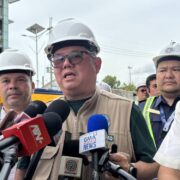
Infra spending boost seen key to faster PH growth in 2026

A recovery of government spending after a deep slump triggered by the flood control scandal would be the most effective way to accelerate growth, ANZ Research said, arguing that the boost from interest rate cuts is still debatable in an environment of weakening confidence.
In a note to clients, Sanjay Mathur, ANZ’s chief economist for Southeast Asia, said that while the Bangko Sentral ng Pilipinas (BSP) may opt for one last final rate cut to support the economy, there are repercussions from the graft fallout that may not be effectively addressed through monetary policy easing.
“There has been a downshift in the growth in the Philippines as repercussions from governance-related issues in public infrastructure projects have not receded,” Mathur wrote. “The resulting weakness in public spending, particularly on the capital side, has permeated into the household and business sectors.”
“The efficacy of the monetary policy easing cycle against the backdrop of low household and business confidence is debatable,” he added. “In our view, a revival in government spending is the most appropriate pathway to faster growth.”
Earlier this month, economic officials in the Marcos administration trimmed their 2026 growth target to 5 to 6 percent, from the previous goal of 6 to 7 percent, underscoring the economic costs of the sweeping investigation into anomalous flood control projects.

ANZ’s Mathur estimated that growth in the fourth quarter of 2025 may have settled at a “sub-potential” rate of 4.5 percent, which, he said, is likely to validate the need for an additional cut in the policy rate.
To help “compensate” for the effects of the graft fallout, the BSP cut its benchmark rate by a quarter point to 4.5 percent last December, bringing total reductions since the easing cycle began in August 2024 to two percentage points.


Fighting corruption gradually