








Lower food prices cooled November inflation to 1.5%

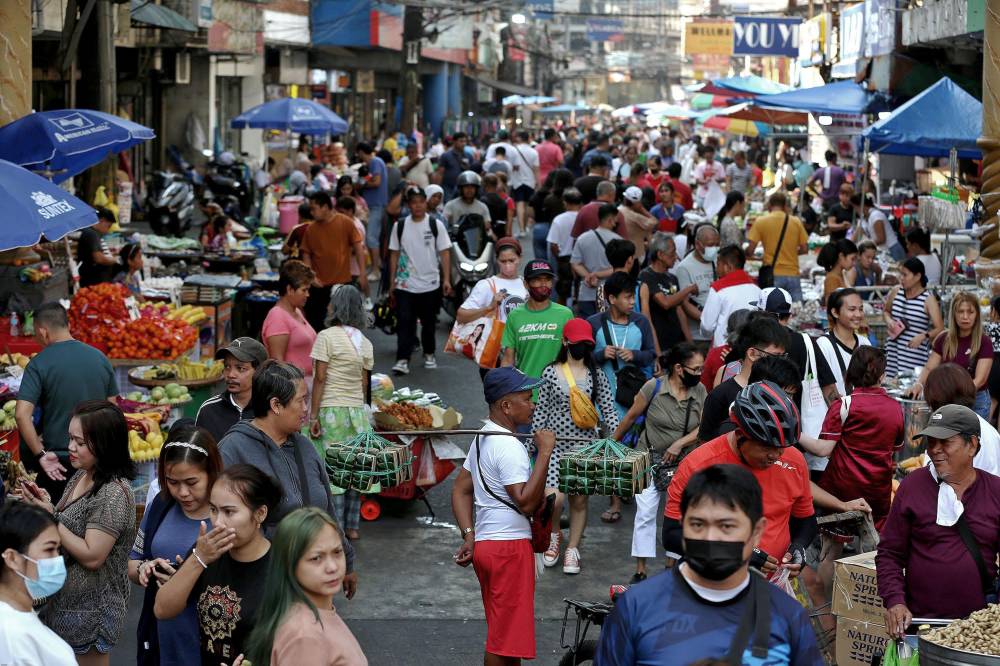
Inflation cooled to 1.5 percent in November after the continued decline in rice prices helped temper overall food costs, the Philippine Statistics Authority (PSA) reported on Friday.
The latest print is slower than the 1.7 percent clip recorded in October and landed within the Bangko Sentral ng Pilipinas’ (BSP) 1.1 to 1.9 percent forecast range for November.
Further, it was better than the 1.6 percent median forecast of 10 economists polled by the Inquirer last week.
This brings the year-to-date average to 1.6 percent, still undershooting the central bank’s 2 to 4 percent target for the ninth straight month, once again fueling expectations of a rate cut on Dec. 11.
The BSP said the risks to the inflation outlook were “limited”, as supply-side pressures are expected to ease.
Low risk
“Inflation expectations also remain well-anchored. Potential electricity rate adjustments and possible increases in tariffs on rice imports could add some upward pressures,” the BSP said in a statement after the release of November inflation data.
“Inflation is projected to average below the low-end of the target range in 2025, primarily due to the decline in rice prices in previous months,” it added.
In a commentary, economists at Chinabank Research echoed the central bank’s view, barring any new shocks.
“Hence, we think the BSP will likely deliver another 25-basis point cut at its meeting on Dec 11, with possible further reductions in 2026,” they added.
Ruben Carlo Asuncion, chief economist at Union Bank of the Philippines, likewise said that the benign inflation environment provides the BSP with greater policy flexibility.
Contributors
The slowdown in November inflation was largely driven by easing food prices, with inflation for food and nonalcoholic beverages rising by only 0.1 percent and accounting for 85.3 percent of the downtrend.
This supports Asuncion’s earlier view that rice has remained “a powerful dampener on overall inflation.”
According to PSA Assistant Secretary Divina Gracia del Prado, rice prices—which account for nearly 9 percent of the consumer price basket—have been falling since January following tariff reductions, with the maximum suggested retail price dropping to P43 per kilogram from P58 at the start of the year.
Del Prado added that this drop will likely be seen in December as well.
Another factor in easing food costs was the sharp slowdown in vegetable inflation, which fell to 4 percent from 16.4 percent last month. Still, Del Prado noted that prices of some vegetables, such as beans and potatoes, rose due to late-season typhoons.
‘Stability is key’
Jonathan Ravelas, senior adviser at Reyes Tacandong & Co., said the cooler inflation was a “welcome breather” that gave households some relief.
Still, he warned that stability is still at risk, considering volatile global markets and risks of El Niño.

“Let’s not celebrate too early.,” he said. “Government should double down on food supply chain efficiency and invest in climate-resilient agriculture. Stability is key.”
In a statement, the Department of Economic Planning and Development (DEPDev) said the government would intensify efforts to ensure price stability through programs such as the expansion of “Benteng Bigas, Meron Na!”, which provides affordable rice to vulnerable households.
But November’s inflation, following a subdued reading in the previous month, comes at a time when stability has been tenuous, as the government’s macroeconomic targets have been shaken by a raging flood control corruption scandal and a series of typhoons.
“The sustained moderation in inflation reflects our commitment to protect consumers and strengthen our economic resilience against both global and domestic headwinds,” DEPDev Secretary Arsenio Balisacan said.
“We will continue implementing timely, well-coordinated policies to keep prices stable and ensure that progress is felt by every Filipino,” he added.
The BSP, for its part, said the Monetary Board has noted that the outlook for domestic economic growth has weakened
“This outlook reflects in part the impact on business confidence of governance concerns about public infrastructure spending as well as lingering uncertainty from the external environment,” it said.
“Going forward, the Monetary Board will continue to review newly available information and reassess the impact of prior monetary actions in light of evolving economic conditions and their implications for inflation and growth,” it added.