







Nomura: Fiscal tightening dims 2026 PH growth momentum

Fiscal tightening is starting to weigh on the Philippines’ growth prospects after a steep contraction in government spending at the start of the year pointed to weaker economic momentum ahead.
Economists at Nomura Global Markets Research turned more cautious on the Philippines’ ability to hit its 5.3-percent growth forecast this year, as fiscal drag compounds rising external risks.
“Fiscal tightening intensified at the start of the year and points to a further drag in near-term growth momentum at a time when the Iran conflict poses additional downside risks,” Nomura said in a commentary.
This came after the government swung to a P165.4-billion budget surplus in January, more than double January 2024’s figures and reversing the P313.2-billion deficit in December. While revenues inched up 0.36 percent to P468.9 billion, expenditures fell sharply by 23.9 percent to P303.5 billion.
“In particular, non-interest government spending growth plunged 40.3 percent year on year, a record low and far worse than the -7.8 percent average in the second half of 2025,” Nomura noted.
“This reflects a worsening of fiscal tightening, partly owing to the corruption controversy. As we have argued before, the lack of pre-procurement activity last year will contribute to weak budget disbursement in coming months before the government implements catch-up spending plans,” it added.
The Philippines is already under pressure to recover from a disappointing 4.4-percent growth in 2025, with the government targeting 5 percent to 6 percent this year, albeit lower than the earlier target.
However, the outlook has become more uncertain amid the Middle East conflict, which has caused oil prices to skyrocket and threatens to spill over into inflation and broader economic activity.
For Nomura, the weak fiscal start in January “suggests a limited near-term economic recovery.”
“We thus see rising downside risks to our 2026 GDP (gross domestic product) growth forecast of 5.3%, which is well below potential, in addition to the fallout from the Iran conflict, to which the Philippines is relatively heavily exposed,” it said.
Ripple effect
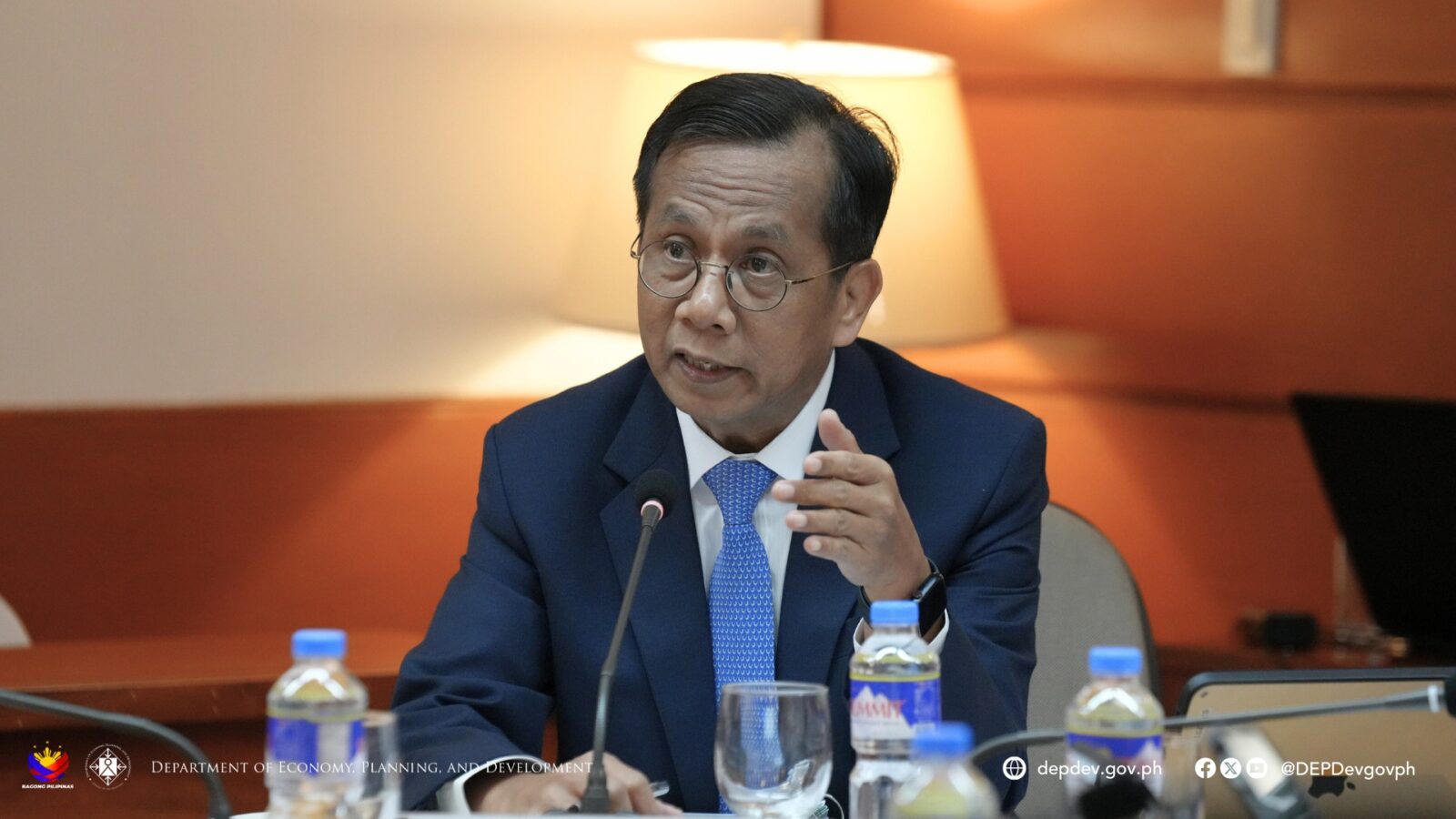
Economic Planning Secretary Arsenio Balisacan earlier warned that the conflict could shave off as much as 0.3 percentage point from growth this year, raising the risk of another sub-5-percent expansion.

This is largely due to a potential spike in inflation, which could reach as high as 7.5 percent in March, with higher fuel costs expected to ripple across key sectors. The government may also face added fiscal pressure as it rolls out subsidies and other support measures to cushion the impact of rising oil prices.
“Fiscal position remains vulnerable to the Middle East energy shock, as higher oil prices can increase subsidy pressures, raise operating costs, and potentially dampen growth affecting revenues,” said John Paolo Rivera, senior research fellow at the Philippine Institute for Development Studies.
Jonathan Ravelas, senior adviser at Reyes Tacandong & Co., echoed the warning.
“Looking ahead, higher Middle East energy prices remain a key risk as they can push up subsidies, inflation, and deficits, underscoring the need for tighter spending discipline and faster energy diversification,” he said.
The government is projecting a P1.6-trillion budget deficit this year, equivalent to 5.3 percent of GDP.