











Oil price surge to deal heavy blow on PH

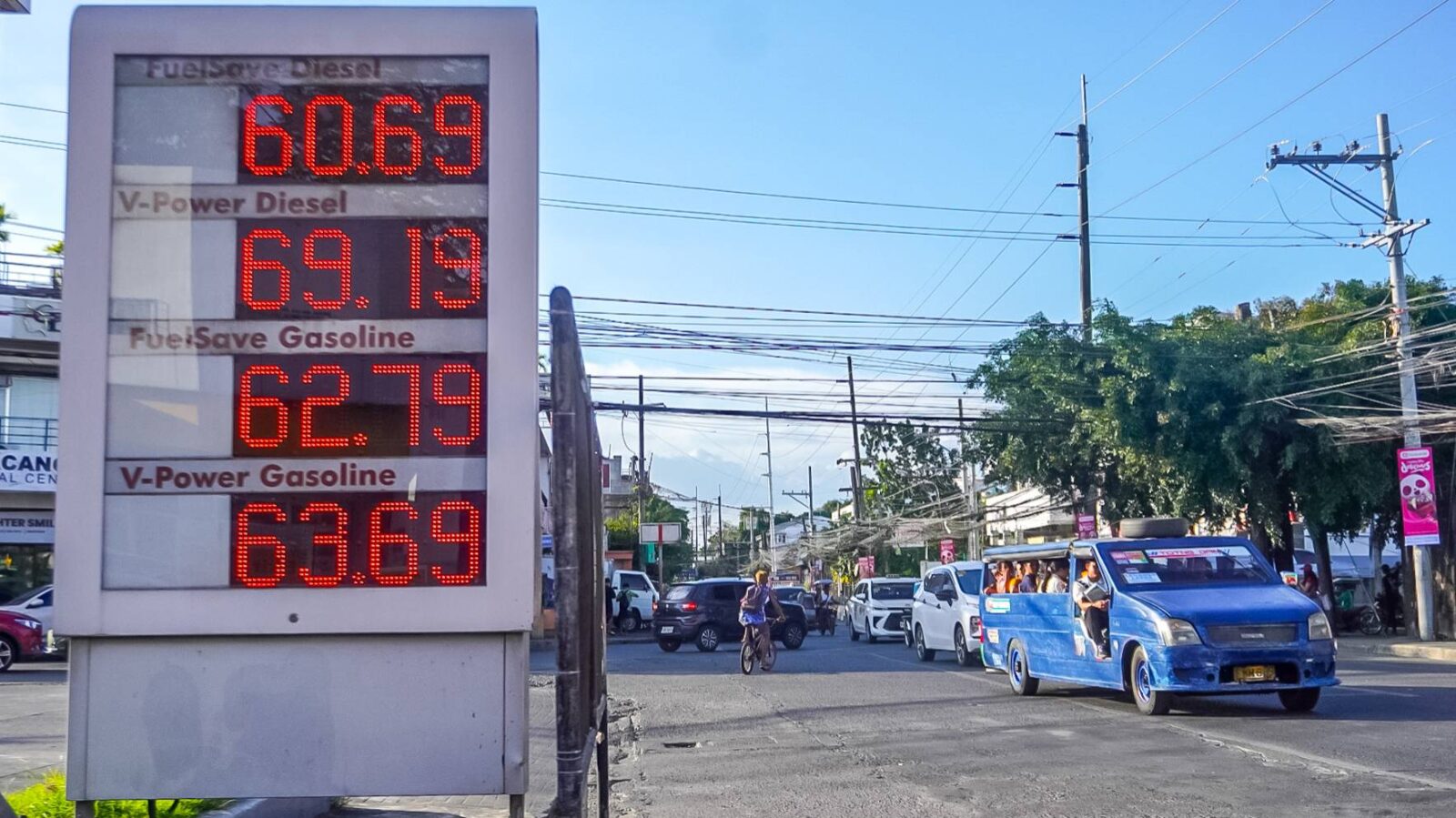
Rising crude prices tend to hit Philippine households and the broader economy faster than in many other Asian countries, as the nation grapples with limited fuel buffers, quick pass-through of global prices to domestic pump rates and a structurally large import bill.
Deepali Bhargava, regional head of research for Asia-Pacific at ING, said the energy shock stemming from the prolonged conflict in the Middle East was affecting Asian economies unevenly.
The Philippines, she said, is likely to see the “fastest pass-through” and face “higher near-term risk” than peers, such as Thailand and Indonesia.
The strain is already becoming visible.
Bhargava pointed to several government agencies that have shifted to four-day workweeks to cope with surging fuel costs.
Higher oil prices could also swell the country’s import bill and add pressure on the Philippine peso, she said.
The currency is already under strain from a strengthening US dollar as investors seek safer assets—a trend that could further fuel imported inflation.
Beyond oil, Bhargava warned of possible food supply risks.
Fertilizer prices could climb if Middle Eastern supply tightens, eventually weighing on crop yields and pushing food prices higher later this year—a particular vulnerability for a country heavily reliant on imported food and fuel.
“As one of the region’s most oil‑dependent economies, alongside Thailand, Korea, Vietnam and Singapore, a sustained rise in crude has meaningful external implications [for the Philippines],” she said.
Global financial markets opened the week in turmoil after crude prices surged past $100 a barrel following joint attacks by the United States and Israel against Iran.
Tehran retaliated by striking Middle Eastern neighbors hosting American troops and by restricting traffic in the Strait of Hormuz, a critical shipping lane for global oil exports.
Oil prices briefly fell on Tuesday amid reports of a potential record release of emergency stockpiles, but crude rose again by Thursday, suggesting the plans failed to calm supply concerns. The peso shed 21.5 centavos yesterday to close at 59.385 against the greenback.
At home, Bangko Sentral ng Pilipinas (BSP) Governor Eli Remolona Jr. warned that the central bank could reverse course and raise interest rates if global oil prices stay above $100 a barrel for an extended period and the US dollar continues its rally.
President Marcos has already asked Congress for authority to suspend excise taxes on fuel during emergencies. The government has also announced a P5,000 fuel subsidy for public transport drivers affected by the surge in pump prices.
But James Villafuerte, lead economist for Southeast Asia at the Asian Development Bank, said more targeted financial support would be a better policy response than suspending fuel excise taxes across the board.
“Because if you reduce the excise tax, rich people with lots of cars would benefit more. Whereas you could have provided income or food subsidy to the more vulnerable,” Villafuerte told a news conference on Thursday.
“I think that kind of intervention would be better in terms of the social impact,” he added.
Looking ahead, Bhargava said the oil shock could disrupt the Philippine economy’s fragile recovery, which began from what she described as “a muted base” following a confidence shock triggered by a high-profile corruption scandal.
“In our scenario of sustained oil disruptions for a month, inflation for the Philippines is expected to inch closer to the upper end of 4 percent of the BSP’s target range,” Bhargava said. “We no longer expect the BSP to cut rates this year.”
“We anticipate weak growth pressures to persist in the first half of 2026, at least, as ongoing investigations and unresolved political and oil price uncertainty continue to weigh on both business confidence and broader economic sentiment,” she added.

Customs helping agriculture during Middle East crisis