








Oil shock sends PH inflation surging to 4.1% in March

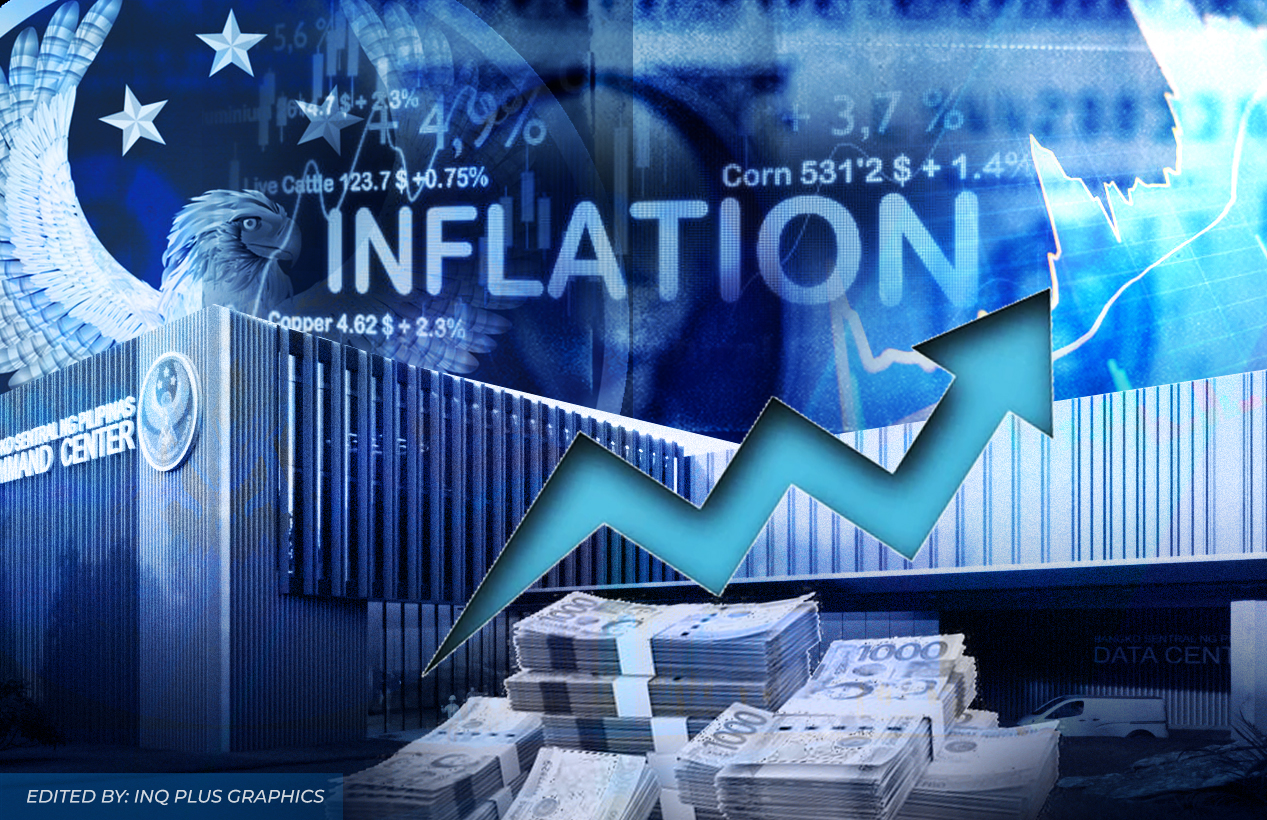
Philippine inflation surged to a near two-year high of 4.1 percent in March as rising oil prices triggered by the Middle East war rippled across the country’s import-dependent economy.
March’s inflation print was the highest since July 2024’s 4.4 percent and nearly double the 2.4 percent recorded the previous month, the Philippine Statistics Authority reported on Tuesday.
The latest reading has now breached the central bank’s 2-percent to 4-percent target range and also the 3.1-percent to 3.9-percent projection for the month. It likewise came in higher than the 3.8-percent median estimate of nine economists polled by the Inquirer.
Driving the spike was the transport group, whose inflation rate surged to 9.9 percent in March, reversing the 0.3-percent contraction in February.
This accounted for 54.8 percent of the overall acceleration in inflation, largely due to sharp increases in gasoline and diesel prices, which rose by 27.3 percent and 59.5 percent, respectively. These figures came from mere single digits in February.
Diesel and gasoline prices reached their highest levels since September 2022, when the Russia-Ukraine war similarly drove global oil prices higher.
The Middle East war, which began with coordinated US‑Israeli strikes against Iran on Feb. 28, has choked off much of the traffic through the Strait of Hormuz—the vital waterway for about a fifth of the world’s oil trade.
Global oil prices have since climbed above $100 per barrel, which reflected in double-digit increases in domestic fuel prices for five consecutive weeks. Pump prices are now ranging between P119 and P172 per liter.
With 98 percent of its oil sourced from the war-torn region, the Philippines is highly exposed to the energy shock. It has bled into transport, electricity, and food costs, compounded by the peso’s depreciation past the 60-per-dollar level.
Other sources
Food inflation also accelerated to 3 percent in March from 1.8 percent in February, contributing 26.9 percent to overall price pressures.
Notably, rice inflation returned to positive territory at 3.6 percent after 14 months of deflation, largely due to higher transport and input costs.
Housing and utilities inflation likewise rose to 4.5 percent, accounting for 12.7 percent of the overall increase. Electricity costs jumped to 9.2 percent, while liquefied petroleum gas prices rose 2.2 percent, reversing a 2.2-percent decline in February. Rental rates also edged up to 3.2 percent from 3 percent in February.
National Statistician Claire Dennis Mapa said 10 of the 13 commodity groups posted higher inflation, while the remaining three were steady.
“We’re seeing higher numbers this April. We’re not seeing any development that it might go down,” he said.
First rate hike in 2 years?
In a note to clients, British banking giant HSBC said the Bangko Sentral ng Pilipinas (BSP) may raise interest rates this month for the first time in more than two years to curb a surge in prices driven by the oil shock, a move that would mark the start of a new tightening cycle.
Aris Dacanay, senior Asean economist at HSBC Global Investment Research, said the above-target inflation in March showed how higher food and energy costs tied to the war in the Middle East are already spilling over into other components of the basket used to calculate price gains.

Dacanay warned that inflation could climb to as high as 8 percent if global crude remains above $100 a barrel through September. That uncertainty, he said, could prompt the central bank to move “ahead of the curve” and raise the key rate by a quarter point to 4.5 percent at the Monetary Board’s April 23 meeting.
“Yes, growth was already weak before the oil shock began and the central bank might decide to ‘look past’ the supply shock,” the HSBC economist said.
In a statement, the BSP said mounting risks to the inflation outlook require “sustained vigilance.”
“The BSP will carefully consider incoming data at its upcoming monetary policy meeting to assess the need for action in keeping with its price stability mandate,” it added.
The last tightening move of the BSP happened in October 2023, when the central bank held a surprise meeting and delivered an “urgent” hike that brought the benchmark rate guiding bank lending costs to 6.5 percent.
Even before this month’s scheduled meeting, uncertainty over the Middle East conflict had already prompted policymakers to act. On March 26, the central bank left its benchmark rate unchanged at 4.25 percent at an off-cycle meeting, holding off on tightening despite rising inflation pressures.
******
Get real-time news updates: inqnews.net/inqviber