







PCCI urges gov’t to defend peso amid Middle East crisis

The country’s largest business group has called on the government to deploy monetary tools to support the peso and maintain financial stability, as escalating tensions in the Middle East threaten to ripple through the Philippine economy.
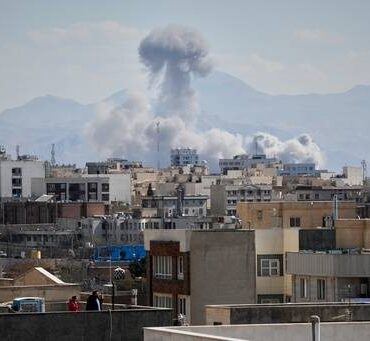
In a statement on Monday, the Philippine Chamber of Commerce and Industry (PCCI) warned that the military conflict involving the United States, Israel and Iran could trigger higher fuel prices, supply chain disruptions and currency volatility that may weaken the peso and reignite inflation.
The PCCI said authorities must act early to protect the economy from potential spillover effects.
“We call on the government to deploy monetary tools to protect the peso, maintain financial stability and preserve investor confidence,” the group said.
In a separate statement, the Federation of Philippine Industries (FPI) said that while a stronger US dollar may benefit exporters, it could also squeeze margins for import-dependent industries.
“The real risk is duration. Markets can typically absorb short geopolitical disruptions, but prolonged instability will translate into sustained pressure on inflation, logistics, and growth,” FPI chair Elizabeth Lee said.
“The Middle East crisis is not just a distant conflict—it is an inflationary shock that could affect Philippine households and industries if tensions persist,” Lee added.
Risks to OFWs
Beyond economic risks, the group also flagged the potential impact of the crisis on the more than two million overseas Filipino workers (OFWs) deployed across the Middle East.
The PCCI called on the Department of Migrant Workers, Department of Foreign Affairs and the Overseas Workers Welfare Administration to activate emergency protocols, maintain communication with Filipinos in affected areas and prepare evacuation or repatriation plans.
“We also urge the government to ensure that repatriated OFWs receive immediate livelihood and reintegration support, recognizing that their remittances—totaling a record $38.3 billion in 2024—are a lifeline for millions of Filipino families,” the group said.
The PCCI also urged regulators to guard against “speculative” fuel pricing practices that could exploit the crisis, and to ensure an adequate supply of basic goods as tensions threaten to disrupt global energy markets.
Oil prices
“With oil prices surging amid fears of disruption in the Strait of Hormuz, we call on the government to urgently explore and secure alternative sources of fuel supply to reduce our dependence on a single region,” it added.

Fuel prices are already set to rise this week. Diesel prices will increase by P1.20 per liter, gasoline by P1.90 per liter and kerosene by P1.50 per liter starting Tuesday.
The Philippines imports all of its crude oil from the Middle East, making the economy particularly vulnerable to supply disruptions in the region.
While local oil firms’ inventories may soften the immediate impact, the FPI said this was only a short-term buffer.
The PCCI also urged the Department of Energy to accelerate the development of renewable and domestic energy sources to reduce the country’s long-term energy vulnerability.
With US President Donald Trump warning the conflict could last for weeks, the PCCI said rising fuel costs, supply chain disruptions and potential declines in remittances could put pressure on consumer spending and businesses.
“The safety of every Filipino abroad and the economic well-being of every Filipino at home must remain at the center of our national response,” the group said.