










Peso continues slide, slips to new low of 59.46:$1

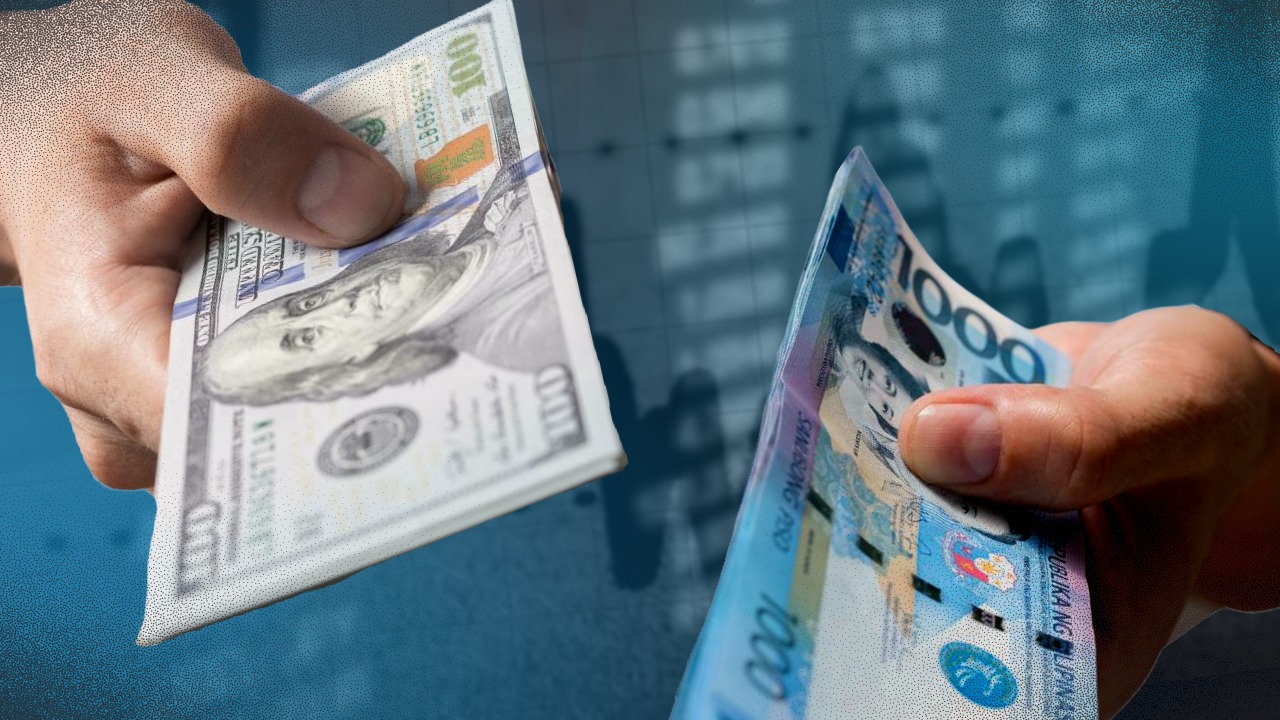
The Philippine peso fell to another record low on Thursday, extending losses for a second consecutive session, as the US dollar strengthened amid expectations the Federal Reserve will hold interest rates steady in the coming months.
The peso closed at 59.46 per dollar, slipping two centavos past the previous day’s record low of 59.44. The local currency touched an intraday low of 59.47.
Trading was heavy, with $1.1 billion changing hands, up from $951 million in the prior session.
A trader said continued expectations of a long Fed pause have powered the dollar, as US yields are seen as more attractive to investors than in markets like the Philippines, where the Bangko Sentral ng Pilipinas (BSP) is approaching the end of its own rate-cutting cycle.
“The peso continued to weaken after the latest data releases on producer inflation and retail sales underscored the resilience of the US economy, further supporting the case for Fed policy rate hold in the coming months,” the trader said.
“The local currency might continue to depreciate as statements from several Fed officials could solidify views of more cautious rate-cutting pace of the US central bank this year,” the same trader continued, adding that peso-US dollar exchange rates may move between 59.25 and 59.50 in the near term.
A weaker peso has mixed implications for the Philippines. It lifts the domestic value of remittances from millions of overseas workers and could make Filipino exports more competitive. At the same time, it risks pushing up import costs and reigniting inflation.
Sustained depreciation could also raise the peso value of foreign debt held by the government and private firms.
The BSP has said it would let market forces largely determine the exchange rate.
The central bank appears willing to tolerate some currency weakness as it nears the end of its pro-growth easing cycle. Governor Eli Remolona Jr. indicated last week that the cycle could conclude with a single additional rate cut—possibly in February—unless “bad surprises” warrant further reductions.

Economists at ANZ Research said in a recent note that the peso’s slide may deepen once the seasonal boost from holiday remittances fades, potentially weakening to around 60 per dollar by the end of the first quarter of 2026, before recovering gradually over the rest of the year.
While the remittance season helped steady the peso in the second half of 2025, ANZ said those gains were limited by a widening corruption scandal that has clouded the local growth outlook and sapped investor confidence.
John Paolo Rivera, a senior research fellow at the Philippine Institute for Development Studies, added that recent attacks on the Fed’s independence may weaken the dollar and provide short-term relief for the peso, though he noted that any appreciation would be “fragile” without encouraging domestic developments.
“Peso gains can be sustained only if they are reinforced by domestic factors such as stronger capital inflows, improving growth prospects and steady remittances,” Rivera said. “Without these, the peso is more likely to stabilize rather than rally, and remains vulnerable to renewed global risk-off moves.”