






PH eyes P25-trillion renewable energy inflows


The country’s energy chief expects P25 trillion worth of investments to flow into the local renewable energy sector as the government sets a 10-year auction plan.
“If you think about it, last year P1.3 trillion went into renewable energy, and we’re talking about 10 years here,” Department of Energy (DOE) Secretary Sharon Garin told reporters when asked about potential investments in financing the agency’s goal to fire up new 25 gigawatts of capacity.
This is as the Philippines hopes to move at full speed for its renewable energy goals even beyond the Marcos term through a series of green energy auctions (GEAs).
Although the DOE terminated many idle contracts, with a potential combined capacity reaching about 18,000 megawatts (MW), the agency reiterated on Friday that the country could still achieve its target of expanding the share of renewables in the electricity generation mix to 35 percent by 2030. The share is currently at 22 percent.
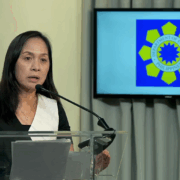
Backing this ambition, Renewable Energy Management Bureau Director Marissa Cerezo presented in a forum the agency’s green energy bidding rounds from this year to 2035.
Up for grabs
These will include auction rounds to unlock additional capacities from solar, wind, battery energy storage systems (BESS), geothermal, hydropower, biomass and waste-to-energy technologies.
“By preparing a clear, auction-backed pipeline, we are giving developers and financial institutions the market visibility they need to plan, mobilize capital and deliver projects on schedule,” said Garin.
Breaking down, the market will see the bidding for offshore wind featuring fixed bottom technology this year, offering 3,300 MW under GEA-5. The agency will also conduct a special GEA for waste-to-energy facilities.
The GEA-6 will feature onshore wind and floating solar farms, while the GEA-7 will focus on rooftop solar energy in the Visayas and Mindanao, as well as solar plants equipped with BESS.
Industry players have been pressing for more power storage systems amid the growth of solar farms.

BESS allows operators to store excess power and only release it to the grid when the demand spikes.
In partnership with different agencies, the GEA-8 will introduce solar plants on stilts, agrisolar and solar facilities on canals.
The GEA-9, meanwhile, will focus on biomass, geothermal, solar, hydropower and onshore wind energy.
The initial auctions, with a target delivery commencement period of 2027 to 2028, will deliver more than 3,200 MW of capacity. Another 5,565 MW of capacity will be activated starting in 2028.
“Succeeding auctions for the remaining capacities in the 25 GW target will be scheduled based on the availability of ready projects covered by renewable energy contracts or certificates of award, power-supply-demand scenarios, grid conditions, among others,” the DOE said.