










PH fintech evolving beyond e-wallets


For years, the Philippines has been described as a fast adopter of digital payments, but not always as a rule setter in the region’s financial technology (fintech) architecture.
That framing may be quietly shifting.
A report by Ant International, a global digital payments and fintech firm, showed that in 2025, the company processed more than 2 billion digital cross-border transactions across its core emerging markets, underscoring how rapidly payment systems, wallets and financial platforms are being knitted together across borders.
Embedded in that expansion is the Philippines, where GCash, one of the country’s largest mobile wallets, has become part of a regional and increasingly global payments network spanning more than 100 markets.
The scale matters not just for transaction volumes, but for how countries like the Philippines fit into Southeast Asia’s evolving fintech map. Ant International says its Alipay+ platform now connects over 1.8 billion user accounts across 40 international payment partners, working with 11 national quick response (QR) payment networks worldwide. Philippine participation in that network signals a deeper form of integration, one that goes beyond consumer convenience and into the realm of payment interoperability, standards and policy direction.
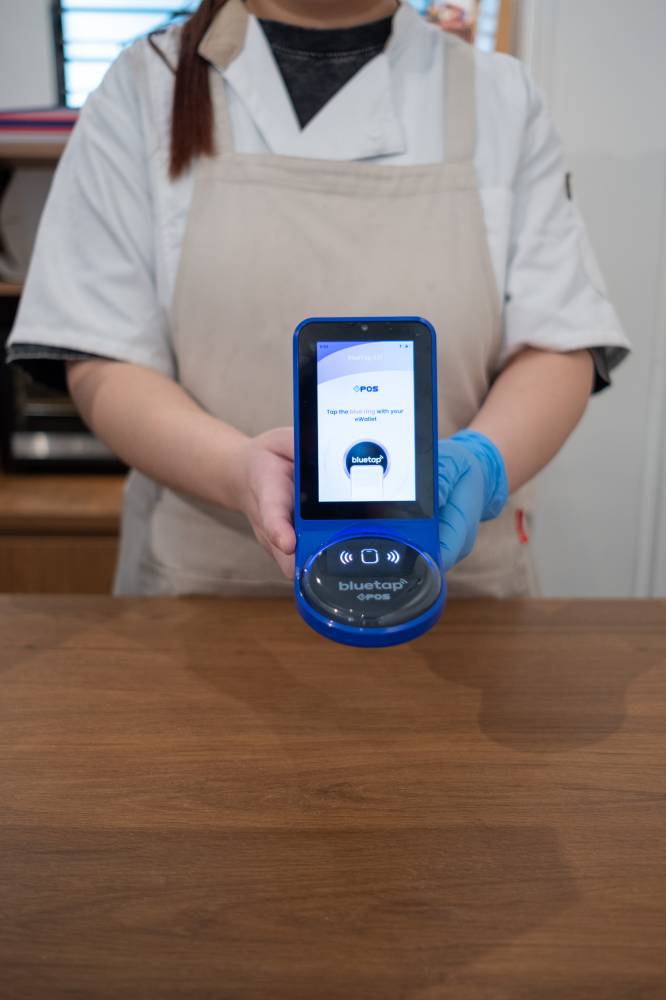
From local wallet to regional infrastructure
GCash is cited by Ant International as one of Southeast Asia’s largest mobile platforms supported by Alipay+, alongside Indonesia’s DANA, Thailand’s TrueMoney and Malaysia’s TNG Digital. Together, these wallets form the backbone of a regional payments ecosystem where users can increasingly transact beyond their home markets using familiar apps.
For the Philippines, this represents a shift from being a predominantly domestic e-wallet market to becoming an active node in a cross-border system that supports travel, trade and online commerce.
Through Alipay+, Philippine wallet users can tap into a network designed to work across different QR systems, payment rails and merchant environments. This approach addresses one of Southeast Asia’s long-standing fintech challenges: fragmentation.
Ant International has positioned interoperability as a key driver of economic activity in emerging markets, citing its partnerships with national QR networks and efforts to harmonize payment acceptance across borders. While the company highlighted higher spending by travelers in Singapore and Malaysia through interoperable QR payments, the Philippines’ inclusion among core Southeast Asian partners places it within the same framework of policy-driven digital connectivity.

Payments policy meets platform scale
The Philippines’ role in this ecosystem is not just commercial; it is structural. By participating in cross-border QR and wallet-based payments, local platforms are effectively aligning with regional standards around real-time payments, consumer protection and transaction security.
Ant International says its security and risk management systems achieved 95-percent precision in identifying high-risk transactions, while also improving payment success rates. Such scale-driven safeguards are increasingly relevant for regulators and policymakers as digital payments grow faster than traditional banking in many emerging economies.
The company’s focus on “trusted financial artificial intelligence” underscores how artificial intelligence (AI) is being embedded directly into payment infrastructure, not as a consumer-facing novelty, but as a back-end system that governs fraud detection, routing efficiency and settlement speed.
For markets like the Philippines, where digital payments are central to financial inclusion strategies, the policy question is no longer whether to digitize, but how to do so safely at scale.
Wallet-to-card integration and regional firsts
One notable development cited by Ant International is the wallet-to-card mobile payment integration enabled by its near-field communication partnership with Mastercard.
Southeast Asian super apps, including GCash, are described as the world’s first to begin combining merchant QR networks with card-based point-of-sale systems under this model.
This matters to the Philippines because it blurs the line between traditional card payments and wallet-based transactions, two systems that have historically operated in parallel. From a systemic perspective, such integration supports broader acceptance, improves merchant coverage and reduces friction for both local users and foreign visitors.
For policymakers, it also raises questions about how payment ecosystems are supervised when wallets begin to function across multiple rails, jurisdictions and acceptance technologies. The Philippines’ participation places it closer to the center of those discussions rather than on the periphery.
SMEs and cross-border ambition
Beyond consumer payments, Ant International reported strong momentum in Southeast Asia’s merchant ecosystem. Its payments arm 2C2P, operating under Antom, recorded 38-percent growth in 2025 transaction volume in the region, driven by sectors such as e-commerce, airlines, online travel agencies and retail, with the Philippines cited among growth markets.

This growth reflects a broader shift in how small and medium enterprises (SMEs) participate in digital trade. Rather than building bespoke payment systems market by market, merchants increasingly rely on platforms that offer one-integration access to multiple payment methods, currencies and markets.
Ant International’s message is that scale, interoperability and AI-driven efficiency are becoming prerequisites for inclusion. For Philippine SMEs, this translates into easier access to regional customers, but also deeper reliance on cross-border infrastructure that operates beyond national boundaries.
More visible role in Southeast Asia’s fintech future
Taken together, Ant International’s 2025 numbers point to a region where fintech leadership is no longer defined solely by the size of population or gross domestic product, but by how effectively markets plug into shared digital systems.
The Philippines, through GCash and its participation in Alipay+, appears increasingly positioned as part of that shared infrastructure rather than a standalone market.
As Southeast Asia pushes toward real-time payments, interoperable QR systems and AI-enabled financial services, the country’s role will likely be shaped as much by policy alignment and system readiness as by user adoption.
Ant International’s scale offers a glimpse of that future, one where Philippine fintech platforms are not just serving local needs, but helping define how digital finance works across borders.
******
Get real-time news updates: inqnews.net/inqviber