








Philippine economy faces make-or-break year in 2026


After a turbulent 2025, the Philippine economy enters 2026 at a crossroads—poised either for a rebound or another year of setbacks.
As a make-or-break year, the question now is: What should be the Philippine economy’s New Year’s resolution?
The Development Budget Coordination Committee (DBCC) set the growth target for this year at 6 to 7 percent, up from 5.5 to 6.5 percent in 2025.
This year’s goal now faces serious pressure after the third-quarter gross domestic product (GDP) posted a four-year low of 4 percent, falling short of expectations. While the DBCC was expected to review the targets, no updates have been announced so far.
A major reason for the slowdown in both the economy and public confidence has been the flood control corruption scandal. This is expected to influence the quarters ahead.
So much so, it triggered a cabinet shakeup, with President Ferdinand Marcos Jr.’s former economic czar, Frederick Go. Go is now at the helm of the Department of Finance, making him the country’s key economic manager.
Meanwhile, Economic Planning Secretary Arsenio Balisacan earlier said that he would not mind a slow economy as long as it leads to growth in the long run.
For 2026, the government’s New Year’s resolution is clear: make do with “catch-up” plans.
For his part, Go is banking on fiscal discipline, prioritizing projects with the highest economic returns to boost growth and confidence.
John Paolo Rivera, a senior research fellow at state-run Philippine Institute for Development Studies (PIDS), backed Go’s focus on fiscal discipline. But Rivera also warned that continued underspending, weak confidence or external shocks would risk falling short of targets again
“It (fiscal discipline) is attainable if discipline means spending better, not spending less, prioritizing high-impact projects, enforcing transparency and avoiding delays,” Rivera said.
“Exceeding the target requires fast, clean execution of public spending, a rebound in private investment and stable inflation,” he added.
PIDS expects the Philippine economy to grow 5.3 percent in 2026.
‘Not a strategy’
On the other hand, Ateneo de Manila University economist Leonardo Lanzona is skeptical about fiscal discipline, calling it “not a strategy at all.”
“The failure lies in this administration’s inability to follow the Constitution and advance productivity by enhancing capacity,” Lanzona said.
Responding to Balisacan’s view, he added that waiting is not a strategy as well.
“Balisacan is right that we should accept the fact that the economy needs to be stronger. But for how long should we wait?” he said.
“If we had taken the initiative to correct the previous administration’s excesses and design an effective strategy to build our institutional and productive capacities from the start of this administration, we would not be in the condition we are in today,” he added.
Perhaps the biggest boost toward a 2026 rebound would be renewed confidence in remittances, consumption and key industries.
“Confidence comes from macro stability, easing inflation and strong OFW (overseas Filipino worker) remittances/services,” Rivera said.
Jonathan Ravelas, senior adviser at Reyes Tacandong & Co., is also hopeful for a better year ahead.

“The fundamentals give me confidence—our young workforce and resilient consumption—but global risks and climate shocks remain big concerns,” Ravelas said.
“And I agree with Secretary Balisacan: quality growth matters more than speed, but we need clear metrics so reforms don’t stall.”
Ravelas’ growth projection for 2026 is pegged at 5.6 percent.
Michael Ricafort, chief economist at Rizal Commercial Banking Corp. (RCBC), said growth could pick up to 5.5 to 6 percent in 2026. That is, provided that the government implements its catch-up plans and improves governance standards.
“If the government’s anti-corruption measures and reforms are taken seriously, they could help boost
confidence among both foreign and local investors,” he said.
“This missing element could lead to significant gains in the local financial markets and the broader economy, supporting faster GDP growth after a period of wait-and-see sentiment following recent political noises,” Ricafort said.
He also echoes Rivera and Ravelas’ views on the key drivers of growth.
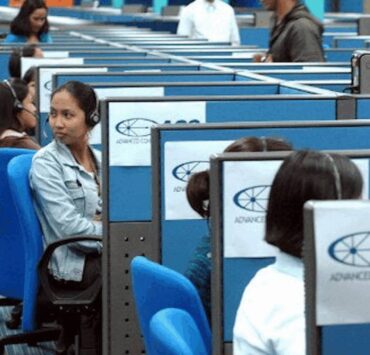
“Other sources of economic growth include the continued rise in OFW remittances, BPO (Business Process Outsourcing) revenues, tourism (both local and foreign) and the continued inflow of foreign investments that create more employment and economic opportunities in the country.”
With all that in mind, 2026 may well be defined by how effectively the country can restore and sustain economic momentum.