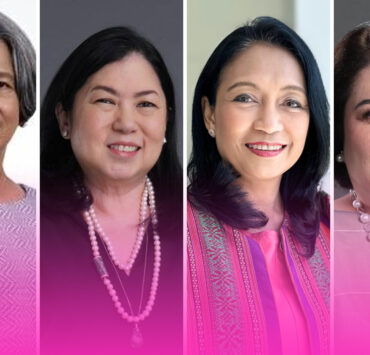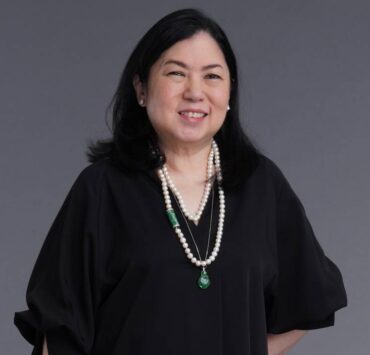







Rossana Fajardo: Topnotch auditor, accountability champ

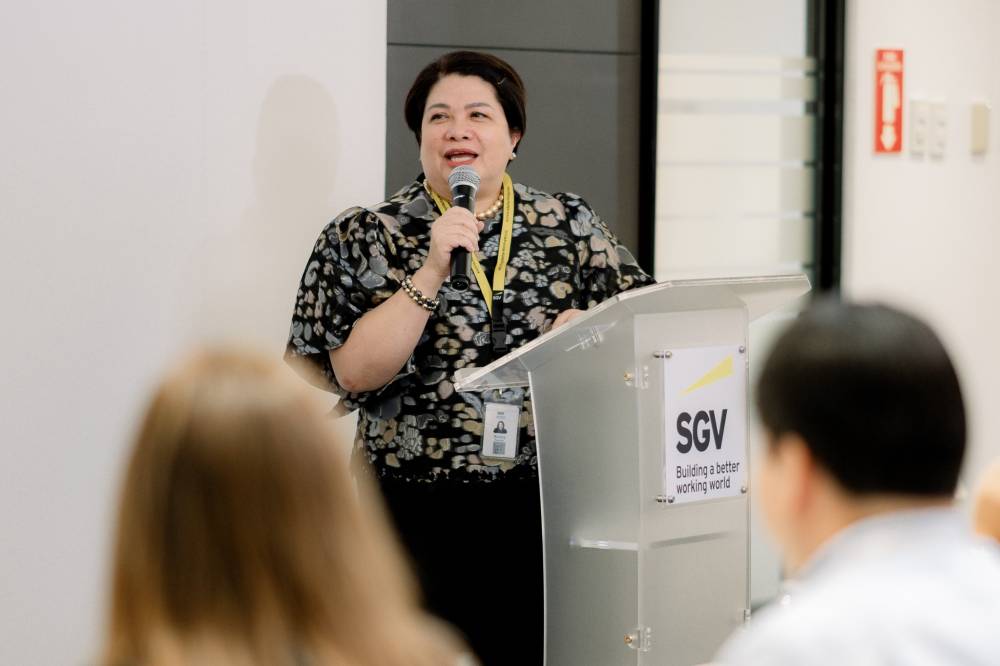
Nothing gets past Rossana Fajardo. Not cooked books, not even a multibillion-peso flood control scandal.
A certified public accountant by profession, the SyCip Gorres Velayo & Co. (SGV) country managing partner for the Philippines built her reputation in the meticulous and often bewildering world of audits and financial scrutiny.
Years later, she carried that same reputation into public service. In September 2025, Fajardo was tapped to help lead a new commission tasked with probing alleged anomalies in government flood control projects.
Though brief, the stint reflected the professional instincts that defined her career: interrogating systems, tracing financial flows and identifying where safeguards break down. It is a discipline sharpened over more than three decades in accounting and consulting.
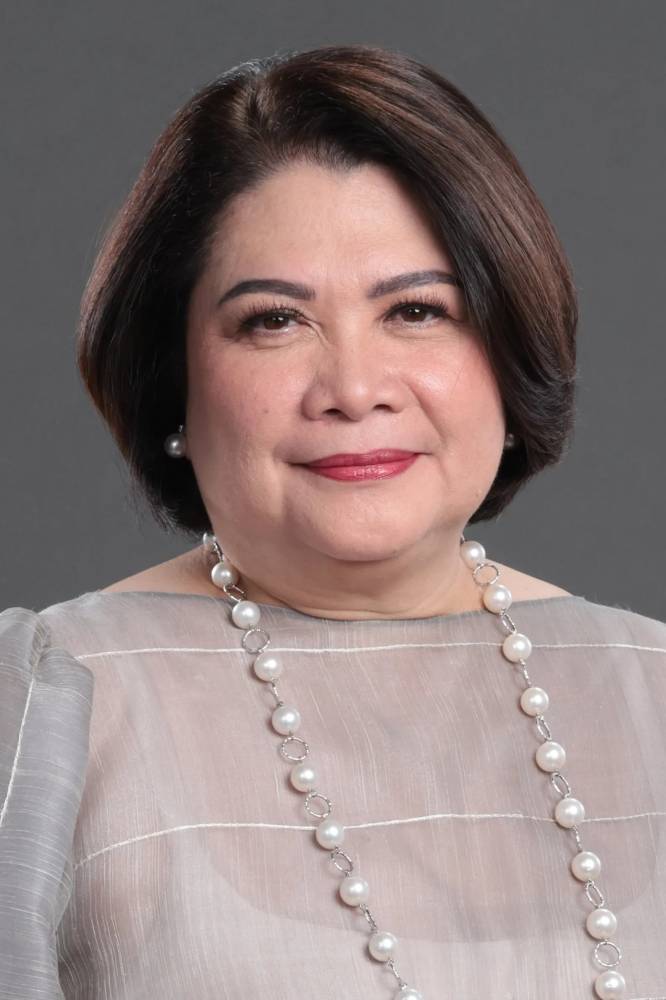
For bringing that rigor from SGV into one of the Philippines’ most sensitive corruption probes, Fajardo landed on Inquirer’s list of Women of Power 2026.
Rising through the ranks
Fajardo completed leadership programs at Northwestern University’s Kellogg School of Management and London Business School. She also earned an executive master of business administration from the Asian Institute of Management.
She graduated cum laude with a degree in accounting from the University of St. La Salle in Bacolod City.
At SGV, one of the Philippines’ most influential professional services firms, Fajardo rose through the ranks. After joining the firm in 1998, she eventually became country managing partner in 2025. She also served as SGV consulting leader and EY Asean Business consulting leader.
Much of her work has focused on serving clients in the telecommunications, media and entertainment, technology, power and utilities, retail, manufacturing, financial services, business process outsourcing and global shared services, as well as government and public service sectors.
At EY, Fajardo also backed initiatives aimed at advancing women in technology, including the EY Women in Technology initiative and the EY STEM Girls program in the Philippines, which introduces girls aged 11 to 18 to careers in science, technology, engineering and mathematics.
Eventually, Fajardo’s work examining financial systems pulled her into a far more public arena.
ICI stint
At the height of the flood control controversy, Fajardo was appointed to the Independent Commission for Infrastructure (ICI), a body created to investigate alleged irregularities in government flood control projects.
“She has worked across both public and private sectors to help organizations deflect fraud, strengthen governance and build more accountable institutions,” Palace press officer Claire Castro said when announcing her appointment.
“Her technical insight and financial acumen are critical in following the trail of public funds and determining where leakages and irregularities may have occurred.”
President Marcos created the body through Executive Order No. 94.
From the outset, however, the body faced structural limits. Unlike permanent investigative agencies, the ICI had no established bureaucracy. It had limited manpower and operated in a politically charged environment as public anger over flooding and infrastructure spending intensified.
Even within the commission, its limits were acknowledged.
As former Commissioner Rogelio Singson later put it, the body “does not have enough powers.”
Together with ICI Chair Andres Reyes Jr. and Singson, Fajardo helped assemble the commission’s investigative machinery from the ground up while facing pressure to deliver answers in one of the country’s most sensitive corruption probes.
For her part, Fajardo helped shape the investigation’s framework, from developing evidence-gathering methods to preparing work plans and overseeing volunteer-led inquiries into infrastructure projects.

Yet just a day after Christmas, and shortly after Singson stepped down from the commission, Fajardo made a decisive move of her own.
Job finished
“I have completed the work I set out to accomplish when I was appointed,” she said as she announced her resignation from the ICI, effective Dec. 31.
Fajardo said her work had focused on laying the commission’s foundations. The next phase, she said, belonged to institutions with permanent prosecutorial mandates, including the Department of Justice and the Office of the Ombudsman.
Within months, the ICI itself would be dissolved after barely six months in operation.
Still, the body produced several outputs during its short lifespan. It conducted 32 hearings, summoned 36 witnesses and compiled more than 1,100 pages of documents, eventually referring nine cases involving 65 individuals.
After leaving the commission, Fajardo remained with SGV.
In one of her first remarks after leaving the controversial body, Fajardo conceded that curbing corruption in the Philippines would take more than just this generation—a lifelong mission and perhaps some more.
“Probably, if you want to correct government or correct corruption, then it would take several lifetimes, because then you would probably need to take out everyone who is part of the system,” Fajardo said at a business forum in January.
Warts and all, Fajardo could at least say with pride that in this lifetime, she had tried.