











Safe use of financial technology requires critical thinking


New technology is bringing financial services and products practically into people’s hands.
Whether they want to save, invest, buy or sell or perform other financial transactions, digitalization allows things to be done in real time with a few key strokes or taps into handheld devices.
But the ease and convenience offered by financial technology (fintech) make critical thinking a valuable skill that people have to develop.
This was the main message of the recent session of Campus Talks, the Philippine Daily Inquirer’s initiative to bring experts to discuss current and urgent concerns with students in different educational institutions.
The session, which was held at San Beda University, tackled the topic “Safe Banking, Smart Spending, Secure Saving”.
Speakers point out that, while fintech has made financial transactions fast, convenient and easy, it has also created risks, like scams, hoaxes, data and identity theft, among others, that require people to be smarter, more discerning and better informed.
Hence, the need for critical thinking, defined as the “objective, rational analysis and evaluation of information, arguments or facts to form a sound judgment”. It requires greater skepticism so people do not accept information at face value and “fosters better decision-making, problem-solving and self-reflection.”
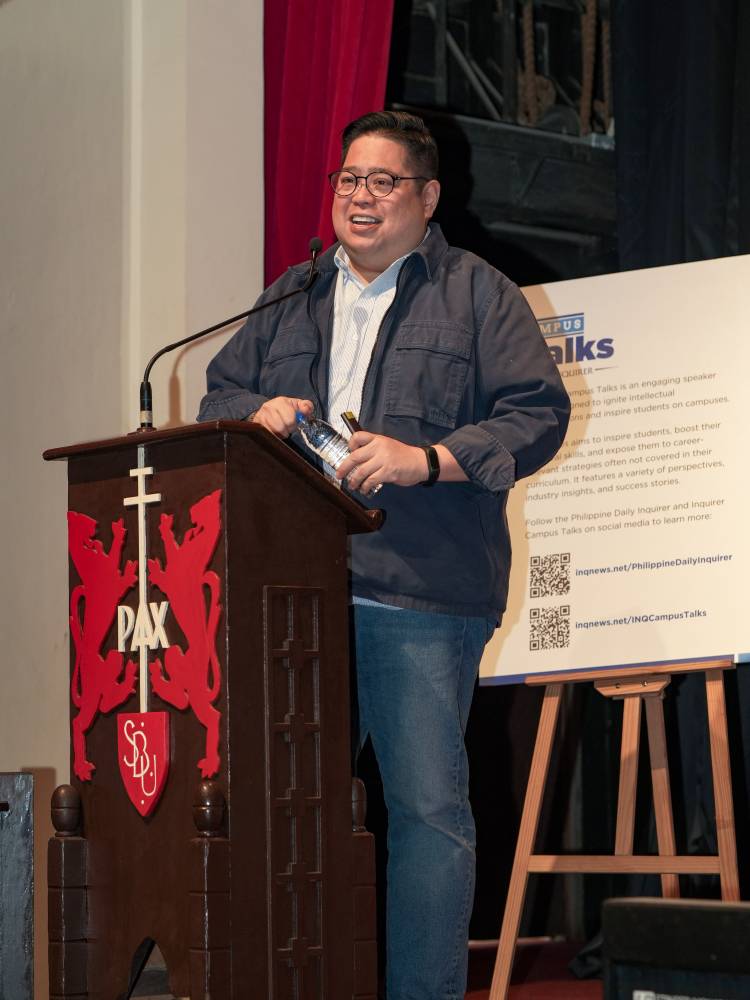
Beware of scammers
Randell Tiongson, director at the Registered Financial Planner Institute Philippines and Inquirer Business columnist, says “critical thinking is important in the new world economy”. He points out that online scams, gambling and other attempts to make people lose money were increasing as digitalization grew.
Tiongson stresses the importance of prudence in money management, advising the young audience to “act your wage” and “don’t go broke trying to look rich.”
Stressing that “money is a great tool but not the end goal,” he encourages the students to find ways to augment their incomes and to focus more on their purpose rather than their passion.
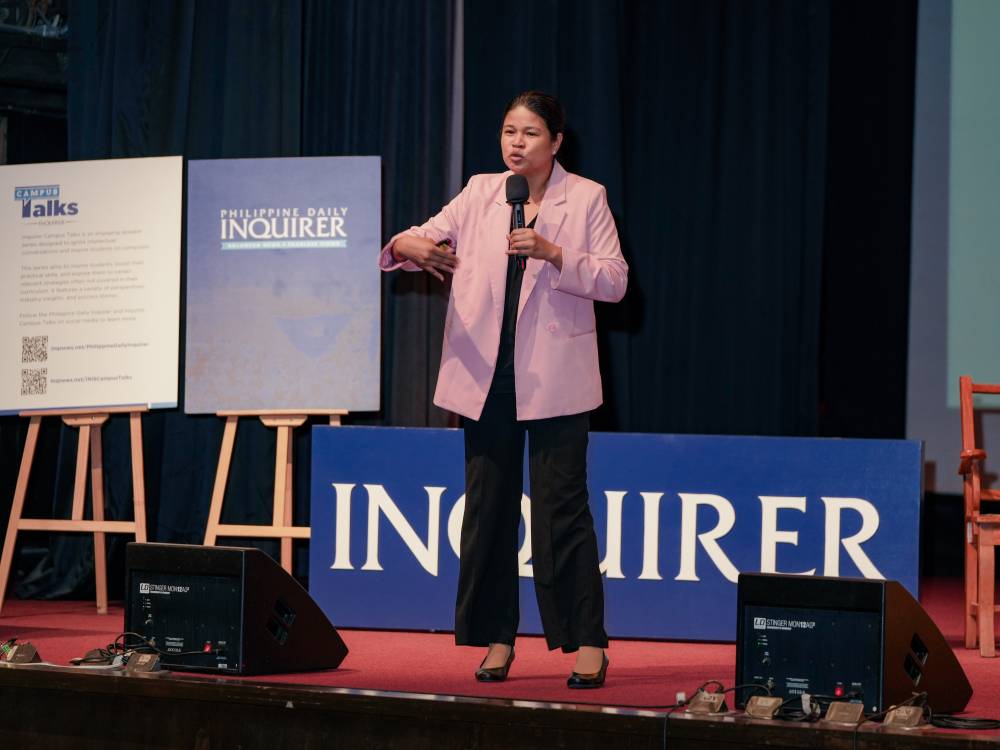
Rochelle Tomas, director for Consumer Protection and Market Conduct at the Bangko Sentral ng Pilipinas, also warns that digitalization, while convenient, also created a lot of risks. Critical thinking would allow people to better protect their money, as she stressed the high risk of people being scammed.
“Be alert, be informed, be proactive,” she tells the audience, which also included students from nearby universities.
People should know about online scams and how new technology could be used to dupe people.
She says if people did not understand something, they should not get involved. They should also do their own research instead of just relying on recommendations, even if they came from friends and relatives.
Tomas outlines laws enacted to better protect people, as she advises the audience to “spend less than you earn and save the rest.”

Make money work for you
Jayson Lo, founder of YOUnique Personalities, encourages students to build healthy money habits and tells them, “you are more than your money, you are more than your job.”
He advices them to “spend less, earn more and never invest in anything you don’t understand.” They should start earning early and saving early, he adds.
Lo also advises students to invest to grow their money. “The more you invest, the more you earn,” he points out.


In his opening remarks, Rudyard Arbolado, chief operating officer of the Inquirer Group, notes how banking has changed significantly. He tells the audience that financial power is literally in their hands as any person could now open a bank account without physically visiting a financial institution.
Edilberto Viray Jr., Department Chair of Financial Management, underscores the power of savings for an individual, industry and the country.
Inquirer’s Campus Talks bridges the gap between academe and industry and is designed to be an engaging speaker series to ignite intellectual conversations and inspire students. It invites accomplished business executives, thought leaders and experts from various fields to share their insights, experience and wisdom.
Campus Talks offers an intimate and interactive setting for students to interact with influential speakers, ask questions and gain valuable and practical knowledge to fuel their personal and professional growth.
Through thought-provoking sessions, Campus Talks aims to expose students to a diverse range of perspectives, innovative ideas and success stories. It provides a platform where students can expand their horizons, explore new possibilities, and gain valuable insights from accomplished individuals.
Campus Talks “Safe banking, Smart Spending, Secure Saving” edition is in partnership with Junior Financial Management Association, San Beda University-Manila and presented by EeastWest Ageas Insurance.
******
Get real-time news updates: inqnews.net/inqviber