











Stocks dive, rates surge on Middle East conflict

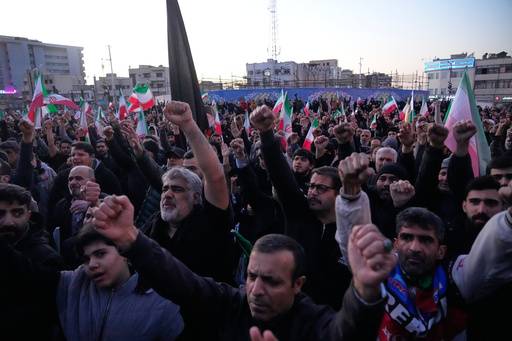
Philippine stocks plummeted while interest rates surged on Monday as investors fled riskier assets amid escalating conflict in the Middle East.
The benchmark Philippine Stock Exchange Index (PSEi) dropped 2.79 percent or 184.61 points, to close at 6,426.83.
Luis Limlingan, head of sales at stock brokerage house Regina Capital Development Corp., said the local index closed sharply lower as the conflict between the United States and Iran triggered a broad-based sell-off across sectors, dampening overall market sentiment.
“Risk-off sentiment prevailed throughout the session, with investors trimming exposure amid heightened geopolitical uncertainty, while some rotated into commodity-backed assets, such as gold and oil, which are traditionally viewed as defensive hedges during market stress,” Limlingan said.
Philstocks financial research manager Japhet Tantiangco said investors digested the potential economic impact of elevated oil prices that could fuel inflation and increase business costs.
Net value turnover reached P7.5 billion. Foreign investors were net sellers to the tune of P784.64 million.
Sectoral performance was broadly negative. Only the mining and oil index finished in positive territory, inching up 0.1 percent, as investors sought refuge in precious metal-related stocks.
In contrast, the services sector suffered the steepest drop, falling 4.11 percent.
RCBC economist Michael Ricafort said it’s still a “wait-and-see” period for the markets, which fear the disruption of global oil supply chains.
“There could be some shift to safe havens until the dust settles, as a matter of prudence; to hedge various risk exposures to be on the safe side,” Ricafort said.
T-bill rates rise across the board
Meanwhile, yields on short-dated local government debt rose for the first time after seven straight weeks of decline.
Auction results on Monday showed that the Bureau of the Treasury raised P27 billion via Treasury bills (T-bills) as planned, with total tenders reaching P76.55 billion.
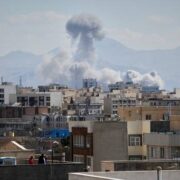
RCBC’s Ricafort said, “T-bill average auction yields also corrected slightly higher after the recent geopolitical risks related to Iran/Israel/Middle East led to higher global crude oil prices, reaching new eight-month highs.”
This conflict is now seen to push Philippine inflation upward, especially as the country is a net oil-importing economy and therefore particularly vulnerable to fuel price hikes.
The 91-day T-bill fetched an average rate of 4.311 percent, more expensive than the 4.240 percent from last week.
The average rate for the 182-day debt paper stood at 4.417 percent, also higher than the 4.357 percent before.
Local creditors sought an average rate of 4.564 percent for the 364-day T-bill, up from the 4.501 percent previously.