











The high cost of low trust in your inner circle


After advising family business owners and CEOs around the world for many years, I have observed a pattern that rarely appears on a balance sheet but quietly destroys enormous value inside companies. It is not poor strategy. It is not weak products. It is not even bad market conditions.
It is low trust within the inner circle of leadership.
In many family businesses, the individuals closest to the owner-operator—family members, senior executives, board members and trusted advisors—form what I call the inner circle of influence. These are the people whose opinions shape strategy, whose feedback influences decisions, and whose alignment determines how fast the company moves.
When trust within this circle is high, leadership becomes clear, fast and decisive. When trust is low, however, the company begins paying a hidden tax that compounds every single day. And the cost is enormous.
The invisible tax on leadership
Low trust rarely announces itself openly. Instead, it shows up in subtle but extremely damaging ways: Decisions take longer than they should. Meetings feel tense and unproductive. Important topics are avoided. Information reaches the CEO slowly—or not at all.
What appears on the surface as “normal business friction” is often something far deeper: people inside the leadership team do not fully trust each other. When this happens, the owner or CEO unknowingly starts making decisions based on filtered information instead of reality. And in business, decisions made without clear reality almost always lead to mistakes.
The Trust–Speed equation
One of the most important leadership principles I have observed across high-performing organizations is simple: Trust determines speed.
In high-trust leadership teams: Executives speak openly. Bad news surfaces early. Ideas are debated honestly. Decisions are made quickly. Execution is aligned.
In contrast, low-trust environments behave very differently. Executives become cautious with what they say. Criticism is softened or avoided. People protect themselves politically. Decisions take longer because information is incomplete.
The result is slower strategic movement. And in competitive markets, slow companies lose to fast companies. I have seen family businesses with dominant market positions slowly lose ground—not because of poor strategy, but because internal mistrust slowed their ability to act.
Why family businesses are especially vulnerable
Family businesses have many strengths: long-term thinking, deep commitment and strong values. But they also have a unique vulnerability. The moment family relationships and business relationships overlap, emotional dynamics enter the leadership structure.
Common sources of tension include: sibling rivalries; perceived favoritism toward certain family members; generational differences between founders and successors; unclear authority between family members and professional executives; and long-standing personal grievances that are never addressed.
Because these issues involve family relationships, they are often never discussed openly. Instead, they linger quietly in the background. Over time, these unresolved tensions begin to erode trust inside the leadership team.
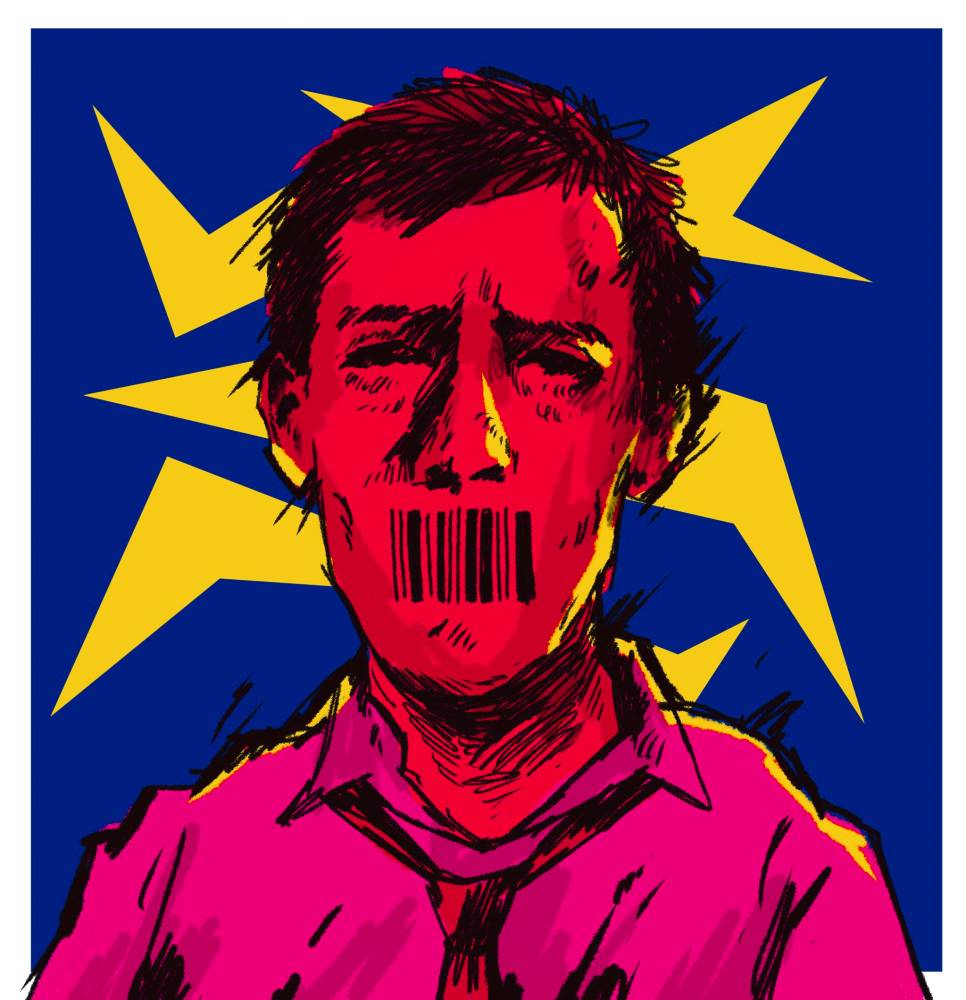
The dangerous lack of open communication
I see this again and again. Family members do not openly talk among each other. Or they do not openly talk to the patriarch or matriarch of the family. Or siblings who both have a role to play in the family business(es) do not trust each other and therefore do not talk openly.
Nothing can sink profits more. The results are disastrous and grow like a cancer over time. Family members avoid challenging each other. Board members avoid giving direct feedback to the owner. Everyone chooses diplomacy over honesty.
On the surface, this can look like harmony. But in reality, it creates a leadership environment where truth becomes diluted. People start telling the leader what they think he or she wants to hear instead of what the leader needs to hear. Over time, the CEO or owner becomes increasingly isolated from reality. And isolation at the top is one of the most dangerous situations any leader can face.
The owner’s blind spot
Many business owners assume that because they hold ultimate authority, they have a clear view of the organization. Unfortunately, this is often not the case. In family businesses, especially the leader may unknowingly sit at the center of a carefully managed information bubble.
When trust deteriorates inside the inner circle, the flow of information toward the leader becomes distorted. Instead of clear insights, the CEO begins receiving edited versions of reality. Executives soften criticism. Problems are presented in overly optimistic terms. Failures are hidden or explained away. Family members protect each other.
And gradually, the leader’s understanding of the business becomes less accurate. This is particularly dangerous in family enterprises where the owner-operator is highly respected—or even feared—by the surrounding leadership team. In such environments, people become reluctant to bring bad news. Ironically, the more powerful and respected the leader is, the greater the risk that the leader becomes insulated from uncomfortable truths.
This is even more true in certain cultures where older—and powerful and wealthy—leaders are held in an almost untouchable veneration. This is the case for many Asian cultures and many regions in the Middle East, for example.

Three to thrive
In my experience advising family businesses around the world, several practices are essential. For family business leaders who want to avoid the hidden cost of low trust, three principles are particularly powerful.
1. Make truth more important than harmony.
First, leaders must create an environment where honest disagreement is safe. Debate should be encouraged rather than suppressed. Temporary discomfort in honest conversations is far healthier than the long-term damage caused by silent resentment. Encourage openness inside the leadership circle.
2. Clarify roles and decision rights.
Second, roles between family members and professional executives must be clearly defined. Ambiguity is one of the fastest ways to create mistrust. Many trust breakdowns stem from unclear authority. When responsibilities and decision boundaries are clearly defined, tension decreases dramatically.
3. Seek outside perspective.
Finally, many family businesses benefit enormously from trusted external advisors who can surface sensitive issues that internal participants may hesitate to raise. Independent advisors can often see dynamics that insiders cannot. Their objectivity helps surface issues before they become crises. Outside perspectives help bring hidden tensions into the open where they can be addressed constructively.
Tom Oliver, a “global management guru” (Bloomberg), is the chair of The Tom Oliver Group, the trusted advisor and counselor to many of the world’s most influential family businesses, medium-sized enterprises, market leaders and global conglomerates. For more information and inquiries: TomOliverGroup.com or email Tom.Oliver@inquirer.com.ph.
******
Get real-time news updates: inqnews.net/inqviber