







Toyota cautious but open to gov’t EV incentives

Toyota Motor Philippines is approaching the country’s electric vehicle (EV) market with caution, but the market leader remains open to participating in the government’s incentives program for EV makers.
This is according to Toyota Philippines chair Alfred Ty, who said that while the local EV market is on a “nice” trajectory, it is “just starting to develop.”
Any investment under the government’s Electric Vehicle Incentive Strategy (Evis), Ty said, would need to be carefully mapped out.
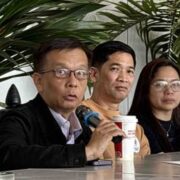
“If the government or DTI (Department of Trade and Industry) is looking at electric vehicles—it’s an ambition of the government—maybe it’s time to sit down, think about it and discuss,” he told reporters. This was on the sidelines of the 42nd annual joint meeting of the economic cooperation committees of the Philippines and Japan.
Toyota is the leading manufacturer of hybrid EVs in the Philippines, selling 19,596 units of 25,737 total hybrid sales in 2025.
The company also dominates the overall car market, capturing nearly half of total vehicle sales with 229,447 units.
Toyota took part in the government’s Comprehensive Automotive Resurgence Strategy (Cars). This provided up to P9 billion in incentives to each of three carmakers that could locally produce 200,000 units from 2018 to 2024.
Asked whether Toyota would consider investing as much under Evis as it did with Cars, Ty said the decision would depend on the benefits offered by the program.
“If there is really an advantage, of course, we’re ready to come in,” he said.
Ty added that any new investment would require sufficient volume and supplier consensus.
“It’s not only the manufacturer’s intention to want to start something,” he said. “You need the support of all the parts makers and they all have to consider the same thing: What are the economies of scale? How will that all work?”

Ty noted that electrification remains concentrated in Metro Manila, where consumer confidence is higher. But he said growth is expected to gradually expand to provincial markets.
To broaden the market, Ty said Toyota plans to introduce more affordable hybrid vehicles.
“The demand right now is mostly coming from NCR…,” he said, adding that hybrids are currently the more practical option given limited charging infrastructure outside the capital.
Following a challenging year for the Philippine car industry, including a fourth-quarter demand slump and earlier uncertainty over Cars funding, Ty said Toyota is taking a conservative approach to growth.
“We are taking a conservative stance and staying flat from last year,” he said.