






US tariff relief comes with new 10% levy

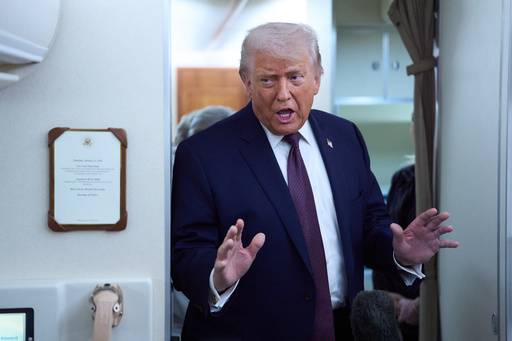
Philippine exporters welcomed a US Supreme Court decision striking down President Donald Trump’s “reciprocal” tariffs, calling it a major relief after months of steep levies had weighed on trade in 2025.
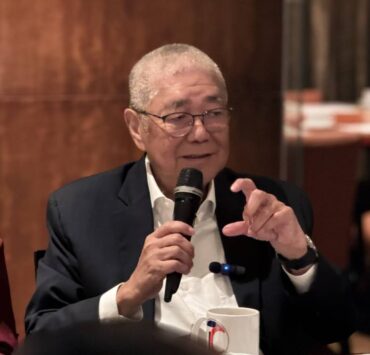
“The invalidation of the previous 19-percent tariff provides much-needed legal relief to our members,” said Sergio Ortiz-Luis Jr., president of the Philippine Exporters Confederation, Inc. (Philexport), the country’s largest umbrella group of exporters.
In a six-three ruling on Friday, the US high court said the sweeping tariffs, which had been imposed on imports from more than 100 countries starting mid-2025, required congressional approval.
Trump attempted to justify the measures under the International Emergency Economic Powers Act of 1977.
This decision is especially significant for the Philippines, whose largest export market is the United States.
Philippine shipments to the US totaled $13.44 billion in 2025, down from $14.5 billion in 2024, but still representing 15.9 percent of the country’s total exports.
‘Significant victory’
Philexport described the ruling as a “significant victory” not only for the Philippines but also for the global rules-based trading system.
“This ruling removes a major barrier that was unfairly penalizing Philippine craftsmanship and industry,” Ortiz-Luis said.
Nearly half of Philippine exports to the US, around $6.8 billion, have been spared from the 19-percent tariff, including more than $1 billion in agricultural goods that cannot be produced in sufficient quantities in the US.
Semiconductors and other electronics, which make up 53 percent of Philippine exports to the US, were largely shielded as well.
In a message to the Inquirer, Danilo Lachica, president of the Semiconductor and Electronics Industries in the Philippines Foundation, Inc., called the court decision “welcome news,” noting that striking down the tariffs “limits the uncertainty” facing exporters.
But shortly after the ruling, Trump announced a uniform 10-percent tariff on imports under Section 122 of the Trade Act of 1974, saying the measure was needed to protect the US from what he called “unfair trading practices.”

Ortiz-Luis struck a more measured tone on the new levy, which takes effect Feb. 24.
“While this is an additional cost, its ‘global’ application means the Philippines maintains its relative competitiveness against other trading nations,” he said, noting that the tariff is capped at 150 days unless extended by Congress.
Ortiz-Luis said the Philippines must use this “crucial time” to negotiate with Washington.
He also expressed hope that key sectors, particularly semiconductors, electronics and agricultural products, would remain exempt.
It remains unclear how the new tariff will be implemented or whether previous collections, estimated at more than $175 billion by the University of Pennsylvania, will be refunded.