


When light meets legacy: First Lady Liza Araneta-Marcos, philanthropists illuminate historic Binondo’s renaissance

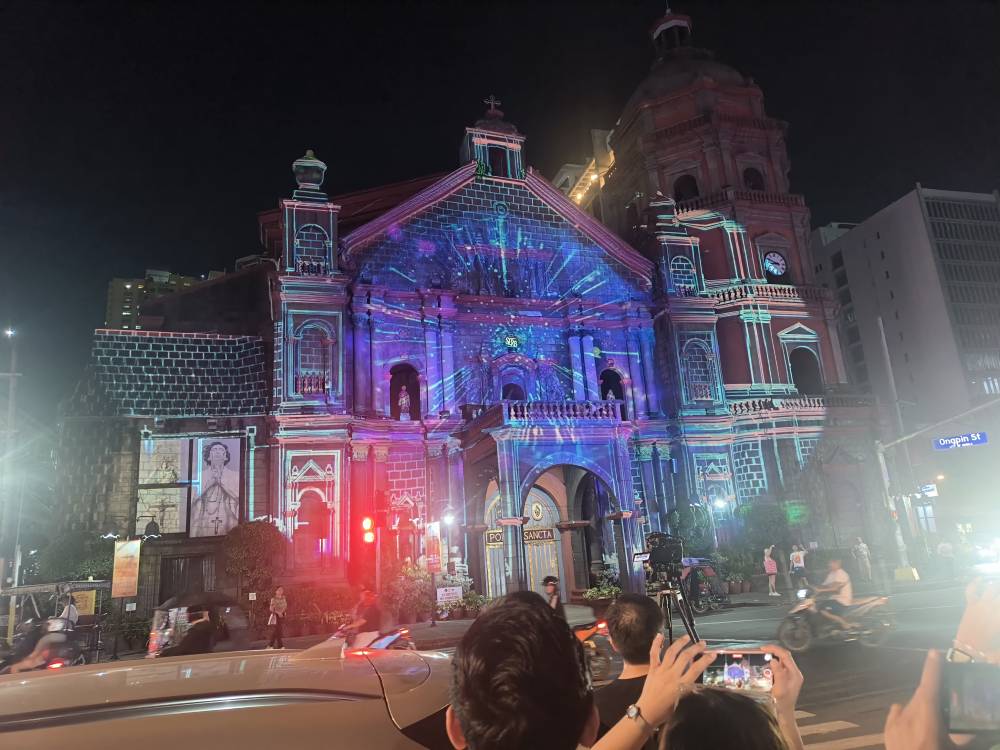
On the night of Feb. 13—four days before the Chinese Lunar New Year ushering in the energetic Year of the Fire Horse—historic Manila’s Binondo Chinatown glowed with more than festive lantern light.
For the first time in decades, First Lady Liza Araneta-Marcos spearheaded a major private-sector cultural and tourism initiative of historic scale—one that bridges centuries of heritage with a forward-looking vision of global relevance.
Under the patronage of the First Lady, with guest of honor President Ferdinand Marcos Jr. and championed by the Federation of Filipino Chinese Chambers of Commerce and Industry Inc. (FFCCCII), and with other community groups, the project seeks to beautify and illuminate key heritage nodes of Manila’s Chinatown—not merely as a tourism attraction, but as a cultural reclamation of the world’s oldest Chinatown, founded in 1594 across the Pasig River from Intramuros.
Binondo is not simply a district on a map. It is the spiritual and commercial cradle of generations of rugged entrepreneurs. While many ethnic Chinese traders and industrialists have long since expanded and relocated elsewhere, most of our immigrant ancestors began here—much like Jewish immigrants in New York’s Lower East Side in the late 19th and early 20th centuries—amid narrow streets, ancestral shopfronts, and humble market stalls that, for centuries, made Binondo the beating heart of Manila’s bustling commerce.
Even today, the eight-story FFCCCII headquarters still overlooks the Pasig River, a quiet yet poignant reminder of that enduring bond.
Manila Chinatown Revitalization Project
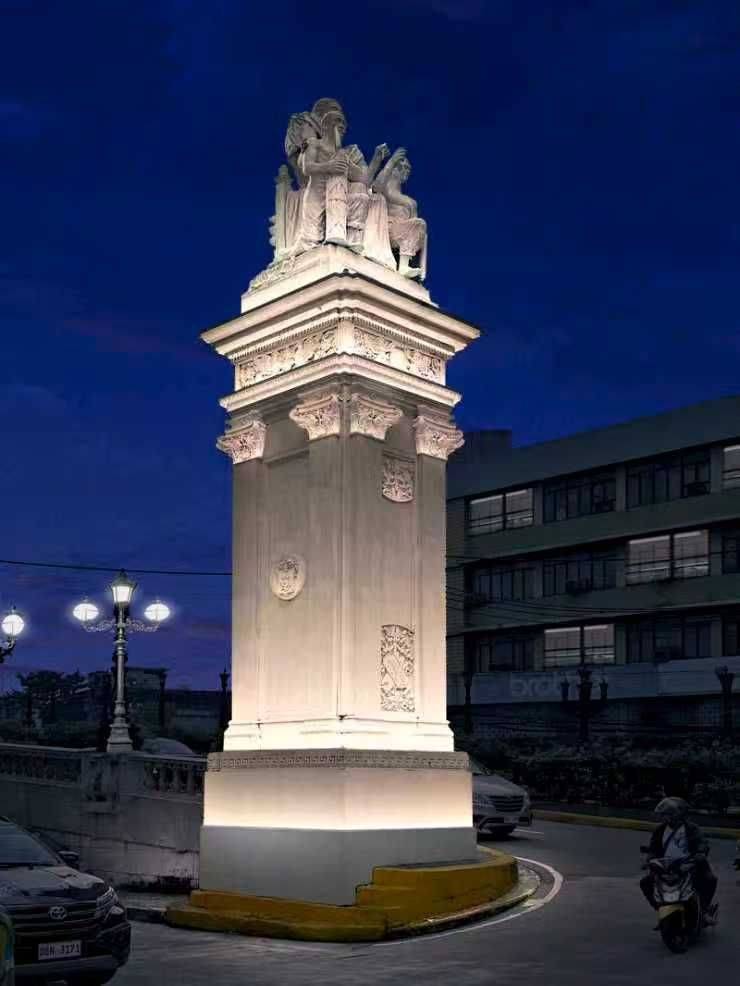
The Manila Chinatown Revitalization Project formally began with Phase 1: the lighting of Jones Bridge in June 2025, timed to coincide with the 50th anniversary of the Philippine-China diplomatic relations—pioneered by the late President Ferdinand E. Marcos Sr. and former First Lady Imelda R. Marcos in Beijing with Chairman Mao Zedong and Premier Zhou Enlai.
That Jones Bridge lighting project was officially donated and turned over to Manila City Hall under Mayor Francisco “Isko Moreno” Domagoso on Dec. 12, 2025, underscoring the partnership between civic leadership and private philanthropy.
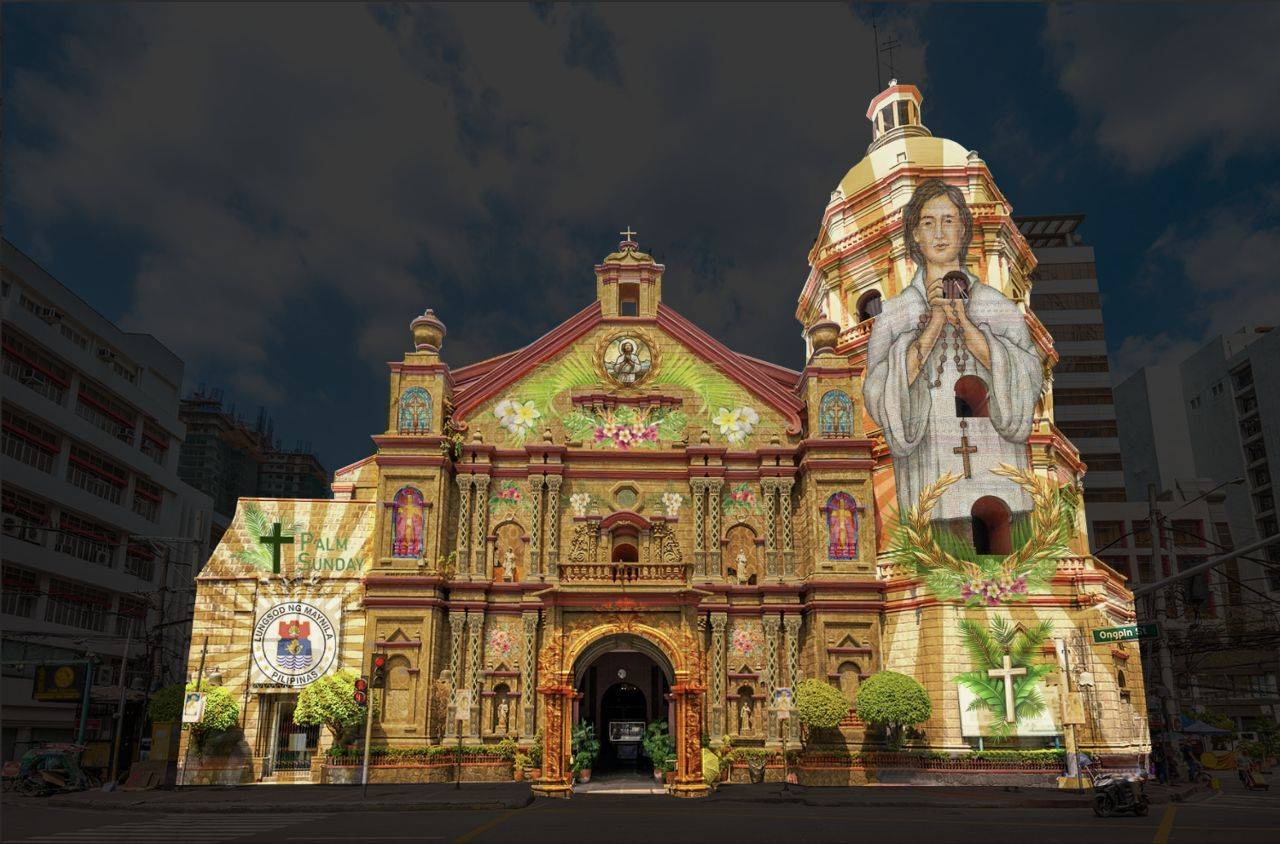
Phase 2, officially launched in the evening of Feb. 13, expands the vision dramatically. It includes architectural lighting for Quezon Bridge and MacArthur Bridge, projection mapping on the historic Binondo Church—the 16th-century basilica where Chinese Christians worshipped, where many historic rites were performed, and where San Lorenzo Ruiz, the Philippines’ first saint, was baptized.
Spectacular holographic and lighting features on dragon posts will also animate Quintin Paredes Street (formerly Calle Rosario), Plaza Lorenzo Ruiz (formerly Plaza Calderón de la Barca, earlier Plaza de Binondo and Plaza Carlos IV, officially renamed in 1981), Padilla Street (formerly Calle Gandara), and Ongpin Street (formerly Calle Sacristia).
Yet this year’s beautification effort goes far beyond exciting aesthetics. It is both symbolic and strategic.
Top donors
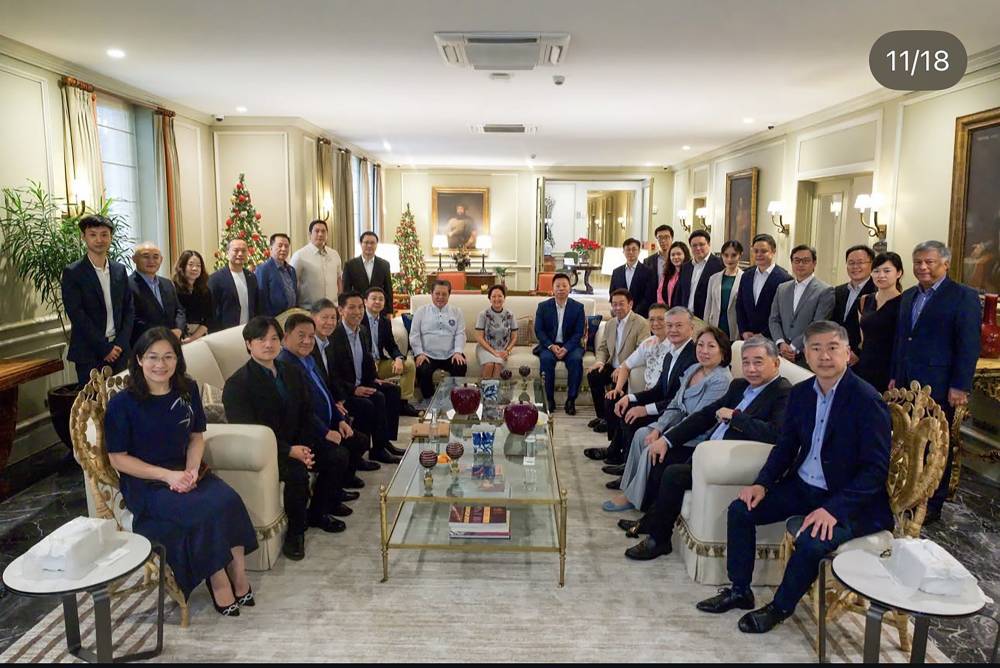
Just a few days before Christmas, the First Lady graciously hosted a thanksgiving luncheon for the project’s top donors and FFCCCII officers at the Presidential Guest House of Laperal Mansion on Arlegui Street near Malacañang Palace. The intimate gathering also served as a welcome luncheon for newly arrived Chinese Ambassador Jing Quan—formerly China’s deputy envoy to the United States and a Brookings Institution fellow in Washington, D.C.—highlighting the importance of people-to-people ties alongside economic cooperation with the Philippines’ largest trading partner.
During that event, donors behind the historic P200-million private-sector contributions were thanked—an earlier unforgettable one evening philanthropic fund-raising at dinner hosted by the First Lady, the effort led by the Filipino at Tsino Magkaibigan Foundation, a coalition of 30 major Filipino-Chinese civic, cultural, and business organizations, together with the FFCCCII under President Victor Lim of Veco Paper Corp. and Honorary President Dr. Cecilio K. Pedro of Lamoiyan Corp. and Hapee Toothpaste.
The roster of major donors reads like a who’s who of Philippine business and philanthropy, many with deep ancestral or sentimental ties to Binondo: BDO Unibank Chairperson Teresita Sy-Coson; SM Group; Andrew Tan of Alliance Global Group, Megaworld, and Emperador; Josephine Gotianun-Yap of Filinvest Group and East West Bank (her late business whiz mother Mercedes Tan Gotianun’s maternal grandfather was Binondo pre-war philanthropist and lumber tycoon Vicente Gotamco); LT Group CEO Lucio Tan III; Arthur Ty of the Metrobank Group and Philippine Savings Bank; Edgar Sia II of DoubleDragon Properties; Dennis Anthony Uy of Converge ICT Solutions Inc.; SteelAsia Chairman Benjamin Yao; First Atkins Group President Gabriel Ang; Cathay Pacific Steel CEO David Chua; Hennan Resort Group founder Henry Chusuey; Cathay Land and Astoria Resorts CEO Jeffrey Ng; ALC Group CEO Edgard Cabangon Chua; Carrascal Nickel CEO Antonio Co; Choi Garden and Gloria Maris restaurant group Chairman Frank Lao; Megawide CEO Edgar Saavedra; PAGSS CEO Jefferson Cheng; Century Peak Holdings CEO Wilfredo Keng; and Philippine Soong Ching Ling Foundation founding President
Larry Tan Villareal, among many others.
Each donor represents not just capital, but culture and collective memory—a tribute to the neighborhood that nurtured dreams long before modern high-rises reshaped Metro Manila’s skyline.
2026 Asean Chinese Business Leaders Summit
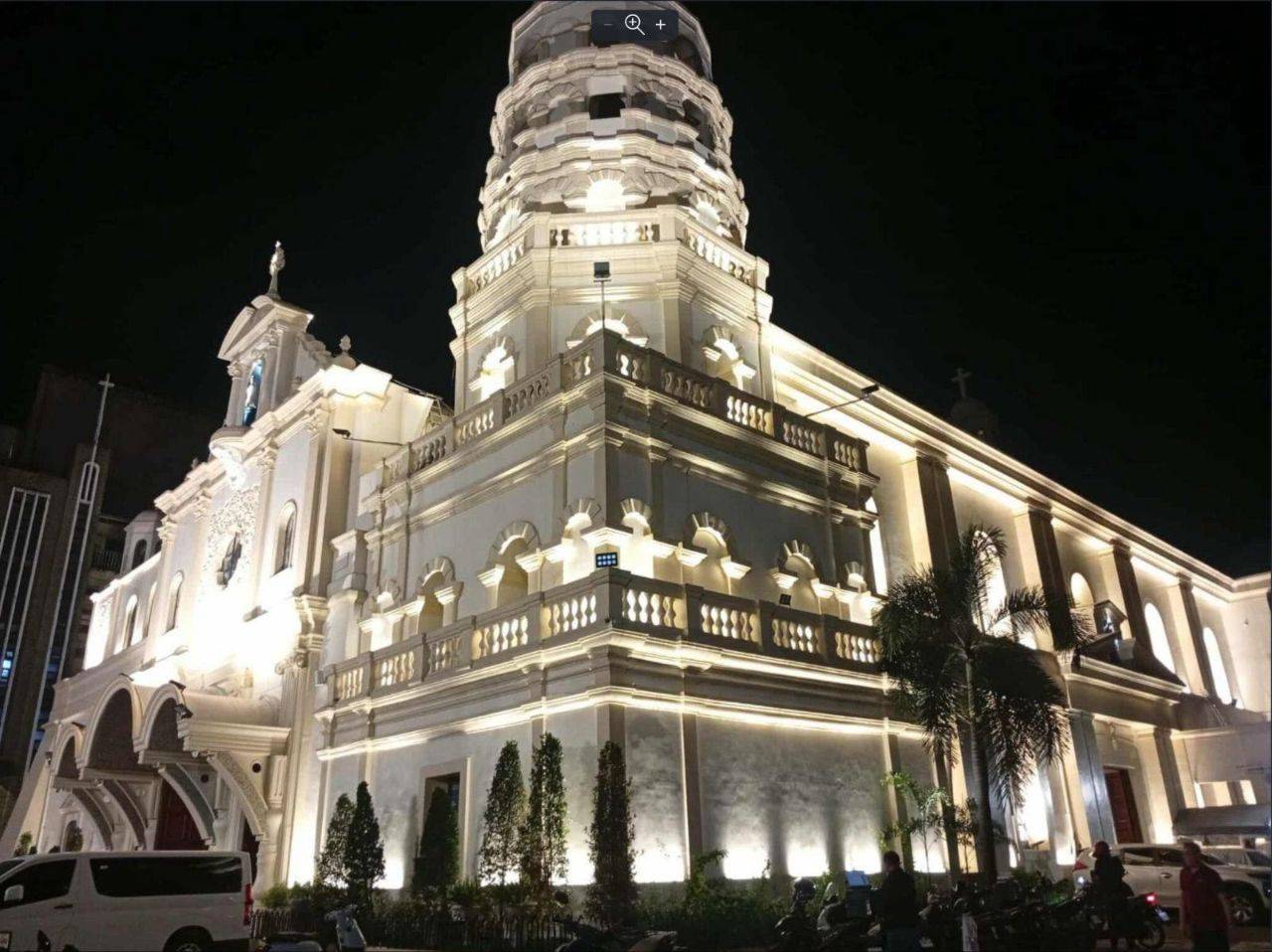
Binondo’s revival also comes at a strategically opportune moment as the Philippines prepares to assume the ASEAN chairmanship in 2026 to host global leaders and seeks to reinvigorate tourism. FFCCCII is also committed to host the 2026 Asean Chinese Business Leaders Summit to promote investments and tourism for the Philippines.

Also, China’s recovering outbound travel market—projected to exceed 155 million tech savvy and increasingly affluent tourists in 2025—has turned Chinatowns from Singapore and Bangkok’s Yaowarat to San Francisco, New York, Vancouver, London, and Melbourne into thriving cultural hubs. Their success highlights Binondo’s immense, long-overdue potential.
Binondo’s past is unparalleled. Katipunan revolutionary founder Andrés Bonifacio married Gregoria de Jesus at Binondo Church. Other residents in this Chinatown included brave anti-colonial revolutionary heroes Roman Ongpin and General José Ignacio Paua (who learned to become a blacksmith in this area). Pioneer banks such as Chinabank, PNB, BPI, and HSBC flourished here since the colonial era.
Heroes such as General Antonio Luna (born in this neighborhood), St. Lorenzo Ruiz, Mother Ignacia del Espíritu Santo Iuco (candidate for sainthood and daughter of a Chinese immigrant), and even Rizal’s mother, Teodora Alonzo, once lived along its historic streets.
The late Philippine Star founder Betty Go-Belmonte’s father, James Go Puan Seng, edited the pre-war Fookien Times here, while the Yuyitung family edited pre-war Chinese Commercial News, both founded by pre-war Lumber King, Philippine Chinese Chamber President and Chinabank founder Dee C. Chuan (whose grand uncle 19th century Philippine lumber industry pioneer and philanthropist Dy Han Kia built up five companies in this area).
Jose Yao Campos (married to FFCCCII Vice President Dee Hong Lue’s daughter Beatrice Dee) co-founded Unilab as a humble drugstore on Santo Cristo Street, Binondo in 1945. Mariano Que began as a sales clerk at Philippine Chinese Chamber co-founder Dr. Jose Teehankee’s pre-war Farmacia Central near Binondo Church, before founding Mercury Drug.
Binondo honors Tomas Pinpin, the first Filipino printer, with a street bearing his name. Lesser-known landmarks include the now-closed Panciteria Macanista de Buen Gusto cited by José Rizal in El Filibusterismo and located near Binondo Church.
These are not mere memories, but epic stories of enterprise, innovation, heroism, and identity.
This Manila Chinatown beautification initiative is not cosmetic. It is a restoration of memory, commerce, and culture—and of Manila’s rightful place in the global heritage economy. It is a bold step toward making Binondo once again a cultural and commercial hub—not only for the Filipino Chinese community, not only for all Filipinos, but for the world.