







A call to watch more world cinema

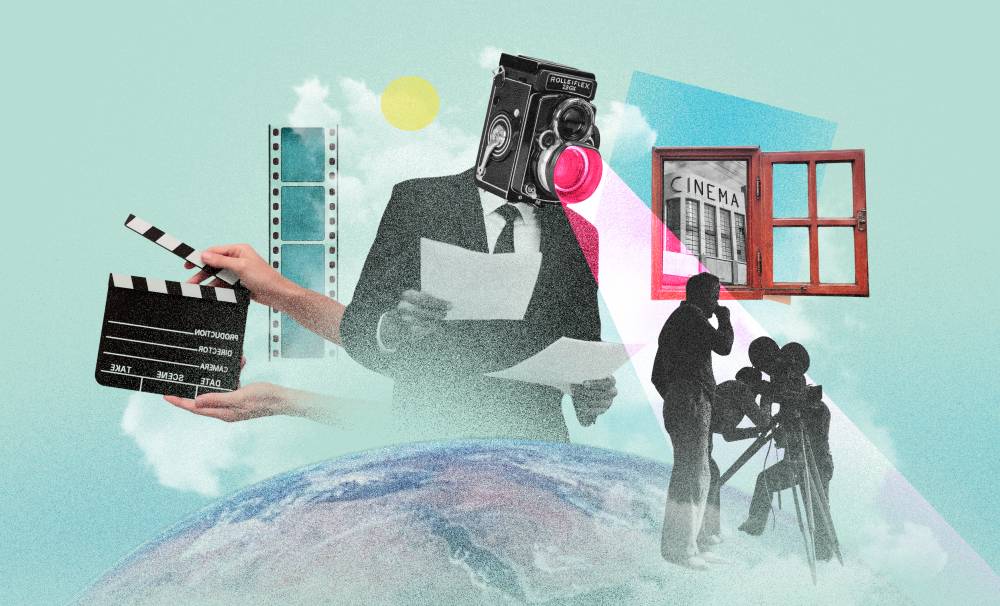
All of last year, the Film Development Council of the Philippines (FDCP) has visited the top film festivals around the world to attend their film markets and promote Filipino films to other countries. They have been to the cinema hubs like Busan, Tokyo, Berlin, Cannes, and Locarno, among others.
In film markets, institutions like the FDCP and independent studios can try to showcase their works with the hopes that film programmers from other countries would acquire these films for local streaming and cable channels. It’s also additional revenue for certain titles and can help our local industry find a bigger audience.
But in the process, the FDCP has also acquired an impressive selection of films that they will be able to bring back and show in the country.
FDCP Presents: A Curation of World Cinema
This year, the FDCP will be presenting “FDCP Presents: A Curation of World Cinema.” Select cinemas will be screening internationally acclaimed films from around the world. From Jan. 28 to Feb. 3, they will be screening “Sentimental Value” (Norway), “It Was Just An Accident” (Iran), “Resurrection” (China), and “Sound of Falling” (Germany).
A second batch of films will be released in March, and while there’s no announcement yet on the selected cinemas, many of these films have been very well-received in international film festivals with “Sentimental Value” winning the Grand Prix at the Cannes Film Festival, earning multiple nominations in the upcoming Golden Globe Awards, and being eyed for several Oscar nominations as well.
On the other hand, “It Was Just An Accident” won Palme d’Or at the recent Cannes Film Festival and is the first Iranian film to be nominated for Best Picture at the upcoming Golden Globes, while also being a frontrunner for several nominations at the Oscars.
Powerful and moving portraits
I’ve seen both films at the tail end of 2025, and they are powerful and moving portraits of other lives from other parts of the world.
“It Was Just An Accident” would be my first Iranian film, and I discovered a whole world that I was ignorant of; my knowledge of Iran was formed completely by Hollywood and American news. Directed by celebrated Iranian filmmaker Jafar Panahi, this dark yet surprisingly funny movie about retribution underscores the horrors of authoritarianism, but is told in a very human way. It straddles between thriller and absurdist comedy with a healthy dose of political commentary that was wholly entertaining while opening my eyes to a country I really knew nothing about.
“Sentimental Value,” on the other hand, is a wonderfully crafted film by Joachim Trier about fathers and daughters, about trauma and reconciliation. With stellar performances by Stellan Skarsgard, Elle Fanning, and Renate Reinsve, who they say is a shoe-in for Best Actress in the upcoming Oscars (and she’s already received a Golden Globe nomination for her role), this powerful film is so exquisitely written, shifting from its myriad characters—all of whom are going through their own issues—and somehow still manages to stay coherent.
I wanted to revel in the emotions evoked but I was beguiled by the skillful writing, jumping from one character to the next yet the film’s core themes resonate throughout the film.
I have not seen, heard, or read anything about “Resurrection” or “Sound of Falling,” and I honestly don’t want to. I want to walk into the cinema completely unaware of the film’s plot, like I did when I saw “It Was Just An Accident” and “Sentimental Value.” I want to be surprised. I want to have no expectations, as it makes the experience so much richer.
The importance of world cinema
Hollywood has dominated the cinematic landscape in such an imperialist way that it has affected the way we look at movies. Even I’m guilty of this, with the way I talk about the abovementioned films’ nominations at the Golden Globes and possible inclusion into the Oscars as if these awards are the epitome of quality and good taste.
Both films I talked about won at the Cannes Film Festival. Shouldn’t that hold equal weight? I had a turning point when “Parasite” won Best Picture at the Academy Awards in 2020, and I read an interview with the director who had called the Oscars “not an international film festival.”
“They’re very local,” he says before his film came home with four trophies. It was then that I began to decolonize the way I watched movies and to stop judging films by Hollywood standards.
This is why I’m so happy that films from Southeast Asia are making it to our movie theaters. I’ve seen a number of Thai and Indonesian horror films go side-by-side with American films, and of course, a healthy number of South Korean films also making it to our cinemas (I’m very happy I got to see “Exhuma” in the cinema back in 2024 and not on a streaming site), and one of these days, I will make it to the Japanese Film Festival that happens yearly.
It’s also why I’m so excited to see all the other films at the “FDCP Presents: A Curation of World Cinema,” and I hope that people take advantage of these screenings so they can also see what the rest of the world looks like and that it is not all just America.

A glimpse of reality
Seeing other films from other parts of the world allows us to see how we are different, but more importantly, how we are all the same. How we are still suffering from the sins of our history and struggling from the weight of unhealed wounds from our authoritarian past, just like the characters in “It Was Just An Accident.”
Filipinos might find “Sentimental Value” jarring, the way the Norwegians handle their family dynamic—very different from our own—but the need to repair and reconcile past grievances with our family members is something we can all connect with, maybe in different ways.
Seeing these films and how a lot of them stray from the Hollywood formula and tackle complexity with different cinematic approaches, I’m hoping it will allow many Filipinos who don’t appreciate our own movies to look at our films through our viewpoints, not Hollywood’s.
Our stories are about us and told in a way that is true to our own experiences. We must not be afraid to see other perspectives and see other ways of dealing with the challenges of life. And we definitely must not be afraid of subtitles. The whole point of movies is to connect with an experience different from our own.
As one writer puts it: “Fiction is a way to practice for experiences we might end up having to face in the future.” Let’s not use movies to confirm what we already know. Let’s watch films to expand our understanding of the world and of each other.
Let that be our New Year’s resolution.