








A different kind of Miró


It’s easy to reduce someone to a legacy from the outside looking in. But destiny alone can’t make you the person you choose to become. For Joan Punyet Miró, all his life he’s sought to forge his own fate through endeavors in painting, sculpture, poetry, music, and an intuitive, creative life he’s chosen as entirely his own.
Like his grandfather and namesake, household name and Catalan artist Joan Miró, the younger Miró similarly delves into the subconscious and unconscious mind, creating with a sense of wonder that feels almost childlike in its simplicity.
Painting across azure waves
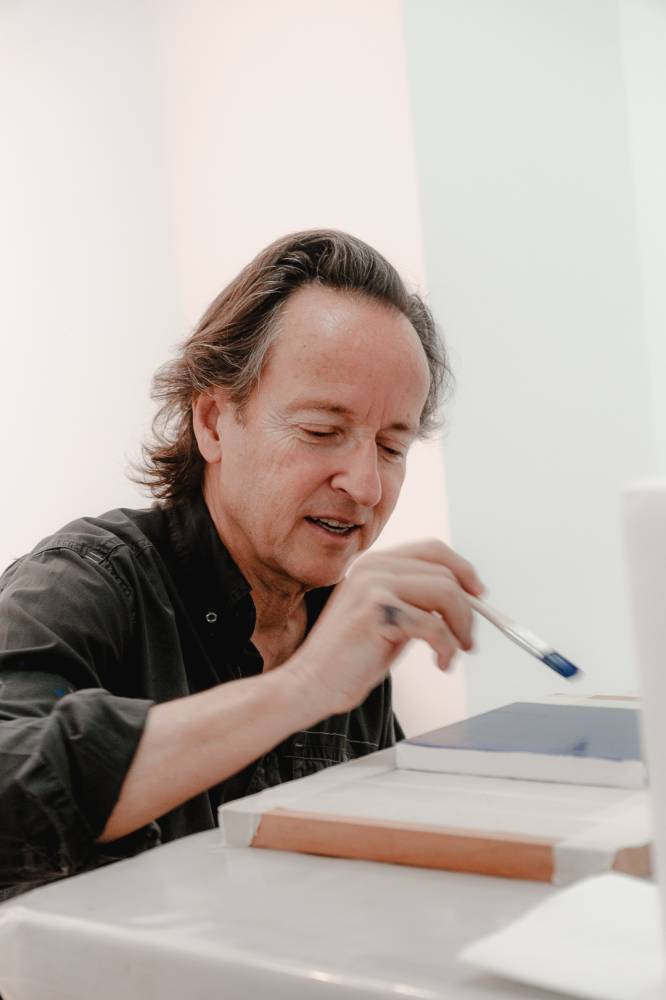
Humble, grounded, and easygoing, he carries himself like a well-dressed gentleman about to saunter in Pitti Uomo. No stranger to the Philippines, Miró mounted a well-attended exhibition by the well-heeled in Manila last year, titled “Punyet: L’Azur—a Homage to Mallarmé.”
Linking the turquoise waters of Mallorca to our own archipelago, he portrayed the Philippines solely through the color blue after working in the studio for 10 days straight, and painting with his bare hands. For it, he referenced French poet and critic Stéphane Mallarmé’s poem “L’Azur.”
“The everlasting azure’s tranquil irony
Depresses, like the flowers indolently fair
The powerless poet who damns his superiority
Across a sterile wilderness of aching despair.”
A man of many hats
The artist has exhibited across the world, too, previously creating collages and assemblages from recycled objects and organic elements gathered on nature walks. Beyond visual art, Miró is also a poet, and while living in Paris in 2000, published “La roue de secours,” meditating on the delicate nature of human language.
And as a novelist, he later released “El susurro de la intuición,” a work also revolving around humanity, but this time centering on love and the soul.
Since graduating from New York University in 1995, he’s curated exhibitions and published several books on his grandfather. To top it all off, he fronts a rock and blues band whose music tackles environmental concerns, from climate change to plastic pollution, writing lyrics in English with full respect for the natural world.

What you see is what you get
Now, he thrills Manila again with a return to León Gallery International, and a new show titled “Oneness (Unidad).” “Oneness is an invitation to pause, feel, and recognize the invisible bond between all living things,” Miró explains.
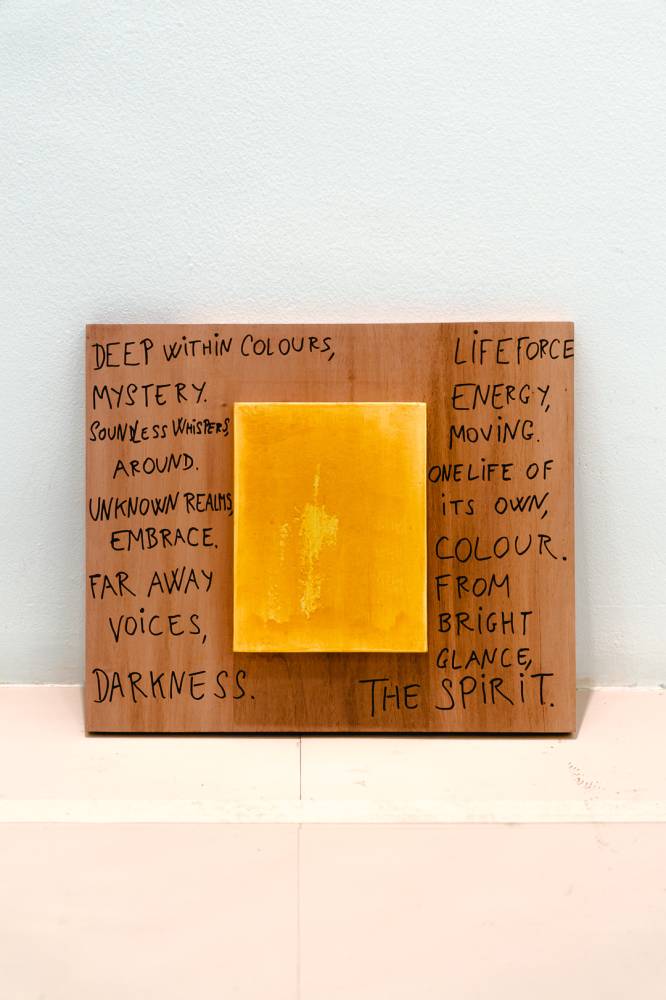
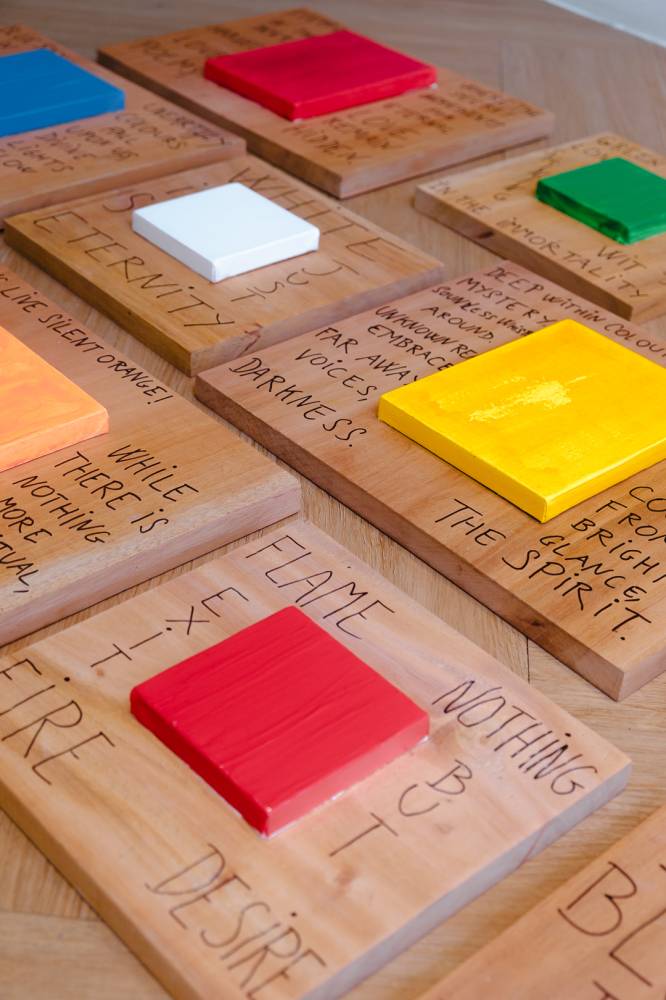
In the works themselves, there’s very little illusion. What you see is what you get, with color blocks on wood, many painted in primary colors. Around a blank space is written, “white is just eternity.” Around a bright red cube is “nothing but desire,” in scraggly text.
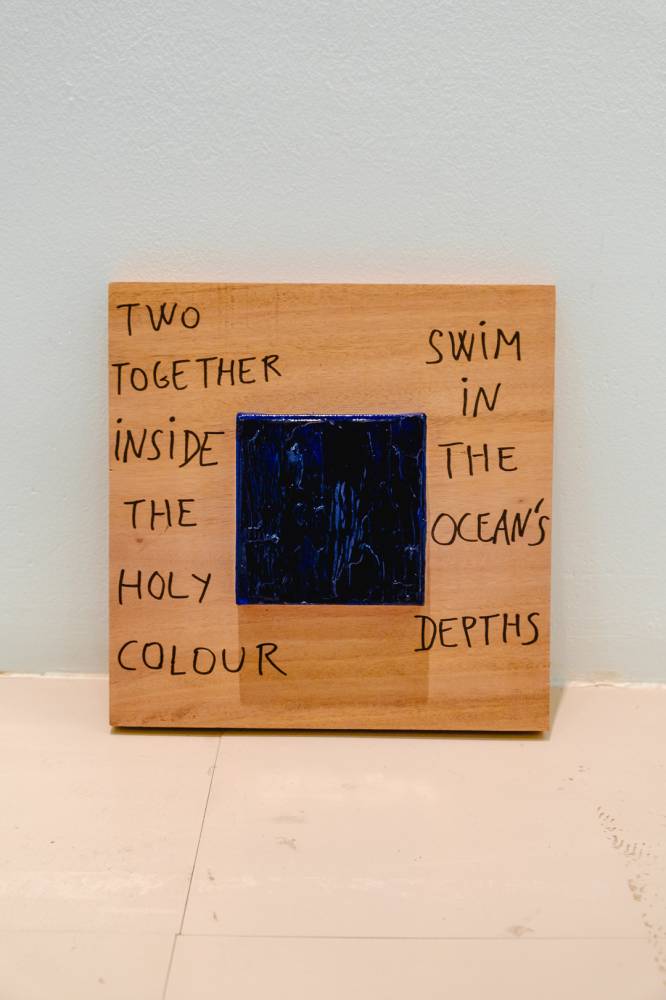
Like the multiple disciplines he dabbles in, Miró’s work resists being confined to one form. Through painting and installation, he meditates on the multifaceted meanings of oneness, seeking to bring together the earthly and intangible.
Destiny rarely repeats, and it can’t be confined to inheriting a name. For this Miró, he’s claimed his backstory of being born into one of art history’s most recognizable legacies. At the same time, he’s shaped a visual language on his own, venturing into a lifelong search for multiple meanings beneath the visible surface.
“Oneness” opens on May 28, 2026, at León Gallery International. This story was originally published in RED 2026 Issue 2