










A Kiwi state of mind in BGC

High ceilings, open windows, concrete floors, and white walls accented with blue and touches of light wood. Quite literally a breath of fresh air amid the bustling streets of Bonifacio Global City, June is staking its claim as a brunch spot by day, cozy bistro hangout by night.
And in the afternoons, a pleasant in-between, where people catch up over slow sips of natural wine or coffee alongside plates of eggs and bread.
With a reputation that preceded it, even during its first few days of opening, June Eatery (June for short) is the newest concept by Justin and Vanessa Apolonio, the husband and wife duo behind Poblacion’s natural wine bar Bibio. Together with chef Kier Ibañez, who had a brief stint as chef-in-residence at the sister brand, June now serves as the playground in which the chef can freely flex his tattooed arms to craft dishes inspired by his time in New Zealand—an “extension of his life there,” if you will.
“The whole concept of June is [built on] who I am, how I grew my palate, and how my taste changed because of living outside the Philippines,” Ibañez says. “It’s an extension of what I cook at home and what I eat outside at home.”
“When I was [at Bibio], it was basically touching on my Filipino heritage—like reimagining Filipino food through my eyes—but with June, it’s more about my experience overseas,” he adds. “That’s because there are two sides of me: I’m proud of being Filipino, but I’m also very proud of becoming a Kiwi.”
A taste of life overseas
Having grown up in Cebu, Ibañez was no stranger to a thriving food scene, but living in Auckland, New Zealand for 12 years has honed his palate even more—exposing him to a wider range of ingredients, cuisines, techniques, and even unconventional flavor pairings. All this is what he sought to bring into the BGC concept, where he can put a taste of his life overseas onto a plate.
“Auckland is a multi-diverse city,” Ibañez explains. “A good weekend for me is going up to this favorite cafe called Williams Eatery, and I say it’s my favorite because the food is very unpretentious. You could just eat a good bread, eggs, and sausage there. It’s very life-changing—that simple food can just be very good.”
Distinctly different from the “silog” breakfasts of garlic rice, egg, and meat that Filipinos are known for, June leans toward Western nuances, with dishes influenced by continental techniques and European flavors. But even with a multi-cultural country like New Zealand as his touchstone, Ibañez doesn’t claim to serve authentic Kiwi fare—not that there are any dishes distinctly New Zealand in origin to begin with; only dishes influenced by British cuisine, Maori ingredients, Pacific flavors, and even Asian techniques.

Straightforward and spice-forward
Why June? Ibañez admits that initially, there wasn’t any deep meaning behind it (though there was in the daffodil motif, as it is the chef’s favorite flower). He and the partners were just looking for a one-liner—something easy to remember. “When we listed down names, June was part of it. But the whole reason why we called it June is because June represents, like Juno, like spring—like a new start, a new beginning, and that reflects in my food as well,” the chef explains.
“If you see my food, it’s very light, it’s very green, it’s very fresh,” he adds. “That’s how we came up with the name, and it’s always in reference to the menu that we created for June.”
According to Ibañez, creating the menu for June was not a challenge per se—though occasional concerns about supply chain and suppliers did come up, given that June sources ingredients both locally and internationally. But it did require some introspection. “It’s more like, how do I portray myself? What’s the creative part there [in this menu]?”
“But the good thing about living overseas is that you immerse yourself in the culture,” the chef adds. “You know how to cook their food, and you know what they want. Like, for example, you know how people nowadays travel so much, and when they come back, they want to experience what they did outside the country? When we created June, that’s how I see it—a place for them to try the food that they experience overseas.”
While defining a singular cuisine for a melting pot like New Zealand is next to impossible, June’s signature can be pinpointed to a spice-forward thrust. “If you know me, I love working with spices,” Ibañez says. “So when you think of June, people would say it’s like a grown-up flavor because we love using spices. We love using cardamom. We love using cinnamon.”
Echoing his time in Bibio, where he made a dark chocolate tart with rosemary, the chef still uses spices in his desserts. “I love mixing savory and sweet. One of our desserts is a bread and butter pudding. It’s very English, very Irish… that type of food. But how do I make it distinctly June? In our anglaise, I added bayleaf.”
“It’s not just one note. There are many layers to our food,” he points out.
Brunch by day, bistro by night
With doors open daily from as early as 9 a.m. to as late as 11 p.m., June caters to a variety of tastes, moods, and moments. But even so, the cafe-bistro keeps the menu lean—with breakfast to brunch offerings the most diverse and an additional three dishes (two pastas and a chicken burger) to anchor the lunch menu.
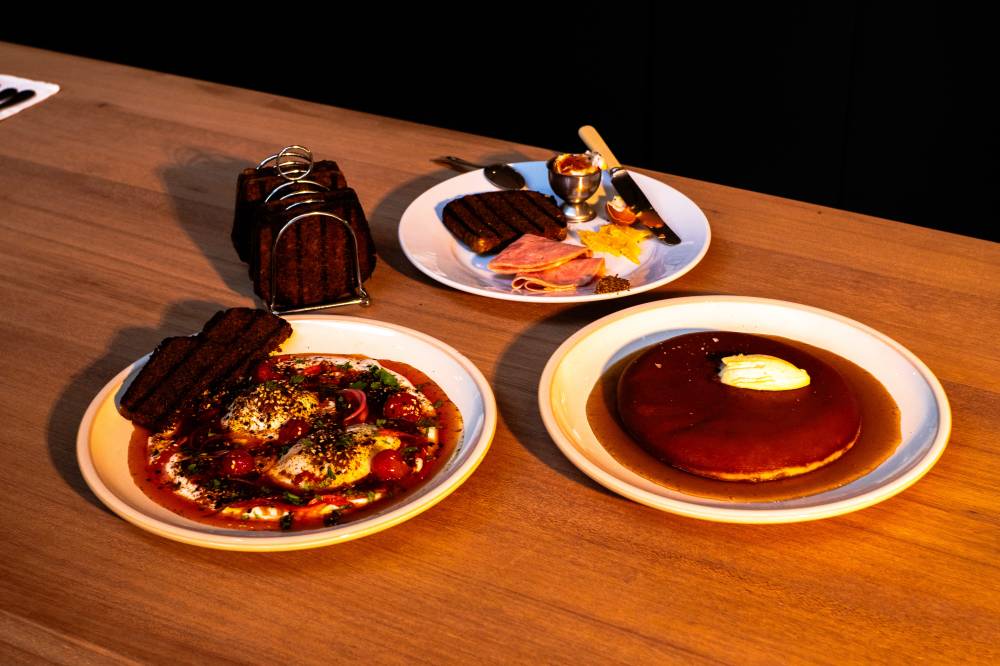
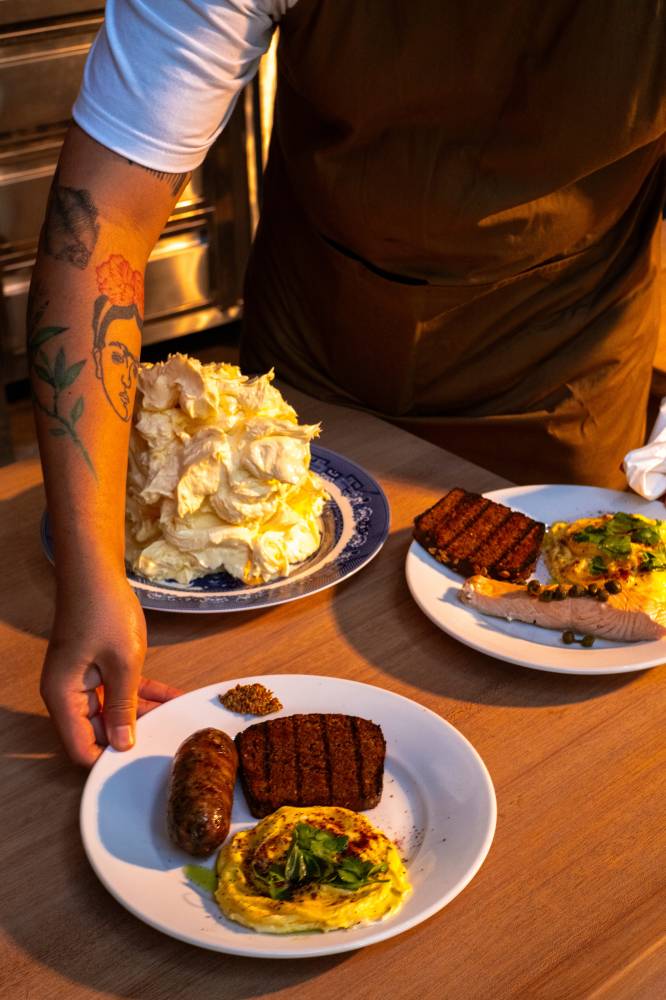
June’s morning offerings hinge on a foundation of creamy, lightly seasoned scrambled eggs and toast (not just any bread—we’re talking crunchy, toasted, rye-dotted brown bread) for those looking to indulge in savory fare, with choices of poached salmon with capers or a pork and fennel sausage. On the flip side, a massive pancake—the kind that’s more on the cakey side, but crunchy on the outside and soft inside—sitting in a pool of spiced maple syrup (cinnamon with bright notes of orange zest) with a scoop of butter is for those who believe that breakfast should border on indulgence.

Not one to be missed is Ibañez’s take on shakshuka that uses nduja, a spiced sausage—and the quintessential elements of runny egg, yogurt, cherry tomatoes, and a spice blend of za’atar. It’s the kind that invites mopping up with brown bread in messy, good fun.

Coffee is just as much a focus here in June, with Justin and Vanessa explaining that their beans carry a fruity note—“not for everyone, but we’re trying to change that.” And while mainstays like latte and espresso remain on the menu, it’s the signatures that demand attention. The Mont Blanc (not to be confused with the hazelnut, mountain-shaped dessert) brings together black coffee with a cloud of foamy cream, dusted with orange zest and nutmeg for a full-bodied, milky blend with distinct notes of citrus.
On the other hand, the Chai Einspanner is on brand with June’s spice-forward thrust—think housemade spiced chai with a cloud of cream, dusted with cinnamon.
Skating on flavors
If breakfast at June gives diners a taste of life in New Zealand, the bistro offerings are a whole new animal, ushering in a refined and more robust lineup.
The steak features a thick slab of beef, cooked medium rare and sliced into neat stripes that invite sharing. It sits in a bed of French bordelaise sauce, and if that isn’t enough, a creamy herb-based bernaise sauce is poured on top. And while the dish briefly veers away from June’s straightforward approach of letting the ingredients speak for themselves, it caters to a sauce-loving audience—of excess and indulgence working in tandem.
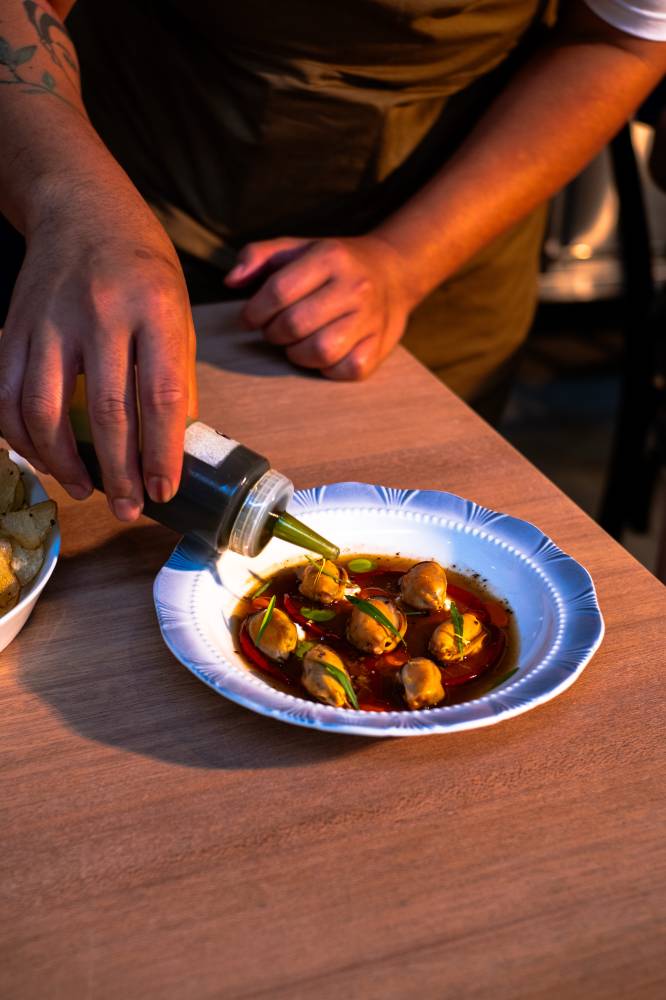
But the menu doesn’t stop at steak. There are many other dishes that showcase Ibañez’s daring side. For him, June’s signature dish is hard to pinpoint, given its round-the-clock service, but he settles on one: “I would say the skate wing is my answer to that one. It’s very unusual—like, where can you find a place in Manila that serves skate wing?”
While skate wing and sting ray are more or less the same, skate wing is “smaller… the meat is very meaty, and then, even the bones, the cartilage… You can eat it as well.” But the downside? Supply chain concerns (since the chef sources it from France) make for a finicky and, at times, inconsistent quality. This means some off days and varying market prices, so it can be unpredictable in both availability and taste.
The June experience
Upscale but casual. Approachable but sophisticated. In June, dining is anything but the typical tita’s hangout—but it does echo the good times spent with friends and family.
Mirroring the New Zealand and Australian dining scene, where wine is flowing just as smoothly as conversations, Ibañez aims to bring that effortless, seamless experience to the Philippines. “Our dining experience here is very casual, but not the usual casual—like, you have a little bit of an upscale part.”
At its core, June caters to “basically the people who live overseas and experience many things” and want to relive their time overseas. “We also cater to the people who want to travel, but cannot just yet,” Ibañez ends. “June is here for them to experience it as well—what it feels like to live overseas, or just to experience the food that they can have.”