








Afternoon tea with chef Jessie


Afternoon tea is not just a meal. It is a mood. Perhaps it is the soft clinking of porcelain cups, the sight of delicate pastries arranged on a tiered stand, or the way time itself seems to slow down between three and five in the afternoon. In a world that often moves too quickly, afternoon tea reminds us that elegance is not extravagance but intention. And that great service and a beautiful, relaxing experience are essential to its charm.
At chef Jessie Sincioco’s restaurant at the Rockwell Club in Makati City, guests may enjoy an unhurried afternoon tea in the main dining room, surrounded by a timeless tropical-colonial elegance. Here, afternoon tea is experienced in two ways: The English Way and The Filipino Way. Both cultures are represented beautifully, each carrying its own distinct character—one refined and ceremonial, the other warm, generous, and deeply hospitable.
Of get-togethers and social gatherings
Afternoon tea traces its roots to 19th-century England and is often credited to Anna, the Duchess of Bedford, who would grow hungry between lunch and the late evening dinner. She then began requesting tea, bread, and small cakes in the afternoon, eventually inviting friends to join her.
And so, what started as a private ritual evolved into a fashionable social occasion among British society.
Contrary to popular belief, afternoon tea is not the same as high tea. Afternoon tea was traditionally served between 3 and 5 p.m. and was meant for socializing among the upper and middle classes. It was elegant, leisurely, and often served in drawing rooms on low tables.
High tea, on the other hand, was the evening meal of the working class, typically served between 5 and 7 p.m. after work. It was eaten on higher dining tables, hence the term “high tea,” and included more substantial dishes such as meats, eggs, and hearty pies.
Setting the scene
The beauty of afternoon tea lies not only in the food but also in the etiquette that surrounds it. There is grace in knowing how to host and how to be a considerate guest.
One waits for the host to invite guests to sit down before taking a seat. The napkin is placed neatly on the lap, folded in half with the open fold facing the body. Water and beverages are always placed on the right side of the setting. If champagne or sparkling wine is served, one holds the glass by the stem. And contrary to popular myth, there is no need to raise one’s pinky finger while drinking tea.
A proper afternoon tea setting may use fine bone china or porcelain, along with luncheon forks and knives, which are slightly smaller than dinner cutlery. The fork is placed on the left and the knife on the right. Low floral arrangements soften the table and encourage conversation across it.
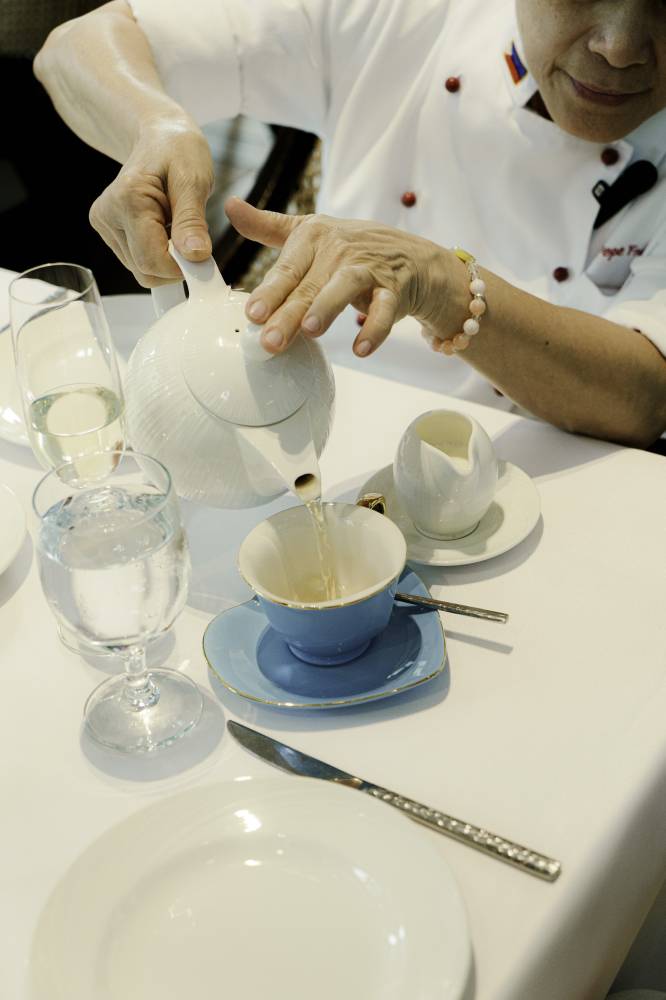
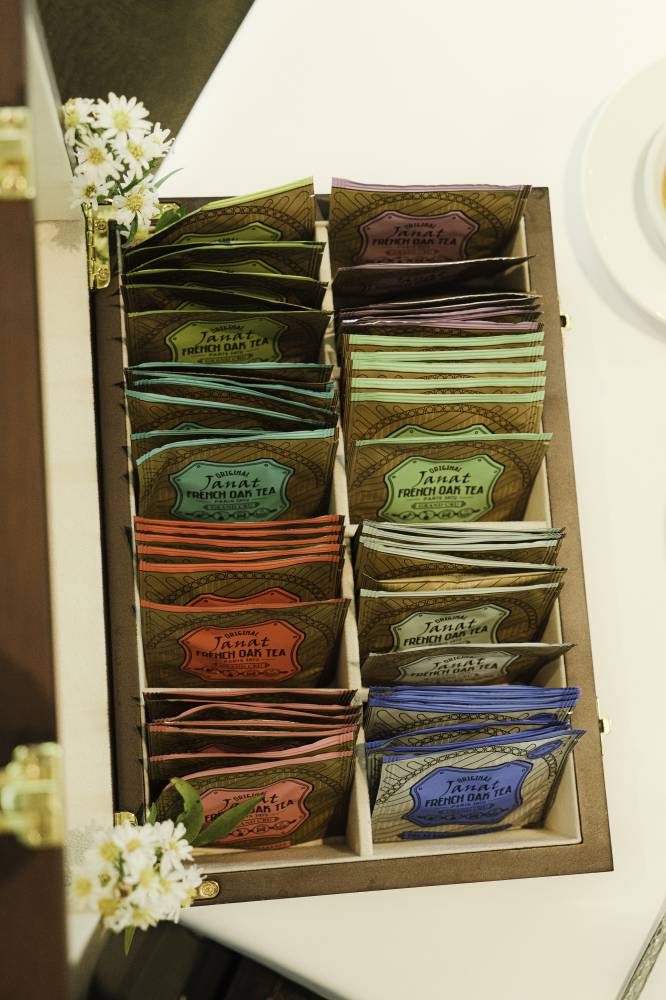
Tea is poured first before food is served. Black tea remains the classic and most traditional choice for afternoon tea. Once the tea is poured, cold milk may be added according to preference. For those who prefer sugar, etiquette traditionally suggests placing the sugar cubes into the cup first, followed by the tea, and then the milk.
Even stirring tea has its own quiet discipline. Instead of circling the spoon around the cup, gently stir back and forth from six o’clock to 12 o’clock to avoid clinking the porcelain or spilling the tea.
A progression of courses
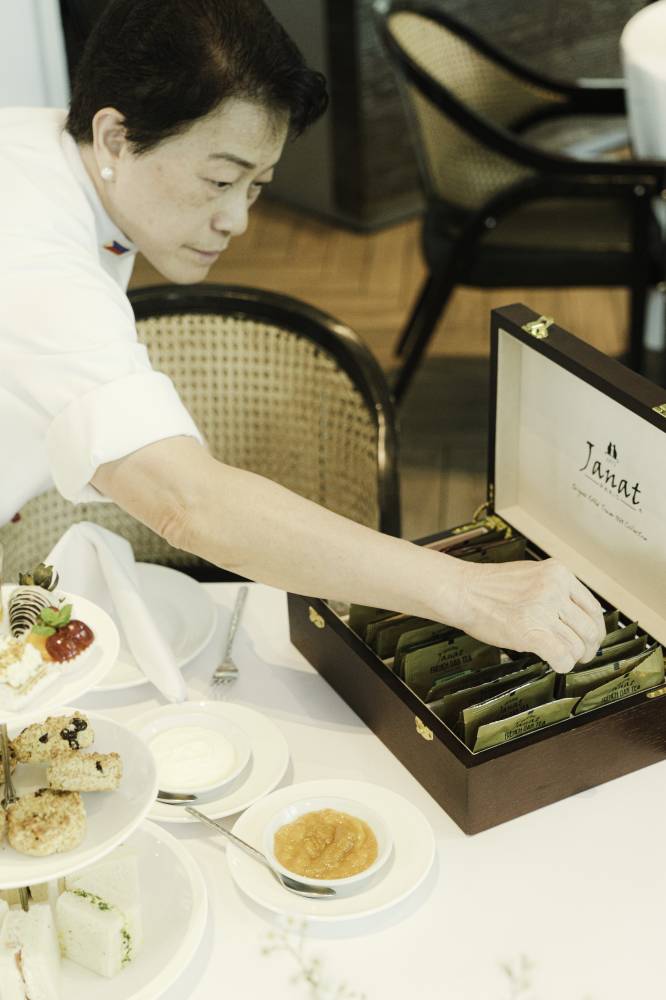
The tiered stand, also called an étagère or tiffin, follows a thoughtful progression of courses. The bottom tier begins with savory tea sandwiches, often referred to as finger sandwiches. These may be eaten with the fingers. The middle tier contains scones, while the top tier is reserved for sweets and pastries.
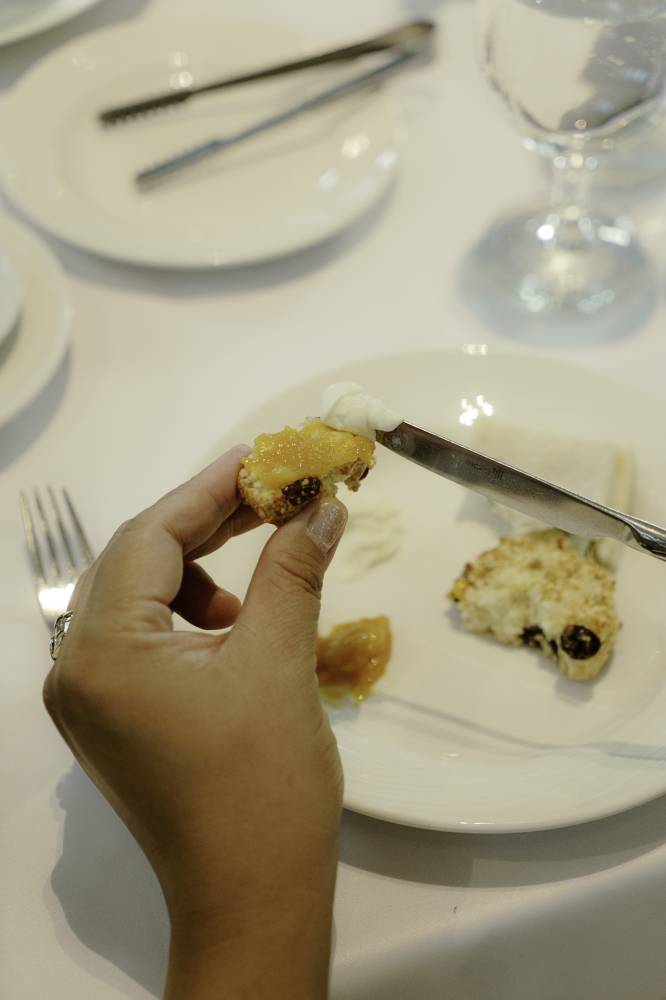
When eating scones—pronounced “skons”—take one and place it onto the plate. Transfer the clotted cream, jam, or lemon curd onto the plate using the serving spoon. The proper way to eat a scone is to break off a small piece at a time instead of slicing it entirely with a knife.
Traditionally, there are two ways to dress a scone. The Cornish method spreads clotted cream first before adding the jam. The Devon method does the reverse, beginning with the jam first, then the clotted cream. Cakes and pastries are best eaten using a dessert fork since soft pastries can become messy when handled with the fingers.
A Filipino interpretation of afternoon tea
Yet beyond etiquette and table settings, afternoon tea was always meant for companionship. This idea perhaps resonates naturally with Filipinos because we already have our own version of afternoon tea: merienda.
While English afternoon tea leans toward refinement and ceremony, Filipino merienda reflects generosity, comfort, and hospitality. It is less formal yet equally meaningful.
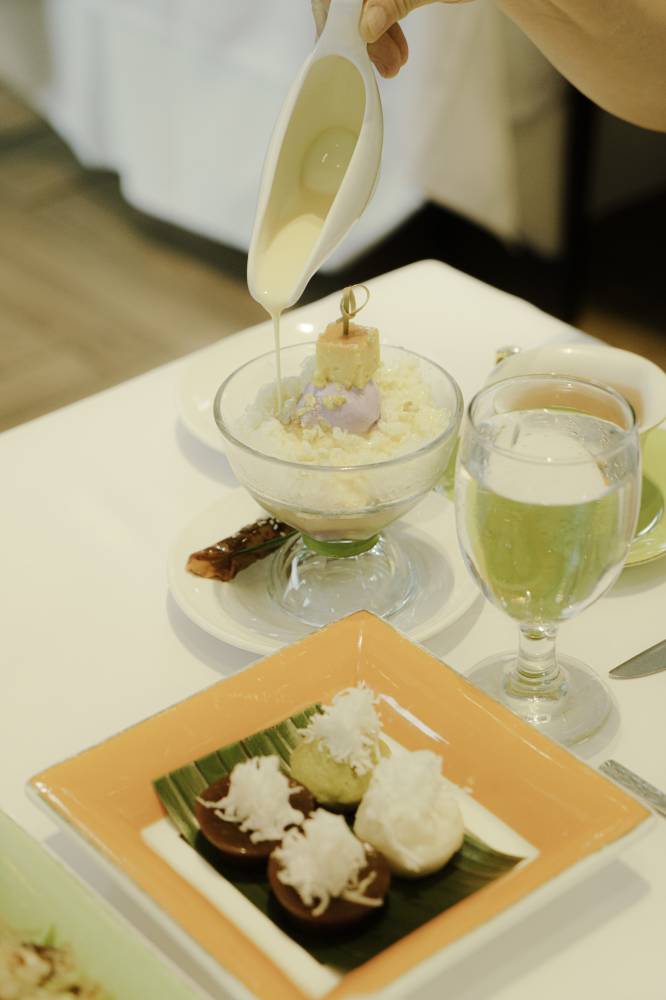
At Sincioco’s table, the Filipino interpretation featured beloved local delicacies such as lumpiang ubod, kutsinta, puto, turon, pancit, halo-halo, and salabat.
Yet what made the experience memorable was not merely the food, but the warmth of the welcome and the gracious attentiveness that accompanied it. A particularly charming touch was Sincioco bringing out her personal tea set—making the gathering feel less like a restaurant service and more like an invitation into her home.

The hostess with the mostess
When asked about one etiquette rule she strongly believes in, Sincioco says, “Know your place to avoid embarrassing yourself.”
At first, it sounded like practical advice about seating arrangements and place cards, which indeed play an important role in formal dining. But the meaning felt deeper than simply knowing where to sit at the table. It spoke about humility, self-awareness, and understanding how to move gracefully in different social settings.
Sincioco remains one of the country’s most respected chefs, known not only for her culinary excellence but also for her understanding of hospitality as an experience. By trade, she began as a pastry chef, making afternoon tea feel especially natural within her world of elegant entertaining.
For her, one of the most memorable places to enjoy afternoon tea remains the legendary Raffles Hotel in Singapore—long associated with timeless service and colonial charm.
Whether enjoyed the English way or the Filipino way, afternoon tea ultimately reminds us of something deeply human: the pleasure of slowing down and sharing merienda with another person. In many ways, Filipinos have always understood this instinctively. We may not always call it afternoon tea, but we have long known the joy of gathering around a table in the middle of the day, sharing stories over something warm, sweet, and lovingly served.
Afternoon tea is available at Chef Jessie Restaurant, Rockwell Club, Makati, daily from 3 to 5 p.m. for P995++ per set, good for 1 or 2 guests. For reservations, please contact +63 917 858 5466. Follow @chefjessierestaurants on Instagram for updates
Anatomy of a tiered stand
Top – Sweets and pastries
Middle – Scones
Bottom – Savory tea sandwiches