









Angeline Quinto’s enduring devotion


Angeline Quinto’s earliest memory of the Black Nazarene was joining the Traslación and walking barefoot with neighbors in Sampaloc toward Quiapo Church. She was only around seven or eight back then and far too young to understand the ritual. All she knew—and needed—was that her late adoptive mother, whom she lovingly called Mama Bob, was with her, together with her childhood friends. “I just went with them,” she says.
But as she grew older, Quinto began to understand the ritual’s significance and the devotion it required. And so even after Mama Bob grew frail and could no longer join the procession, Quinto continued her panata to honor the tradition passed to her.
After attending mass at Quiapo Church, the singer would usually join the crowd near Quinta Market in the early hours of Jan. 9. She would hang out with her friends, eating street food while waiting for the Black Nazarene’s carriage to complete its journey back to the church. Hearing the devotees chant “Viva Señor!” and wave their white towels never fails to give her goosebumps.
First brush with mortality
In her early years of devotion, Quinto—who at one point had to give up singing due to school and personal challenges—always prayed for a steady job, even if it had nothing to do with singing. Before long, her prayers to the Black Nazarene were answered. After years of trying her luck in singing contests, she finally earned a breakthrough—one that would unwittingly grant her mother a second lease on life.
Quinto’s first real brush with mortality came in November 2010, when her adoptive mother, Mama Bob, nearly lost her life to heart disease. After her mother flatlined and was admitted to the intensive care unit, doctors said she needed a pacemaker. Desperate, Quinto was forced to mortgage their Sampaloc home to pay for the procedure.
Back then, Quinto was competing in the singing tilt “Star Power.” But despite her strong showing, she still considered withdrawing—shuttling between ABS-CBN for her performances and the Philippine Heart Center to care for her mother proved to be too exhausting. “I felt so alone,” she recalls.
With no one else to lean on, she held fast to her faith in the Black Nazarene, praying not just for her mother’s recovery but for a way to provide for her family. It didn’t have to be her dream job; she just needed to earn enough to make ends meet.
A miracle
Two months later—in what she believes was a miracle—Quinto won “Star Power,” allowing her to cover the medical expenses and eventually reclaim their house. Since then, Quinto has built a successful singing career. Her Mama Bob, meanwhile, enjoyed 10 more years of comfort before she passed away in 2020.
“I was given the opportunity to do what I love in different places while helping my family,” Quinto says.
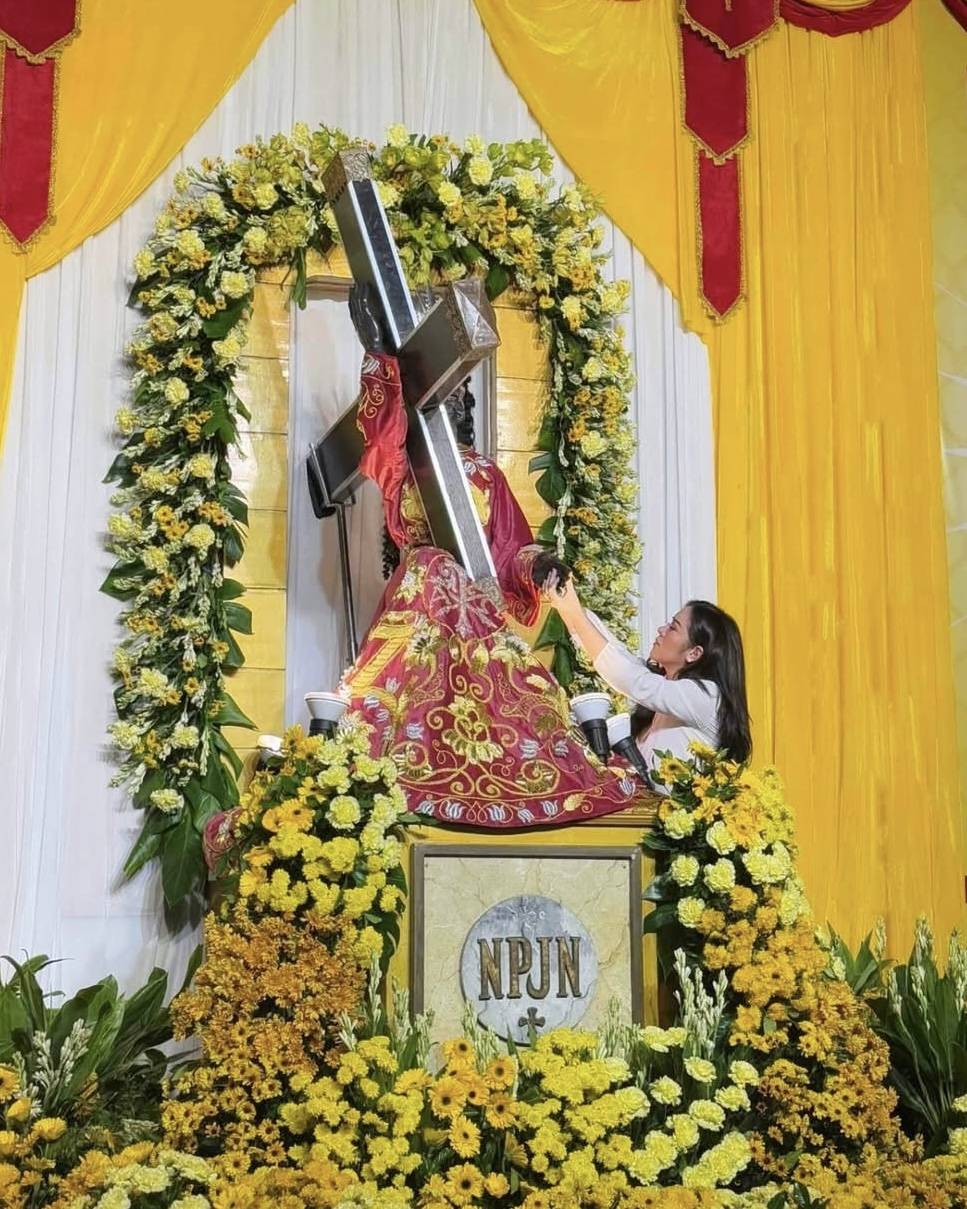
It was that great blessing that compelled the singer to finally scale the Black Nazarene’s carriage to fortify her expression of gratitude. “I used to be scared, but I realized it was my only way to thank Him for all the blessings He willingly gave me,” she says.
And with the help of trusted fellow devotees from a Makati-based group, she has performed the act of faith—the sampa, as it’s called—several times, pausing only during the pandemic years due to restrictions.

“It feels heartening once you come down and see people clapping, because you have made it safely,” she says, adding that joining the celebration is also a way to reconnect with her old friends and feel grounded in a place where one’s status in life doesn’t matter.
A full-circle moment
Today, Quinto stays true to her panata. If she can’t join the procession, she makes it a point to at least attend mass. Every so often, she gets invited to perform at gatherings at Quirino Grandstand, where she’s often asked to sing “May Bukas Pa,” which is, coincidentally, one of the contest pieces she sang on “Star Power.”
It’s a full-circle moment of sorts: Before her breakthrough, she stayed among the crowd; now she takes the stage to perform for her fellow devotees.
Quinto no longer asks for favors, but instead gives thanks for the comfortable life, enduring career, and loving family she once only prayed for. Last year, she brought her three-year-old son Sylvio to Quiapo for the first time. At home, they keep a small figure of the Black Nazarene, which is why her son already recognizes Him.
Surely, her Mama Bob would have been happy to see the devotion she instilled in Quinto being passed on to her son. “Whatever I have now is because of Him. My heart is just filled with gratitude,” she says.