









Bacolod, best in slow

If there’s one word to describe Don Baldosano, it’s cerebral. The chef behind Michelin-star restaurant Linamnam and the recipient of the Michelin Guide Young Chef Award is always thinking. And he exhibited this even more at his Terra Madre Asia & Pacific 2025 taste workshop event in Bacolod.
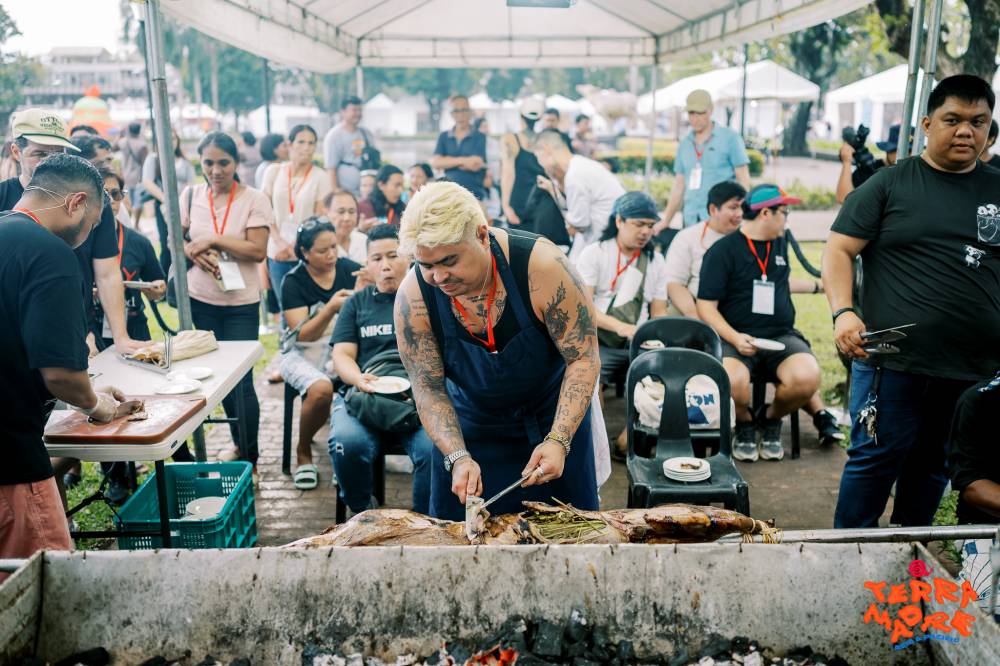
Not only did his food do the talking—a Filipino “bread and butter,” a glittering exhibit of sutukil techniques through a grilled dorado seasoned with latik, and a steamed pork lechon with millet—but so did Baldosano, who, after the talk outside the tent, admitted he wasn’t even sure what came out of his mouth and was more concerned about the number of F-bombs he dropped (“Four,” said an industry colleague).
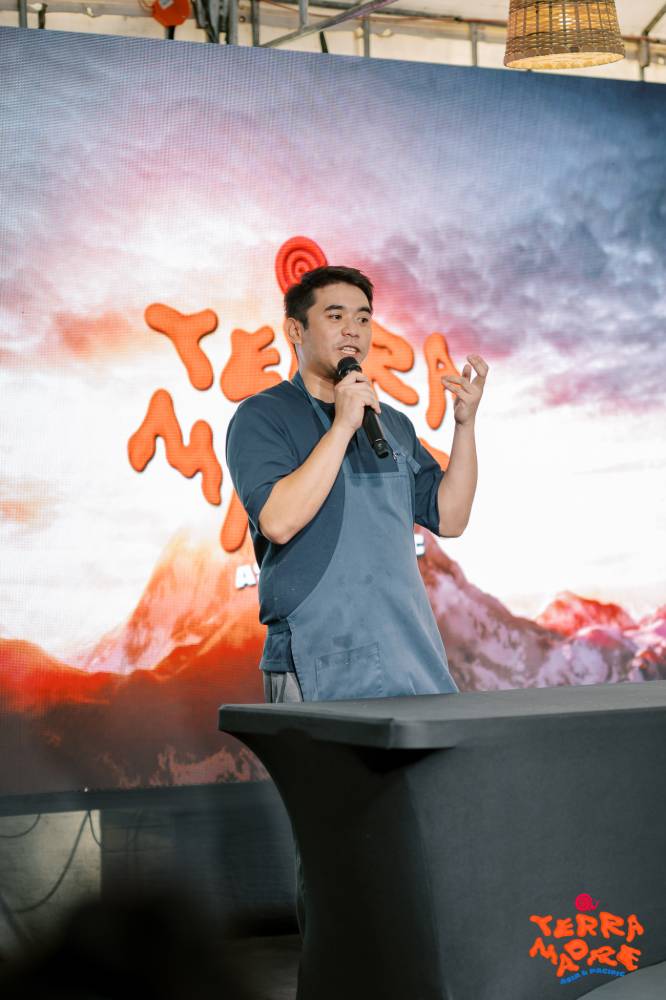
He could have dropped more, and it wouldn’t even matter. Not because he does it for clout, but more for the gravity of his words that seem to echo the weight of importance that Terra Madre Asia & Pacific reinforces.
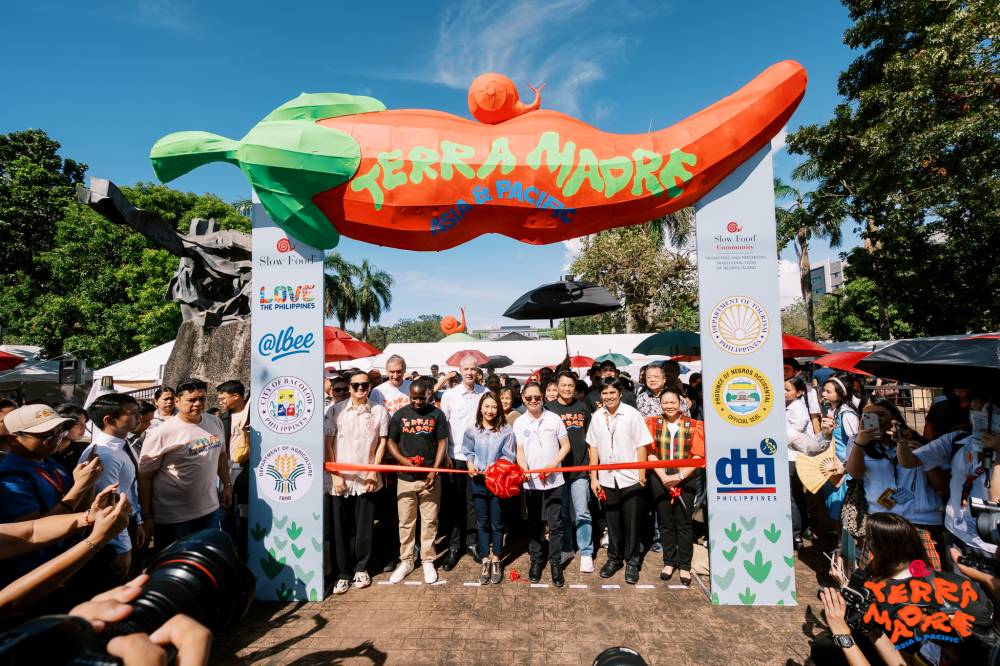
Punctuating the biggest Slow Food event in Asia-Pacific, Baldosano’s session being held last in the five-day celebration in Bacolod—now the first international Slow Food hub in the region—was a fitting end to the start of the movement’s long-term presence in the city.
That he distilled the country’s pre-colonial history through Antonio Pigafetta’s chronicles in a tasting menu as a means to push Philippine F&B’s narrative into the future is a manifesto that both Baldosano and Terra Madre share—one that promotes, protects, and preserves biodiversity and sustainability for generations to come.
“Terra Madre Asia & Pacific has given us a voice to promote our food biodiversity and culinary heritage, and it has inspired the entire Slow Food network to drive change toward the next edition,” says Reena Gamboa, executive director of Terra Madre Asia & Pacific.
“With Terra Madre, we have put Bacolod City, Negros Occidental, and the Philippines on the global gastronomy map,” adds Ramon “ChinChin” Uy, Jr., co-chair and Slow Food international councilor for Southeast Asia.
Taking it slow sheds light on what matters
Terra Madre’s first Asia-Pacific edition in Bacolod’s Capitol Park and Lagoon is hemmed in on all sides, yet there is a sense of liberation wafting in the air. Across the grounds surrounding the lagoon is a network of events unfolding simultaneously that drive home points badly needed today: celebrate, promote, and preserve biodiversity.
Each activity, each talk, each stall from a slow food community in Capiz or Indonesia, a Michelin star restaurant in Manila, or a roastery from Negros, each diwal from Iloilo, or vunung from Batanes felt like a sincere offering of commitment that spoke directly to the public in hopes of furthering the Slow Food advocacy.
“The solutions we need already exist within our communities and within Slow Food farms. The final commitment of Terra Madre is therefore to amplify agroecological practices, defend biodiversity, and reject industrial, unsustainable models of agriculture,” says Slow Food president Edward Mukiibi.
Indeed, the solutions we need already exist. Or have existed as Baldosano explained in his talk: “Maybe all those foods and techniques we’re aiming for now are actually something we’ve done before already, and we kind of forgot.”
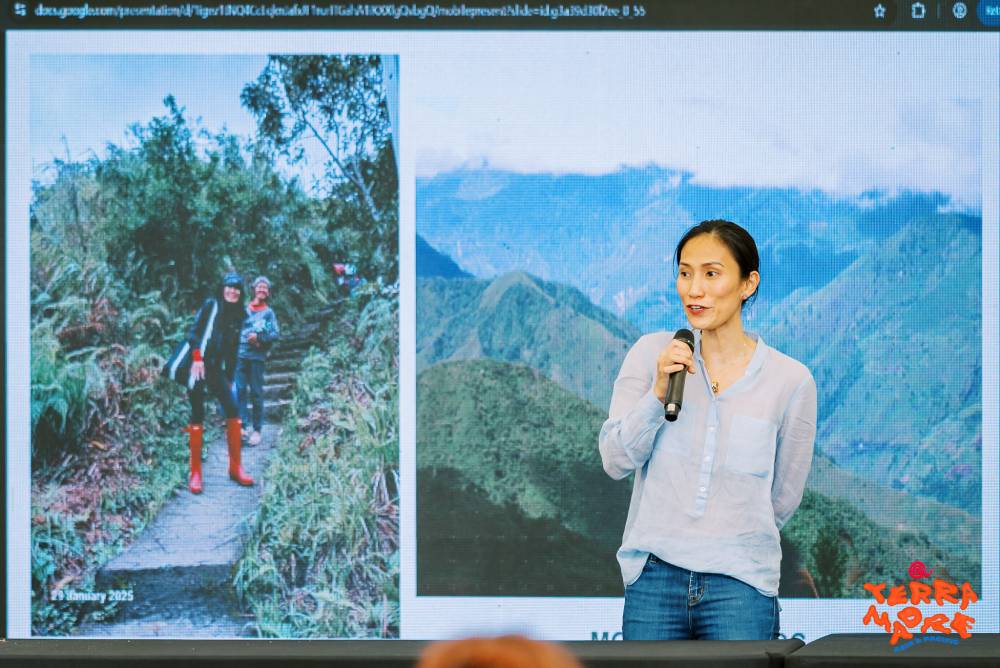
Just that we only need to rediscover them. Akin to how Mrs. Saldo’s chef Rhea Rizzo, gardening boots in tow, reconnected with her roots and found her heart again in the Cordilleras. She looked to her grandmother’s past and the devout women she met in Pasil, Kalinga, including Slow Food Pasil co-founder Rowena Gonnay, and made sense of life through unoy rice—cultured into amazake and shio koji, transformed into sourdough and buro, and served in different, sweet textures.
“To bridge the gap between the modern and the traditional lies also in personal discovery or rediscovery,” Rizzo ponders. “It’s in recognizing that an ingredient as old as unoy can help us navigate modern challenges by simply teaching us to slow down and take note that the answer we’ve been looking for has always been there right before us.”
For all the opportunities for discoveries, this academic aspect remained one of the most important at Terra Madre.
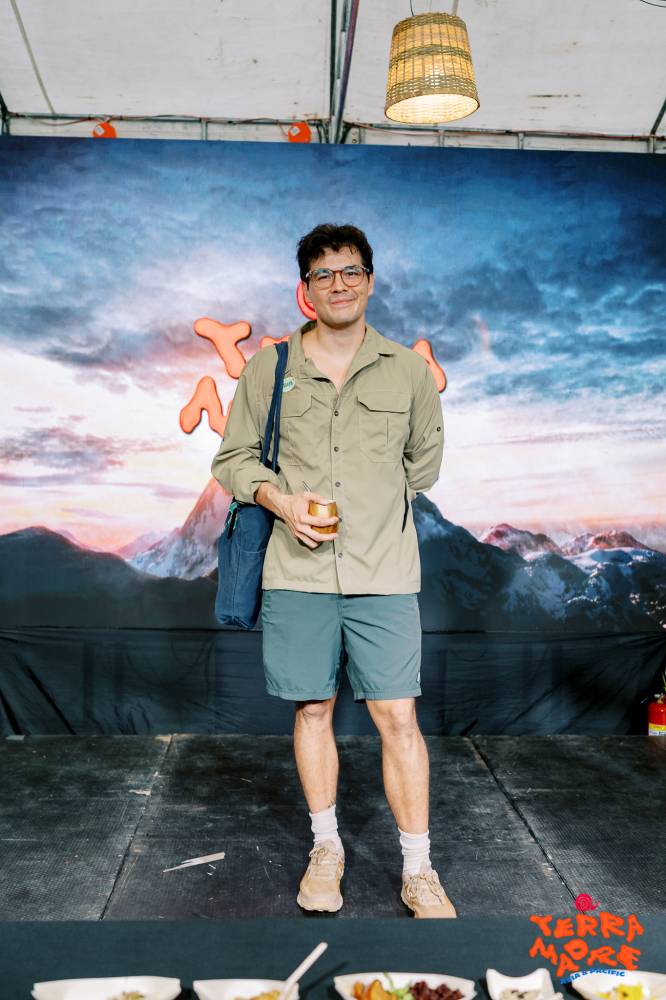
As we come under pressure from the “urgent need for sustainable, regenerative, and culturally rooted food systems,” perhaps the handful of chefs and advocates like Baldosano and Rizzo, together with Josh Boutwood, Chele Gonzalez, Jordy Navarra, Aaron Isip, JP Cruz, and Erwan Heussaff, among many others, who offered insights into their own experiences may as well mold the strategies necessary to choose food that respects the soil, the sea, and communities that produce it… for a better future for all,” according to Congressman Javi Benitez in his opening statement.
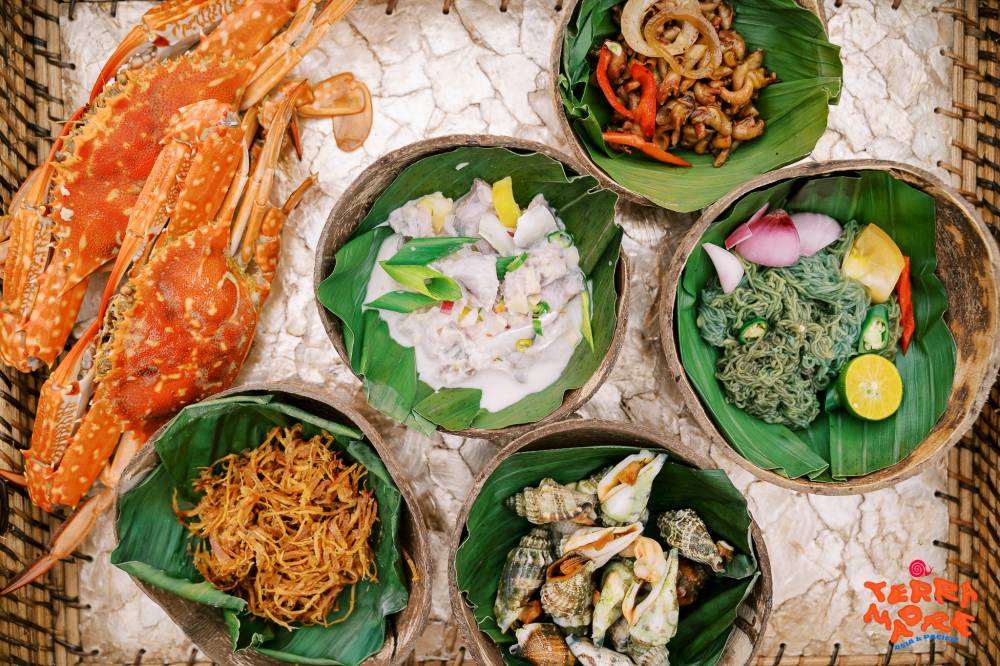
Slow (and steady) food
Rather than simply extolling the virtues and pleasures of the Slow Food movement, the harsh realities equally beat down on us as hard as the scorching Bacolod sun.
In the street food market lining one side of the Capitol Lagoon, farmers and coalitions turned up to vehemently oppose the potential reintroduction of genetically modified organisms (GMOs) in Negros Occidental. On another part of the market, Nowie and Odette Potenciano of The Sunny Side Cafe Group—whose Sagada mushroom pasta and trippy bowls of Mango Mama were standout hits in the heat—mused on the immediate need for restaurateurs to do more in supporting local farmers and fisherfolk.
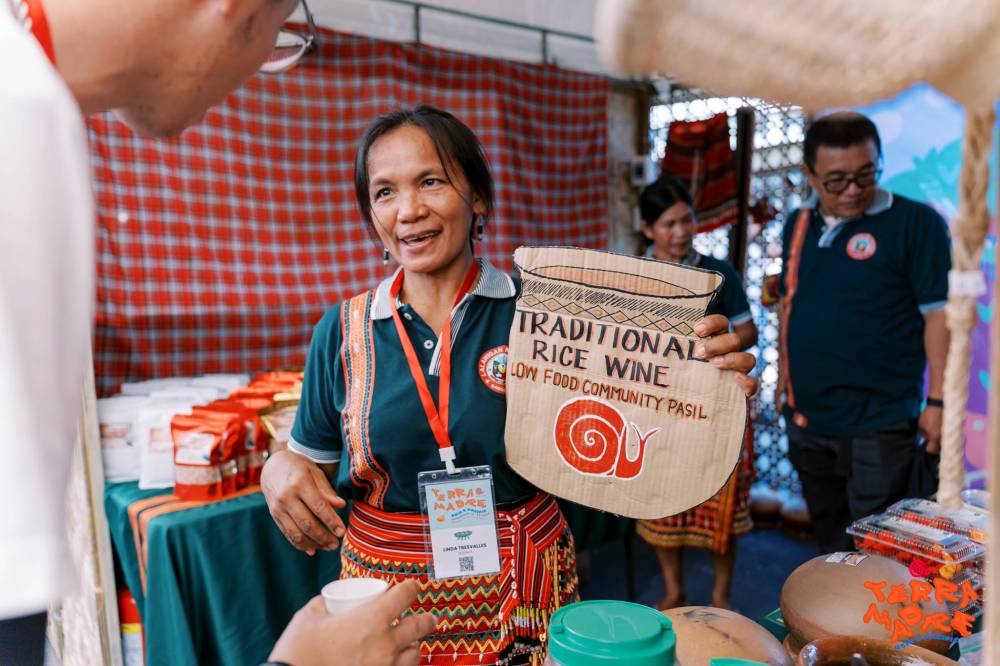
Their time spent at the market mingling with locals and various slow food communities has sparked yet another fire within to realize that the work they and fellow restaurateurs do isn’t finite; it’s fathomless. “It’s stunning that all these people are here. You’re able to try all of these things in one venue, which is fantastic,” says Nowie, who is also trying to work with more producers in mainland Panay.
Back inside the Taste Workshop tent is another example that underscores the truths right in front of us. Where the Potencianos explored the spectrum of relationship-building in future-proofing, chefs Bettina Arguelles, Tina Legarda, and Angelo Comsti honed in on the importance of not forgetting—in this case, not losing sight of traditional products such as sukang sasa (nipa palm vinegar), as well as the people keeping them alive.
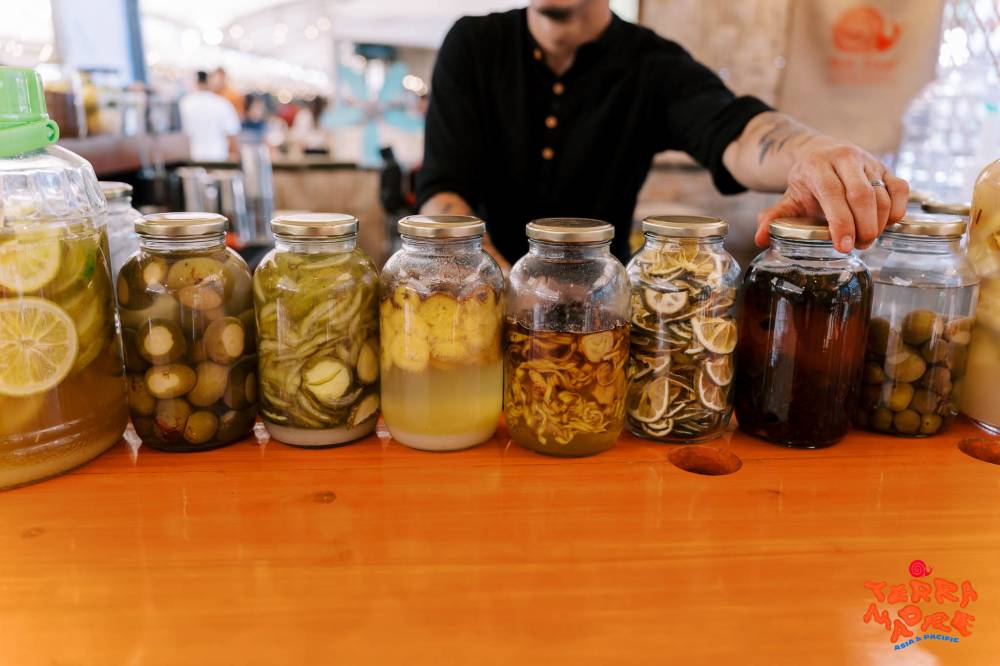
“Heirloom vinegar takes time to prepare, and it’s a very laborious endeavor to be able to produce it,” explains Arguelles, as she reflects on why awareness needs a space of its own. As early adopters of local ingredients in their cuisine, the three chefs’ manipulation of sukang sasa was among the most enjoyable in their disorienting (in a good way) shifts—from sukang sasa’s purest form to a beef belly braised in vinegar atop an adobo puto pao, and even a “desperate” vinegar pie that substituted lemon as the souring agent.

And that’s the point of the workshop—a reminder of how humble Filipino products can deliver the same punch in conventional dishes.
Dissect, structure, and connect
Beyond the educational immediacy, sheltered in a smaller tent or transposed on the open grounds was a surfeit of cooking demonstrations from the likes of Crosta Pizzeria’s Yuichi Ito, who deftly butchered a Bago City river eel from fin to gill, Hapag’s John Kevin Navoa and Thirdy Dolatre—both of whom basked in the process of buro—and Liyab’s Charles Montañez, who literally lit the grounds with a live-flame exhibition.
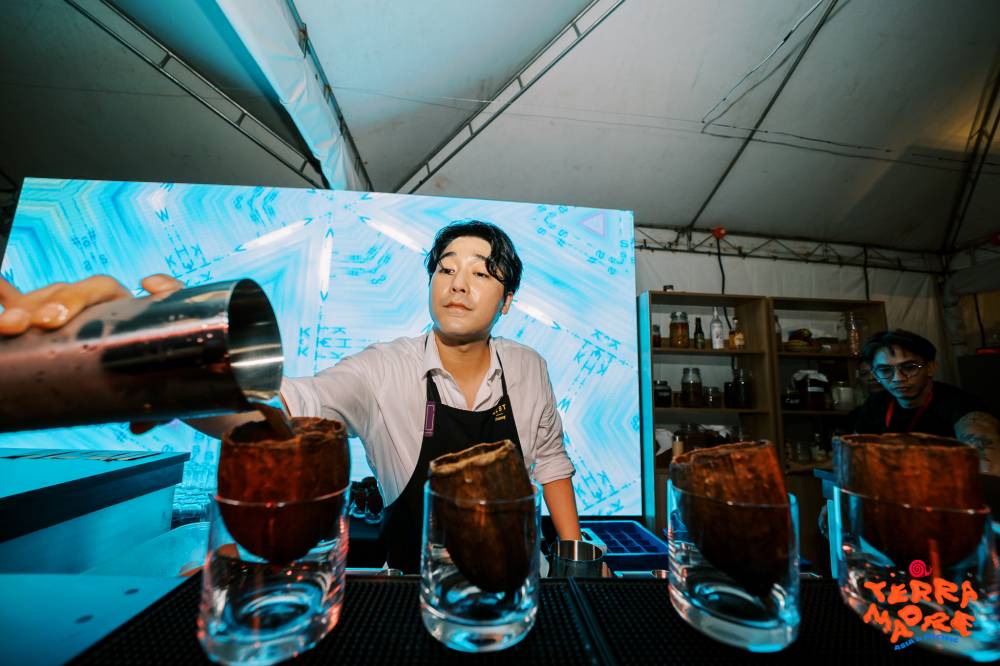
At the Slow Drinks and Slow Food Coffee Coalition zones, and even at the restaurant takeovers, key figures delivered plenty of their own juice into Terra Madre. But there’s no disputing that beneath the presentations, they all bleed into a single narrative that points toward the direction we all aspire to—a “slow” future structured on community and culture.
“We saw our vision, and we thought it was important for us to start off with the right track and the right foundation,” shares Lordfer Lalicon of Kaya Orlando during his talk on Filipino diaspora and identity. The James Beard-nominated chef’s building blocks follow the same pattern as the talented group of expat creatives behind Roots in Siargao.
Over two years since opening the creative restaurant, Filippo Turrini, Ines and Marina Castañeda, Ricardo Miranda de Sousa, and Dane Overgaag have gripped guests with menus that make the most of Siargao’s produce, but it’s their incredible hunger for knowledge refined into methodologies, a residency that fosters gastronomic creativity, and collaborations with chefs or food scientists that have put them in a position that yields results greater than what’s just on their pretty recycled plate.
It is perhaps appropriate that the Roots team’s research, interpretation, and dialogue with the landscape were also presented at Terra Madre, for it reflected the pieces of the larger story unfolding. “The goal is to understand ingredients, to understand materials, cultural dynamics, and always trying to interact with the community,” says Ines, adding that these are then transformed into ideas and then communicated in different ways, like the neat tasting plate of adlai, aligue, inyam, and miso to give the audience, rapt with desire, room to wander across the palette of flavors, tasting the essence of each ingredient themselves.
It hits hardest when certain key findings from their approach—documentation as a tool for evolution, collective memory as a research method, and a deeper understanding of the environment fosters creativity—are unmistakably reminiscent of the powerful moments that happened at Terra Madre in just five days.
And beyond the massive turnout—around 75,000 visitors, 2,500 delegates from 25 countries, and total generated sales of over P46 million—the event proves the power and value of taking it “slow” when it comes to community-led initiatives, food advocacy, policymaking, and cultural heritage.
Asia’s Best Female Chef 2023 Johanne Siy summed it up best at her talk: “Our heritage… our roots give our creations emotional truth.”