










Bebot and kikay: The two faces of Pinay beauty

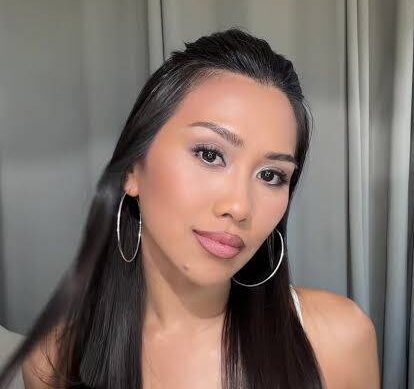
The bebot and kikay trends currently dominating TikTok aren’t just about makeup—they’re about identity, nostalgia, and how Filipina beauty is being defined (and redefined) online. At first glance, both trends orbit around glam. Both celebrate femininity. Both are rooted in Filipina beauty.
But look closer, and you’ll see they move differently.
Bebot: a nod to early-2000s Pinay glam
The bebot trend exploded in late 2025 and early 2026 as TikTok users began tagging dramatic makeup transformations with #bebot. At its core, bebot is Tagalog slang for a “pretty woman” or “babe.”
The word was popularized globally by the Black Eyed Peas song “Bebot,” written by group member Apl.De.Ap and released on the 2005 album “Monkey Business.” The track, notable for being performed entirely in Filipino, is a lyrical ode to Filipino beauty and culture—born from Apl.De.Ap’s reconnection with his roots and the vibrant Filipino diaspora in Los Angeles.
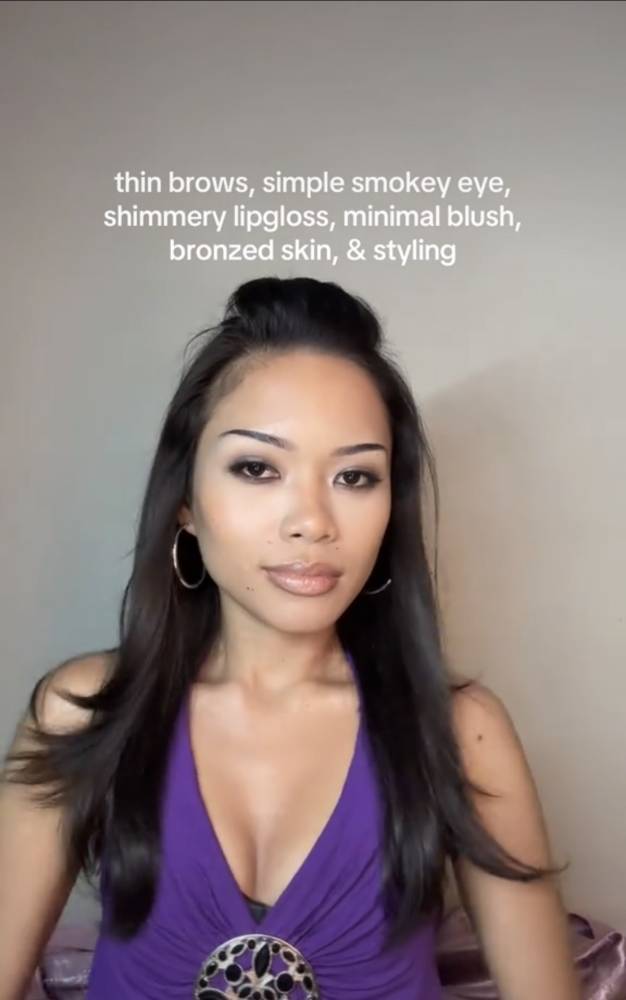
On TikTok, the trend traces back to creators Belle Pauleen (@bellepauleen) and Monique Libres (@monique_libres), both widely credited with posting the viral clips that ignited the craze.
Pauleen’s video, captioned, “bebot is just a Filipina baddie but in Tagalog,” paired a striking makeup transformation with the nostalgic track, while Libres’ posts added her own flair. These clips inspired a wave of “before‑and‑after” looks recreating early‑2000s Filipina makeup, all set to the song. This momentum sparked countless beauty videos, tutorials, and reinterpretations across both Philippine and international TikTok communities.
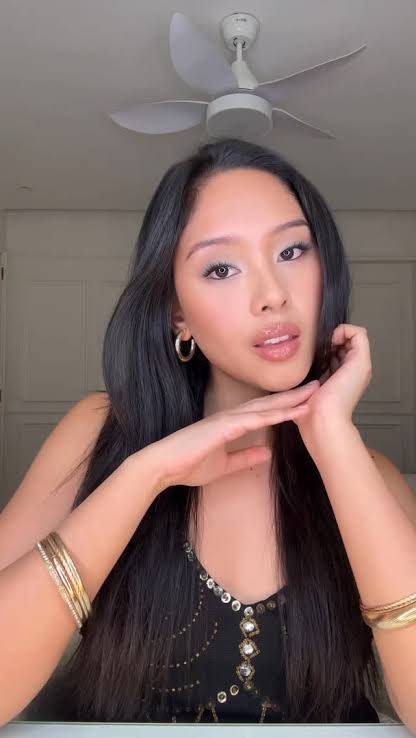
“Historically accurate” bebot makeup?
When celebrities and influencers—from Sue Ramirez and Gabbi Garcia to Lierge Perey, Belle Rodolfo, and Lenie Aycardo—joined the trend, bebot quickly moved from TikTok feeds to mainstream culture. But it didn’t stay local for long. Vietnamese creator Đan Thy and American content creators Natalie Reynolds and Paige Taylor added their own spins, taking the aesthetic internationally.
And yet, scroll through the comments, and you’ll see Filipinos writing the same line: “That’s not historically accurate.” The trend was being policed, but what does “historically accurate” actually mean in the context of bebot glam?
It refers to a very specific early-2000s Filipina glam template. Brows were thinner and more arched than today’s laminated styles. Eyeshadow leaned cool—silvers, charcoals, icy blues—blended softly in a halo rather than sharply cut. Base makeup was matte and fully set; glass skin wasn’t yet a thing. Lips were lighter than the liner, sometimes frosted or muted nude, occasionally with a gloss finish. Contour existed, but subtly—more bronzer than the sculpted snatch favored on Instagram today. Essentially, it was distinctly Pinay.
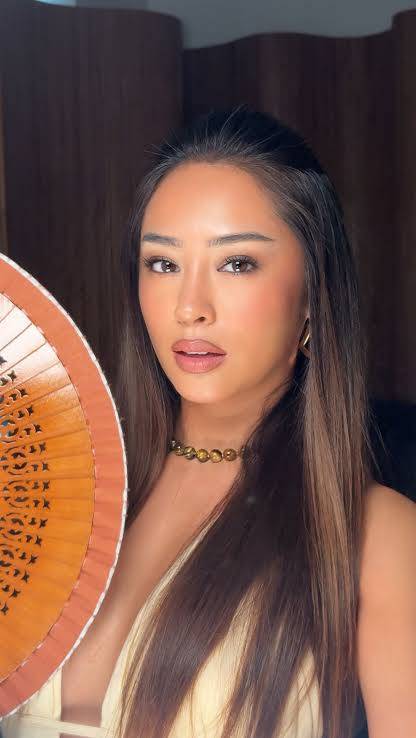
But here’s the part that often gets missed: Bebot makeup was never meant to be one narrow formula that works the same way on everyone. The bronzy, morena-leaning glam that defined the era doesn’t automatically “pay off” on all skin tones, especially when recreated using techniques built for a different complexion.
At its core, bebot glam should celebrate the spectrum of Filipina beauty—kayumanggi, morena, chinita, mestiza—not flatten it into a single exported aesthetic.

Kikay: Filipina girly pop
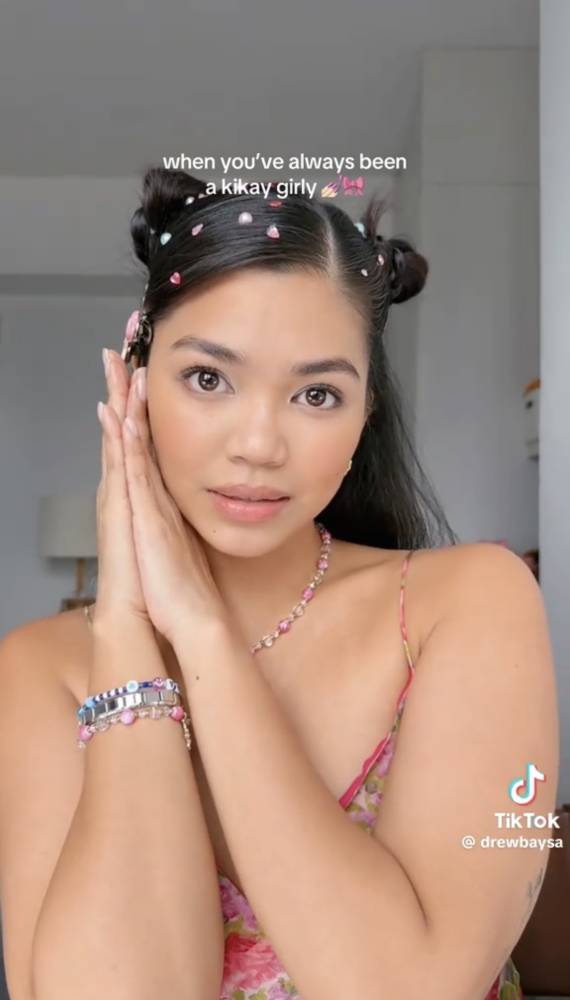
Traditionally, kikay, in Filipino slang, describes someone girly, flamboyant, and unashamedly accessorized. But TikTok’s current kikay wave has leaned into one unmistakable inspiration: the iconic charm of Jolina Magdangal.
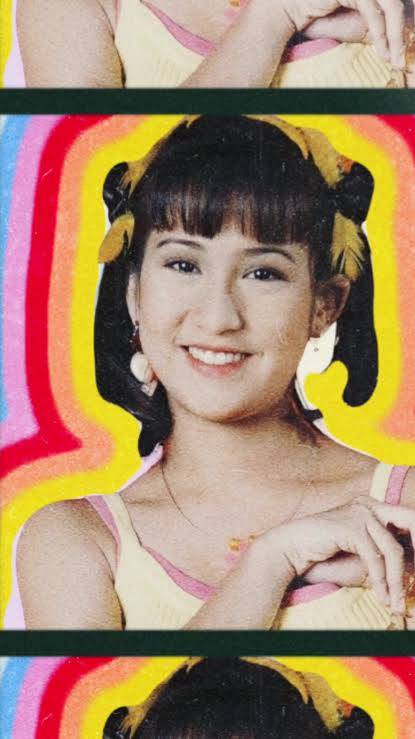
Magdangal, a Filipino singer‑actress who became a pop culture staple in the late 1990s and early 2000s, was known for her accessory‑laden looks—hair clips, quirky outfits, colorful makeup—that became shorthand for kikay fashion long before “viral” was part of the internet lexicon. She is often referenced online as the OG kikay girl.
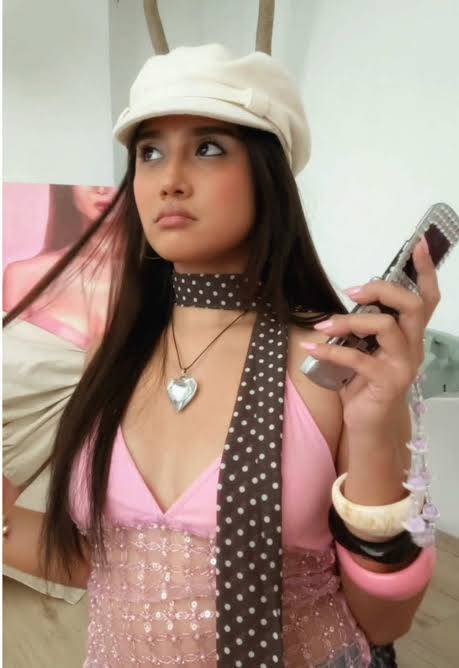
Creators like @ish.silvestre, @ashleygarcia, and @drewbaysa have embraced the kikay aesthetic, sharing playful clips that channel Jolina’s signature style, helping the trend gain momentum across TikTok. Many of these videos feature the Viva Hot Babes song “Kikay” in the background, adding a nostalgic layer to the trend’s bright, fun energy.
Two trends, one celebration of Filipina identity
Bebot and kikay now coexist at the center of the celebration of Filipina beauty. Bebot highlights early-2000s bronzy, morena-leaning makeup, while kikay draws from playful, colorful, and fun style inspired by Magdangal.
Together, the trends show that Filipina beauty is not one-dimensional. They reflect how identity, nostalgia, and creativity can be expressed through makeup, reaching audiences both in the Philippines and beyond.