









Charo and Boots embrace lesbian love and the privilege of aging

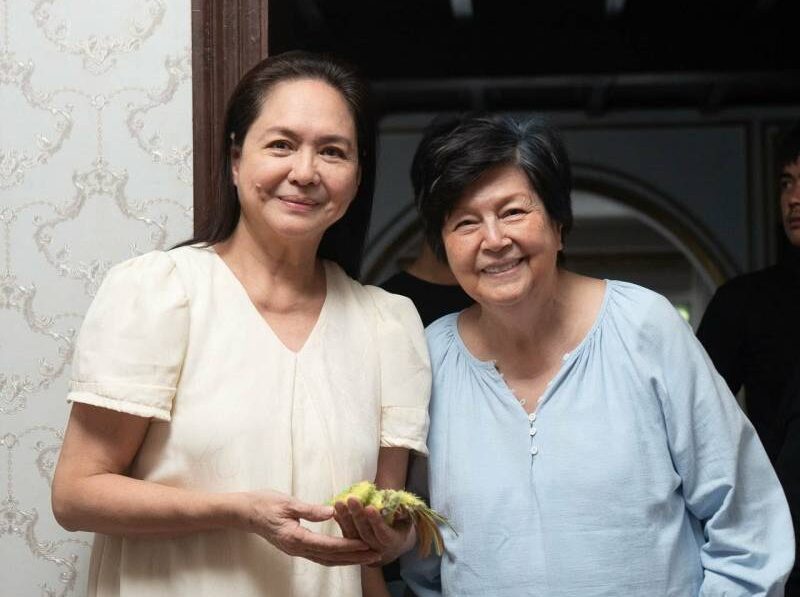
Had they been asked to play lesbians in their early showbiz days, Boots Anson Roa-Rodrigo and Charo Santos-Concio—“in all honesty”—would likely have declined. But not out of prejudice, they’re quick to add.
It’s worth remembering that the two screen legends rose to fame in different decades—Roa-Rodrigo in the 1960s, Santos-Concio in the 1970s—but it was still a period when same-sex relationships were generally frowned upon. So it’s not hard to imagine how concerns over public perception could have stirred initial misgivings.
Still limited-perspective
For Roa-Rodrigo, the worries were closer still. “At the time, my children were still young. I was concerned that they, and my husband (the late actor Pete Roa), wouldn’t understand what compelled me to do a role like that,” she tells Lifestyle Inquirer.
And this doesn’t apply only to this hypothetical scenario. She had, in fact, turned down projects—roles that would end up winning awards for other actresses—for the exact same reason. “Even though I badly wanted the actress in me to prevail and accept roles more challenging and different than usual, I couldn’t,” she says.
Santos-Concio, on the other hand, simply chalked it up to the still-limited perspective that can come with being young.
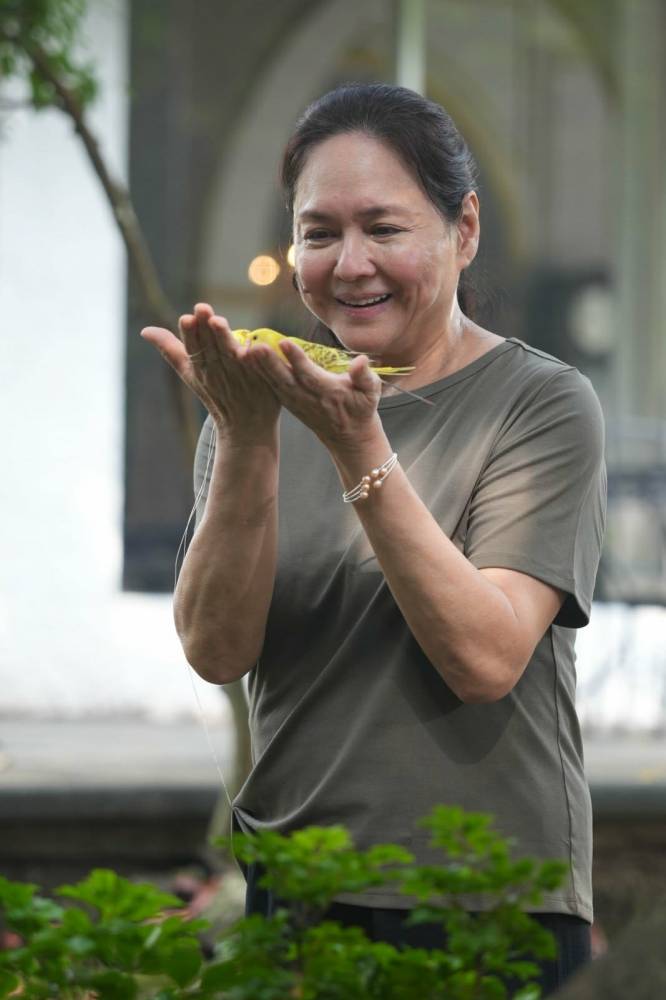
“I accept you for who you are. Pero siguro mas maliit pa ang pag-intindi ko sa buhay. But in my 30s, mas lumawak na ang pang-unawa ko,” she tells Lifestyle Inquirer. She adds that hosting the drama anthology “Maalaala Mo Kaya,” which helped give face to queer stories on national television, deepened her understanding of the community’s struggles and triumphs.
If she hadn’t gone on an acting hiatus back then to focus on production work, and eventually, her duties as a top executive at ABS-CBN, she probably would have had the “more courage to accept such a role.”
The perfect timing
But if there’s one thing Roa-Rodrigo and Santos-Concio have come to realize, it’s that the better you know yourself, the less you care about what other people think. This self-assurance, they say, is a privilege that can only come with age.
So when Cannes-winning director Brillante Mendoza sought them to play a lesbian couple in his upcoming movie, “Until She Remembers,” they didn’t have to think twice. At 81 and 70, respectively, Roa-Rodrigo and Santos-Concio—hardened by trials and enriched by experience—agree that the timing couldn’t have been better.
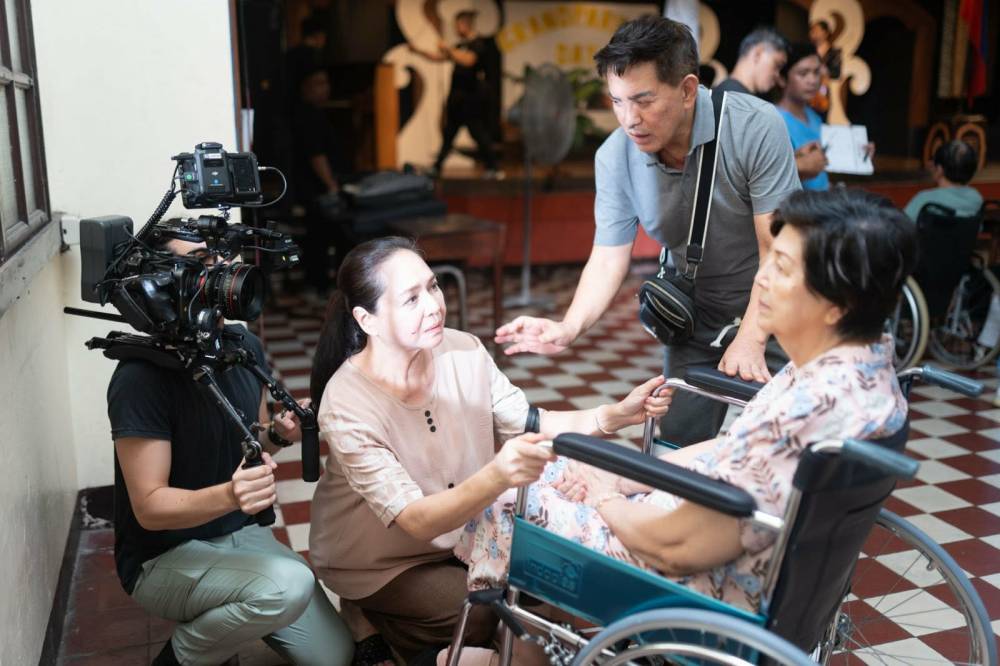
“When the opportunity to play female lovers came, yes, I welcomed it with open arms,” Santos-Concio says. “Wala ng fear of rejection. You accept yourself for who you are, regardless of what the world says. I believe being at peace with yourself is the best place you can be.”
“Ngayon, kahit anong role, puwede ko nang gawin,” says Roa-Rodrigo, who’s grateful to have a husband (lawyer King Rodrigo) who supports her unwavering desire for growth. “He said, ‘If that will improve your craft, go for it.’ And I knew it would.”
Hoping against hope
Produced by Solar Pictures and showing on Feb. 25, “Until She Remembers” follows Catherine (Roa-Rodrigo) and Concha (Santos-Concio), whose young love is torn apart by their families, who deem their relationship unacceptable.
Decades later, Angel (Barbie Forteza)—a struggling student from whose point of view the story is told—moves in with her grandmother, Concha. There, the young woman discovers the love she never felt from her own parents. This newfound closeness sparks a curiosity about her lola’s past, immortalized by old photos and unopened letters.
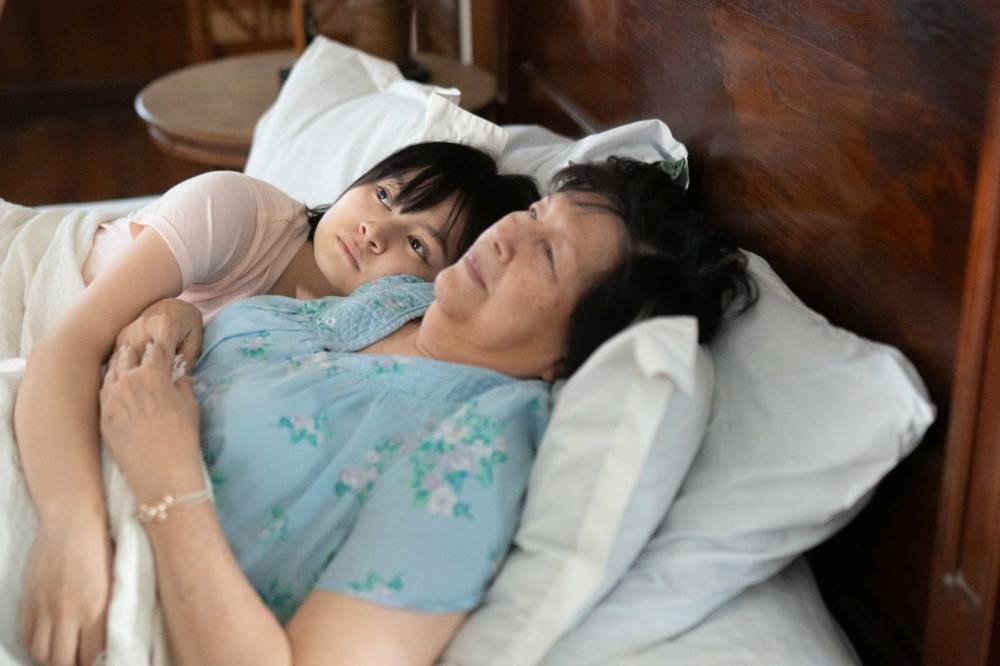
It turns out, despite having a family of her own, Concha never forgot Catherine, who remained her moral compass through the years. They eventually track down Catherine in a senior nursing home, only to find out that she has already lost her memory. Still, Concha and Angel take her in—hoping against hope that she finds her way back to her old self, however fleeting that may be.
Labels, stigmas, and gender bias
While queer stories in film have come a long way since their beginnings in the industry, preconceived notions associating them with sex still persist. For instance, when Roa-Rodrigo’s acquaintances learned that she was doing this project, one of the first questions she got was, “Meron ba kayong laplapan diyan?”
Though seemingly said in jest, the comment still unwittingly revealed the underlying stigma.

“I don’t even know what that means,” she says, laughing. “But it also got me thinking: sex scenes, prurience—‘yun agad ang naisip nila. I have realized how much gender bias is in our society. Kahit may openness about same-sex relationships, ‘di pa rin nawawala ‘yung mga labels.”
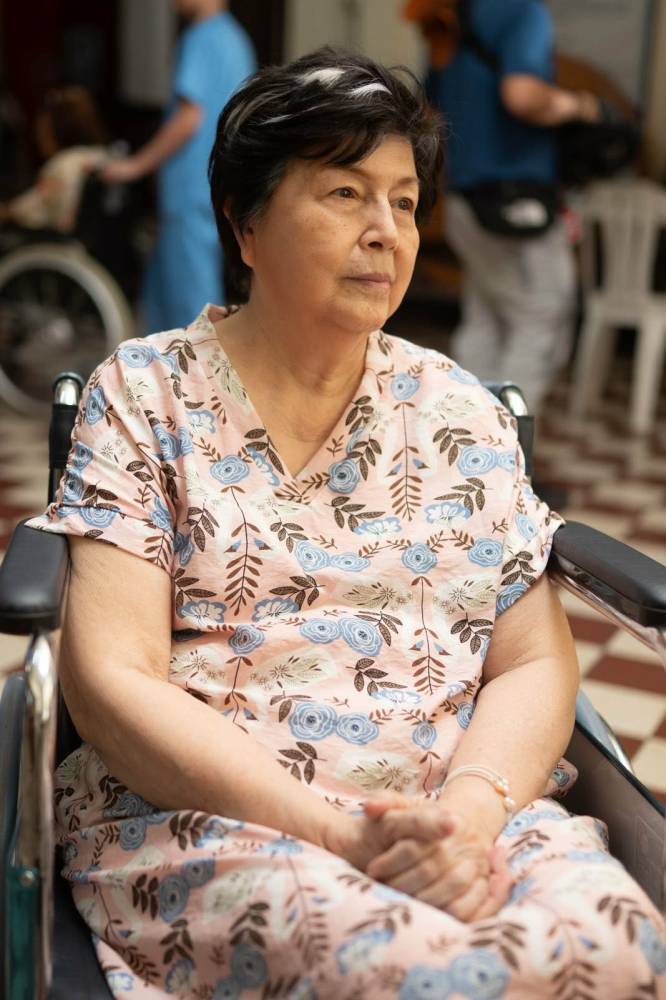
The film couldn’t be further from that. “It just so happens that it’s about love between two people of the same gender,” she stresses.
The challenge, then, is to present the story without making queerness its defining factor. “Mabibigyang-buhay mo lang ang isang character kung wala kang panghuhusga. You have to get out of the box,” Santos-Concio says. “It’s human nature to give names and titles. But at the end of the day, we’re all human beings—and loving is a human experience, regardless of gender.”
Love is a commitment
Beyond its queer romance angle, the film gives a relatively rare look at love in old age and how it intersects with society’s view of one’s diminishing utility in life. We often hear the phrase “aging gracefully.” But what of “aging happily?”
“Ang ilan sa atin ay nalulungkot kapag tumatanda na tayo. We feel na ‘di na tayo kailangan at relevant, useful, o mapapansin. Na hindi na tayo vital part of the community. That’s the greatest challenge of being old,” Roa-Rodrigo says.
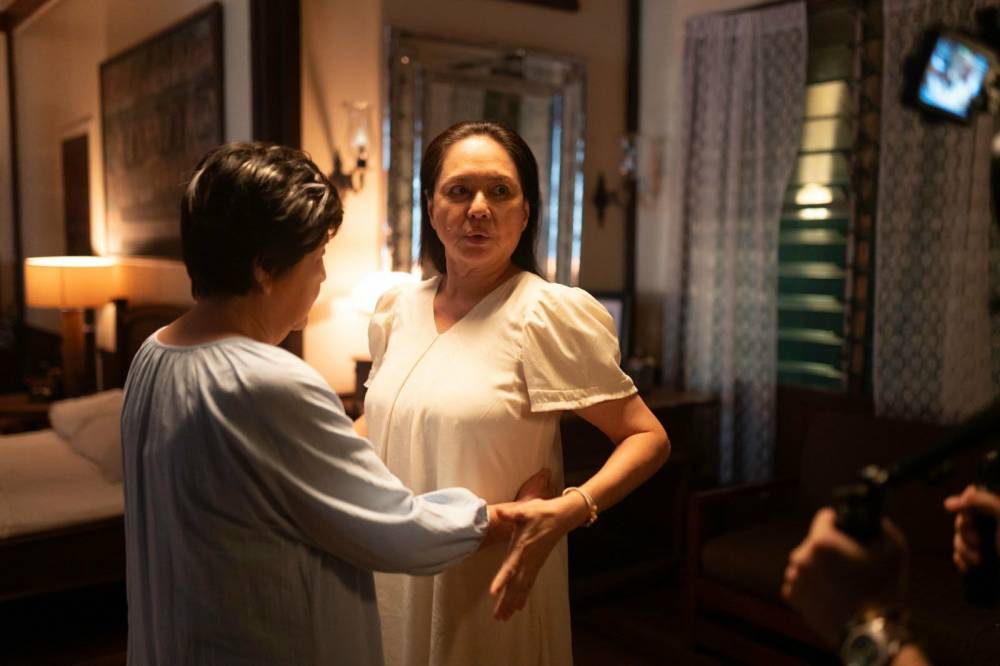
But through the film, they hope to show that these things don’t completely disappear with the passing of time. Love is still a reality, although it may take a form different from what we’re used to. And at this stage in their lives, sacrifice may well be the ultimate expression of love.
“Love is a decision you make,” Roa-Rodrigo says. “Love is very personal—as personal as your commitment to God and as personal as your commitment to your family and community.”