








Charting the path of Philippine photography


From March 23 to July 17, 2026, FotomotoPH is accepting submissions for its fourth Biennial Open Call, “Seen Before, Seen Again: Philippine Photography Across Time.” Founded during the pandemic by photographers, writers, artists, and curators, FotomotoPH promotes Philippine photography through events, special projects, and past Open Calls.
And what sets the 2026 Open Call apart from the group’s past Open Calls is that it coincides with the 200th anniversary of the world’s first permanent photograph.
A medium that shapes the stories we tell
Over centuries, photography evolved and became an inextricable part of daily life. We take photos at birthdays and weddings; we display photographs of the departed during wakes and funerals. In fact, Makati and Pasig were named the selfie capitals of the world in 2014.
Due to photography’s ubiquity today, we overlook how the medium shapes the stories we tell ourselves. “Photographers are authors,” says Veejay Villafranca, photographer and one of the founders of FotomotoPH. “Their decisions and creativity are informed by different beliefs: political, social, and cultural.”
A photograph only shows a split second of what’s in frame, through a single lens. Yet, they also function as artifacts of bygone times that capture personal and community histories.
So how do we tell our stories through photography—and in turn, tell photography’s stories through our lens?
How photography came to be
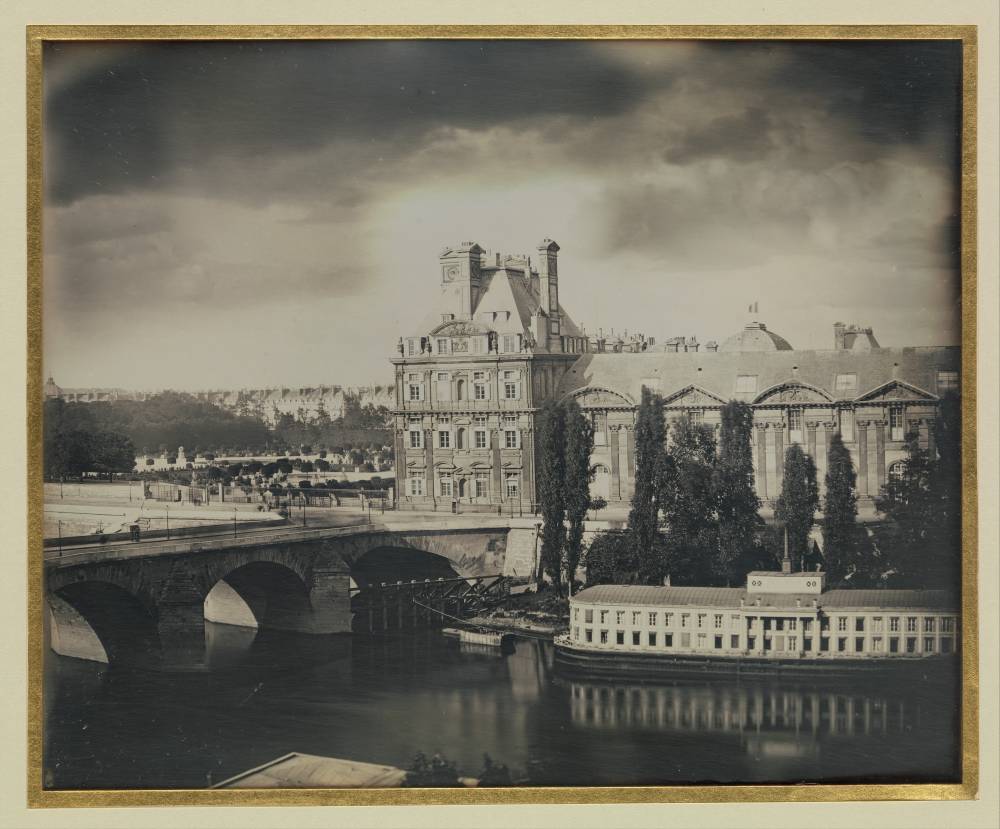
In 1826, French inventor Nicéphore Niépce took the first permanent photograph, “View from the Window at Le Gras,” using a camera obscura with a pewter plate exposed for eight hours. Three years after Niépce’s death in 1835, Niépce’s collaborator, Louis-Jacques-Mandé Daguerre, discovered a process to create clearer photographs through shorter exposure times.
In 1839, Daguerre and Niépce’s son sold full rights for Niépce’s original process and Daguerre’s—the daguerreotype—to the French government, who published these methods on Aug. 19, 1839. And earlier that year, word of Daguerre’s invention reached England. William Henry Fox Talbot had been experimenting with producing negatives with salt and silver nitrate on paper. He had a working technique by 1835 and rushed its publication in 1839, six months before the announcement of the daguerreotype.
A brief history of photography in the Philippines
Photography spread throughout Europe during the 1800s. Many Europeans brought cameras on their travels to document monuments, architecture, and communities. Some European photographers even settled and opened studios abroad, notably in the Japanese port city of Yokohama, and also in the Philippines. During this time, travel photographs often showed romanticized and bucolic versions of these places.
“I think the colonial perspective in photography didn’t necessarily flourish during the Spanish colonial era,” says Villafranca. “It was more prevalent and deepened during the American colonial period.”
From 1901 to 1913, Dean Conant Worcester served as the Secretary of the Interior for the US Insular Government in the Philippines. A trained zoologist, Worcester photographed Filipinos in rural communities, more than the Filipinos he interacted with daily. The American government used these photographs to chart the archipelago.
“Taken as a whole, the Worcester Collection does not evenly represent the ethnic diversity and cultures of the Philippines in the early-20th century,” writes historian Christopher Capozzola. “Dean Worcester took up the challenge of documenting the diversity of the Philippines, with the goal of both understanding the Filipino people and learning how to govern them.”
The other side of the camera
Thanks to globalization and technological advancements, almost anyone can take photos, whether through top-of-the-line mirrorless cameras or smartphones. Photographers of all sorts can share how the world looks through their viewfinders and, consequently, challenge stereotypes or, what novelist Chimamanda Ngozi Adichie calls, a single story.
As photography evolved, photographers faced new challenges. “My batch of photographers, who started in the 2000s, were at the cusp of the shift from film to digital, from traditional to more automated practices in photography,” says Villafranca. “The fear of the unknown is present, especially in creative industries, right?”
Today, photographers grapple with the rise of generative artificial intelligence (AI), as generative AI’s uses range from removing backgrounds to creating images that resemble photographs using prompts. In 2023, photographer Boris Eldagsen used AI generator DALL-E 2 to create an image that resembles a wet plate photograph from the 1800s. He submitted his entry to the Sony World Photography Awards and won in the creative photo category.
Adobe’s Content Authenticity Initiative and debates on copyright legislation offer systemic guardrails amid these changes. For those entering the discipline today, Villafranca advises, “Upskill and learn the discipline alongside the technique. Own your voice.”
Seen before and seen again
In “On Photography,” Susan Sontag writes, “Instead of just recording reality, photographs have become the norm for the way things appear to us, thereby changing the very idea of reality and realism.”

Though photos record the world through images, they reveal a photographer’s sensibilities and biases, such as who to photograph, what to include in the frame, and what to edit. Given that a photo’s subjectivity masquerades as objectivity, could we trust a photo to reveal the truth?
Perhaps, not a photo, but collections of photos from different photographers that celebrate, as Villafranca notes, owning one’s voice.
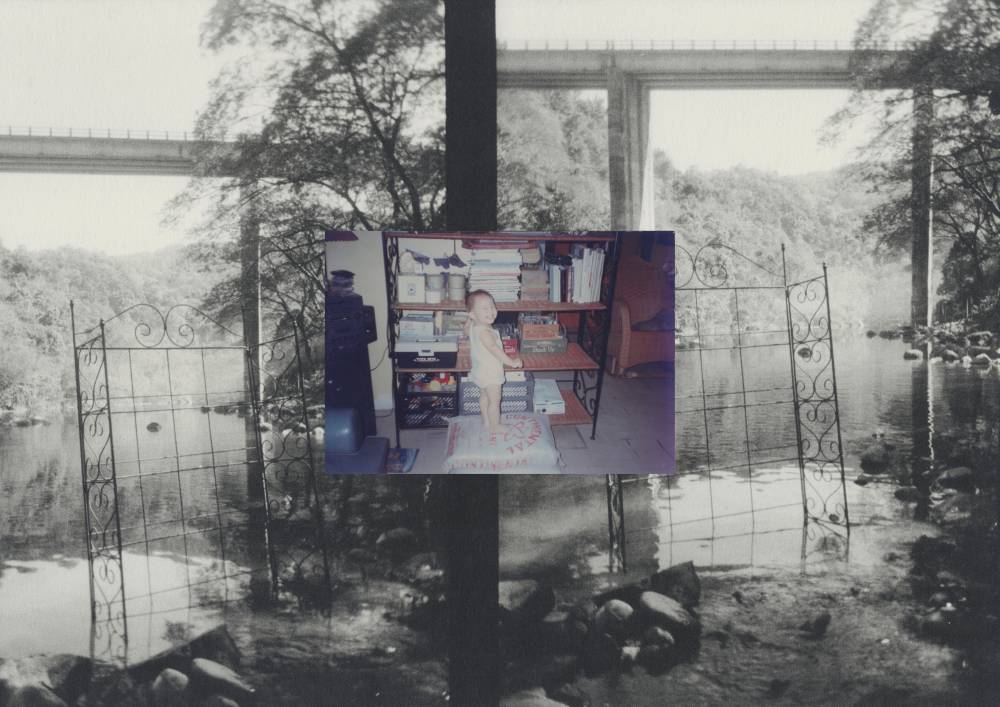
FotomotoPH’s Open Calls assemble multiple voices and realities through photographs. Past open call themes include “Portraits,” “Home,” and “I/LAND.” These were juried by practitioners across Southeast Asia. This year’s theme, “Seen Before, Seen Again: Philippine Photography Across Time,” asks photographers to meditate on memory and place by creating new work based on archival photographs. Selected entries will be announced in November 2026 and exhibited in 2027.
“One part of this theme is commemorating the discovery and industrialization of photography,” says Villafranca. “We’re looking at history, but also asking what photography is and what does photography do for us today?”
Photography has come a long way from eight-hour exposures to billions of people having cameras in their pockets. We document, express, and create narratives through the press of a button. And, each photo—whether underexposed, blurry, or perfectly crisp—brings the discipline to new heights.
From March 23 to July 17, 2026, FotomotoPH is accepting submissions to the 2026 Open Call on their website.
******
Get real-time news updates: inqnews.net/inqviber