











De-mystifying the Hollywood lie

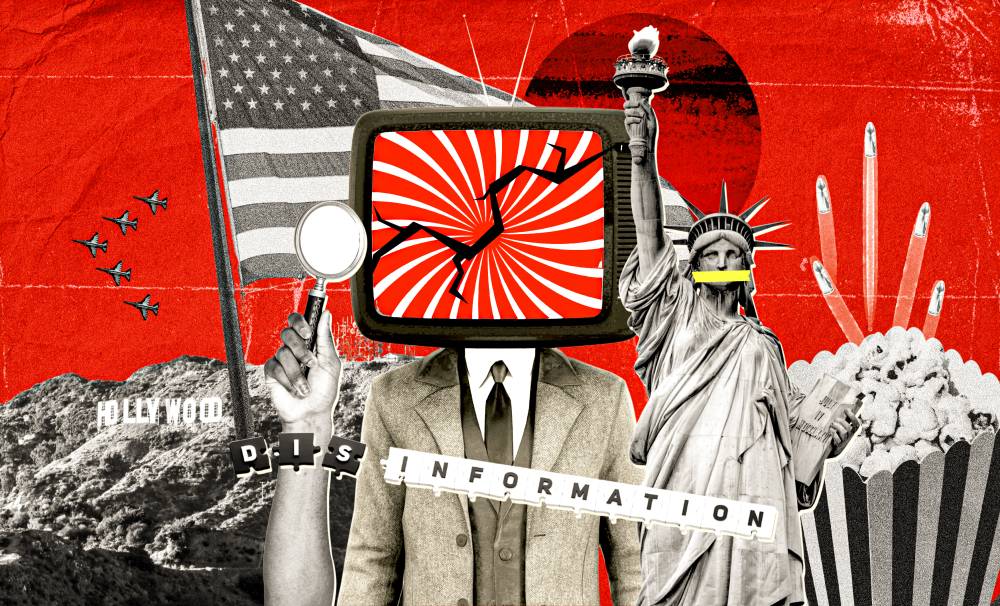
Because American media is ever so present in the entire world, they have made it so that they seem like the center of world politics. This is the grand myth that Hollywood has created about America, but the “greatest nation in the world” is beginning to crackle and fade.
Under its current administration, we are seeing aspects of a tyrannical dictatorship and the horrors of fascism on the streets of America on our social media feeds. The land of the brave and the land of the free now all seems so hollow and untrue, as every day, we are bombarded with more occurrences of the deterioration of the American dream.
Not what it seems
The American media has been ever-so powerful, with its global reach and the way it has made English the second language of the world. Maybe that began with the British during their imperialist years—and that’s a deep dive into history I’m not yet ready to commit to.
But the mere fact that television shows like “The Walking Dead,” “Game of Thrones,” and “Stranger Things” are global cultural landmarks, while movies like that of the Marvel Cinematic Universe, the Mission Impossible series, and Fast and Furious can reach the box office numbers… all this serves as a testament to the way the United States of America has been exerting a colonial force on the world—guiding geo-political discussions through the soft power of culture.
What was hidden—that social media has brought to light—was that the so-called “greatest nation on earth” has not been that great for a very long time now. Their issues with racism, police brutality, the rise of the Karen culture, and even various reels and TikToks of how uneducated Americans can be have started to show us a different side to the global powerhouse.
And the fact that they are the country with the most mass shootings and an inability to curb gun violence is such a staggering display of the country’s inability to protect itself from itself.
Under the current administration, the least desirable of American values have found solid ground to stand on. The racism, the xenophobia, the anti-intellectualism have come out from the woodwork, and a lot of Americans seem to be embracing fascist ideologies, dressed up in conservative and Christian rhetoric.
No, America is no longer the great country that we’ve been told about in all its movies and television shows.
A global savior…?
A quick Google search shows that, since World War II, America has participated in over a hundred military conflicts around the world. While they have formally declared war only five times, their military has invaded other countries in the name of freedom, democracy, and—within this administration alone—openly stated their own self-interest.
In a country whose industry is mainly that of weapons of war, what did we expect?
But taking a look at Hollywood’s long list of films that depict America as some sort of global savior, and justifies their own incursions in other countries—painting themselves as heroes or victims—we start to see how movies can create a global narrative that seeks to serve the country it originates from.
As much as I loved the filmmaking behind “Top Gun: Maverick,” I reviewed it with stark criticism against the film’s inability to really name an enemy. This is a movie that made over a billion dollars at the box office and showed us how badass and cool it was to be a fighter pilot. But in efforts not be political, the film never names the terrorist organization that is stockpiling uranium and never names the country that the pilots in the film have to enter—and that attack creates the false belief that if America decides to send its ships, planes, and weapons to any country, it is for everyone’s greater good.
Without naming an enemy, the film turns the American military command into some mythical hero out to save the world.

The great illusion of Hollywood has begun to crack
We don’t have to believe that anymore—not if you follow the news. Not if you take a deep dive into social media and see what people are saying. Not if you use the internet to see what other news agencies from other parts of the world have to say.
Films like “Black Hawk Down” or last year’s “Warfare” serve to show the dangers that American soldiers find themselves in when fighting these wars—it is meant to show them as heroic, putting their lives on the line as they fight for these abstract ideals like democracy and freedom.
But the films never really ask the tough questions: Who gets to decide that for the countries they invaded? How come the countries they send their military to seem to have either resources they want or a political geography that is beneficial to them? What about the other countries that need intervention? How come they aren’t where they are needed?
This is ideology and propaganda at work: using culture and entertainment to create a narrative that the whole world ends up believing. But as America drops its bombs on Venezuela and then declare their plans to annex Greenland, while supporting the genocide of Palestine, the great illusion of Hollywood has begun to crack.
This is why films like Yorgos Lanthimos’ “Bugonia” or even Alex Garland’s “Civil War” are films I have found myself enjoying quite a lot because it shreds the myth of America being the greatest nation in the world. It’s not. It hasn’t been.
And I wish that Hollywood were willing to be more honest now, moving forward. Fiction is a lie that is supposed to tell the truth. I don’t want to watch fiction that reinforces a lie.