











Denim, but not as we know it


Fashion is reinventing one of its most iconic fabrics. Designers are now treating denim with special coatings and finishes to give it a leather-like appearance, offering a sleek, glossy look.
Brands like Acne Studios and Luc Lequel are at the forefront, experimenting with techniques that carry leather’s luxe appearance but retain denim’s comfort and breathability. For consumers, this means achieving a polished, edgy look while still enjoying the comfort of denim.
When denim mimics leather
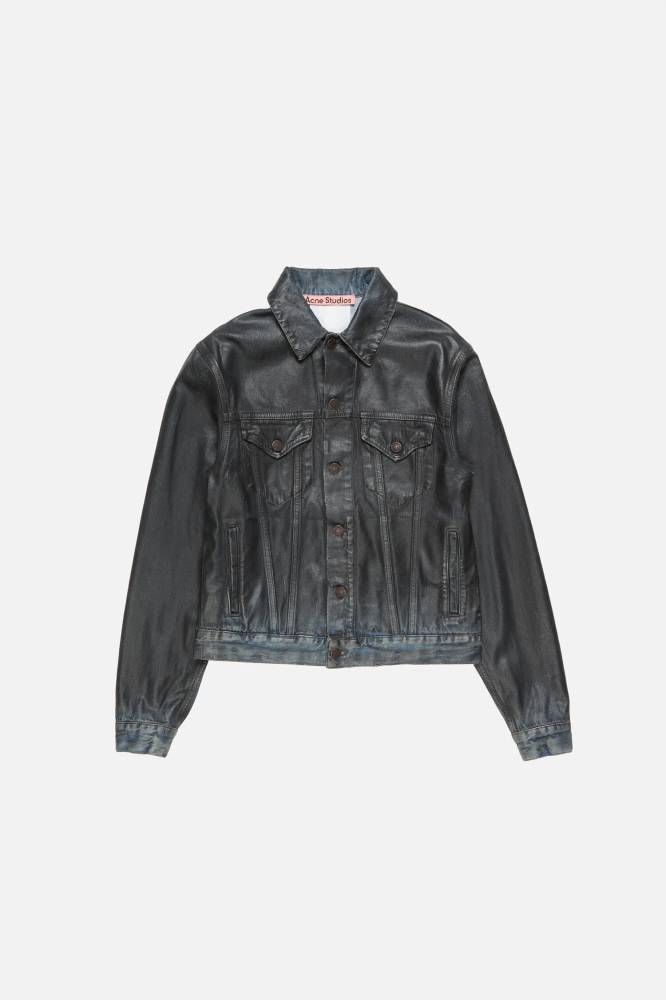
Acne Studios is once again pushing the boundaries of what denim can do. Its latest release—a denim jacket and jeans—blurs the line between classic indigo and sleek leather. Crafted from washed indigo Tencel denim, each piece is treated with a pressed black leather finish that gives it an unexpected glossy edge while maintaining the softness and flexibility of denim.
The denim jacket is unlined and cut to a regular fit with a waist-length silhouette. Its center-front branded button closure, chest pockets, and welt pockets give it a timeless structure, while the leather-like finish elevates the look to something entirely new. This isn’t just a casual staple—it’s a statement piece that feels polished yet effortlessly wearable.
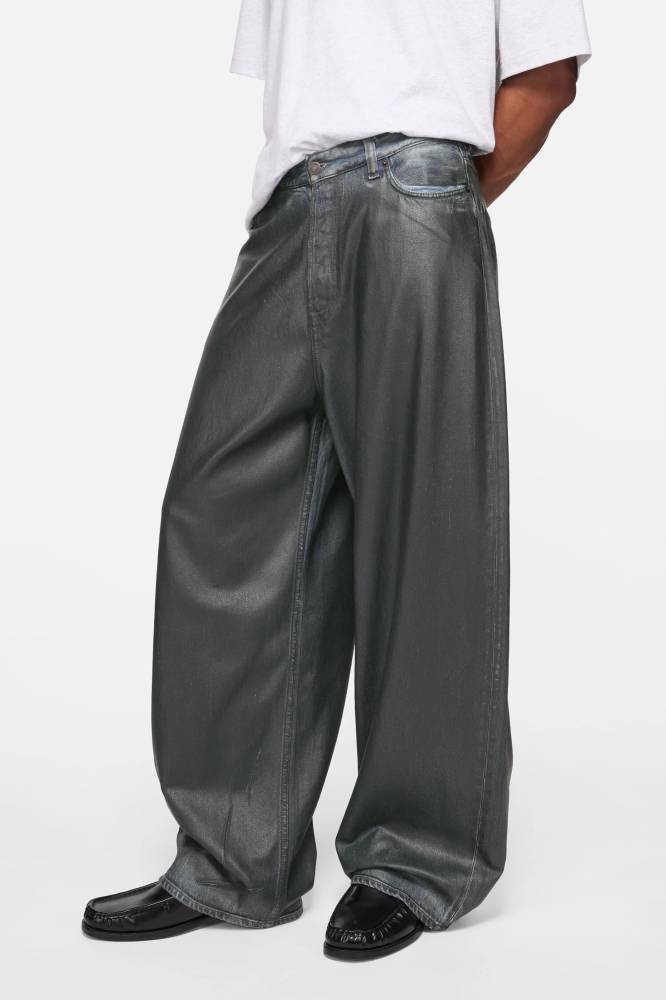
The jeans also feature the pressed black leather finish, they are cut for a loose fit with a low waist, long length, and super baggy legs. A button fly closure completes the look, balancing streetwear comfort with fashion flair.
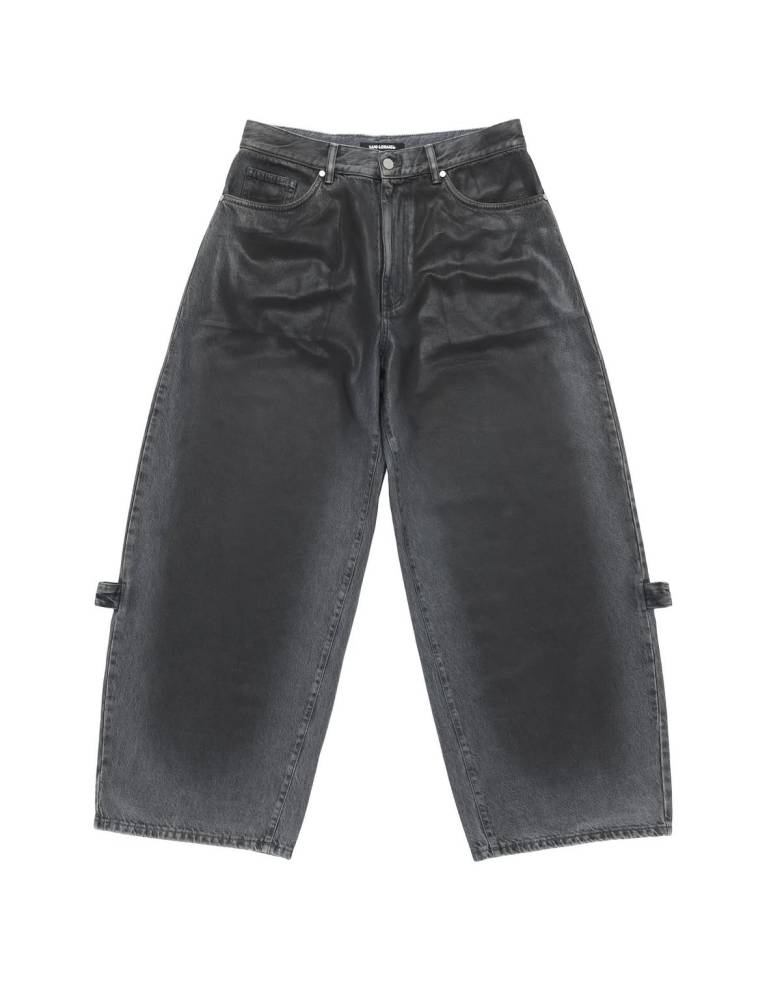
Meanwhile, Luc Lequel takes a more artisanal, European approach. Its coated denim (polluted black) is made from heavyweight Italian denim, 100 percent cotton, and handcrafted in Italy.
Each Luc Lequel piece is treated through a meticulous six-step process, which the brand openly shares. The process begins with mechanical abrasion using a specialized machine, creating the signature salt-and-pepper effect.
The denim then undergoes a bleaching phase, shifting its tone from dark gray to a medium-light gray. This prepares the fabric for further treatment and adds depth to the final finish. Next, pigment spraying is applied in two tones—typically black or anthracite gray and a deep brown—strategically layered to create contrast and a light-and-shadow effect, most noticeable around the waistband.
To ensure durability, the pigments are heat-catalyzed and pressed, permanently fixing the color into the fabric so it resists fading and washing out. A resin-like product known as Manopelle is then sprayed over the colored denim, oven-catalyzed, and pressed using glossy paper.
Before the final press, the resin has a grainy, speckled texture; after pressing, it becomes a transparent, glossy patina, giving the denim its distinctive shine, layered texture, and unique surface feel.
The final result is a richly finished fabric defined by subtle color layering and depth—demonstrating how technique, rather than animal materials, can deliver the visual language of leather.
This development parallels historical material trends in fashion. Just as genuine fur became a hallmark of luxury and sparked debates about ethics and sustainability, leather-look denim introduces a new avenue for brands to reinterpret traditional fabrics.
Instead of relying on animal products, designers are experimenting with techniques that elevate textiles, creating the visual impact of leather without the same environmental or ethical consequences.

Why leather-look denim matters
Producing leather involves raising livestock, which contributes to deforestation and large greenhouse gas emissions, and transforming hides into leather requires vast quantities of water and chemicals. Industry assessments show that making one square meter of finished leather can be associated with around 22.5 kg of CO₂e, with most emissions stemming from upstream processes like farming and slaughtering.
The tanning and post‑tanning stages are also resource-intensive. A 2021 study published in Science Direct on leather processing found that, during post‑tanning alone, an average of 360 kg of chemicals and 8.6 m³ of water are used per ton of shaved leather, and the wastewater generated is typically highly polluted.
Chemicals such as chromium salts—used in chrome tanning, which accounts for over 90 percent of global leather production—are hazardous and generate significant waste. Tanneries often produce effluents rich in salts, lime sludge, sulfides, and acids, which can contaminate waterways and soil if untreated.
These impacts help explain why alternatives are gaining traction. Leather‑look denim delivers a similar visual and textural richness without relying on livestock, chrome tanning, or heavy chemical use. Like coated or bio‑based materials, it offers a conscious aesthetic—appealing to consumers who want sophisticated finishes without the same environmental footprint. This trend can be seen as part of a wider movement in fashion where materials are not just chosen for how they look, but for what they signify about sustainability and responsible production.
The trend is also about versatility. Leather-look denim works in casual and elevated contexts alike. Jackets and jeans can be styled with sneakers for streetwear looks or paired with boots and tailored layers for a polished ensemble. The glossy finish adds texture and depth, while the underlying denim ensures comfort and movement, showing that practical fabrics can carry high-fashion appeal.
While still in its early stages, fashion brands are showing how familiar materials can become statement-making and responsible, opening new possibilities for how we think about fashion’s impact and innovation.