










Eating your way to good luck this New Year

For one night each year, we plan our menus around dishes believed to bring good fortune and cheer. We savor what is round, what rises, what multiplies, what flows. Our Media Noche table is often shaped by pamahiin—folk beliefs and superstitions passed down by elders, meant to invite prosperity in the year ahead.
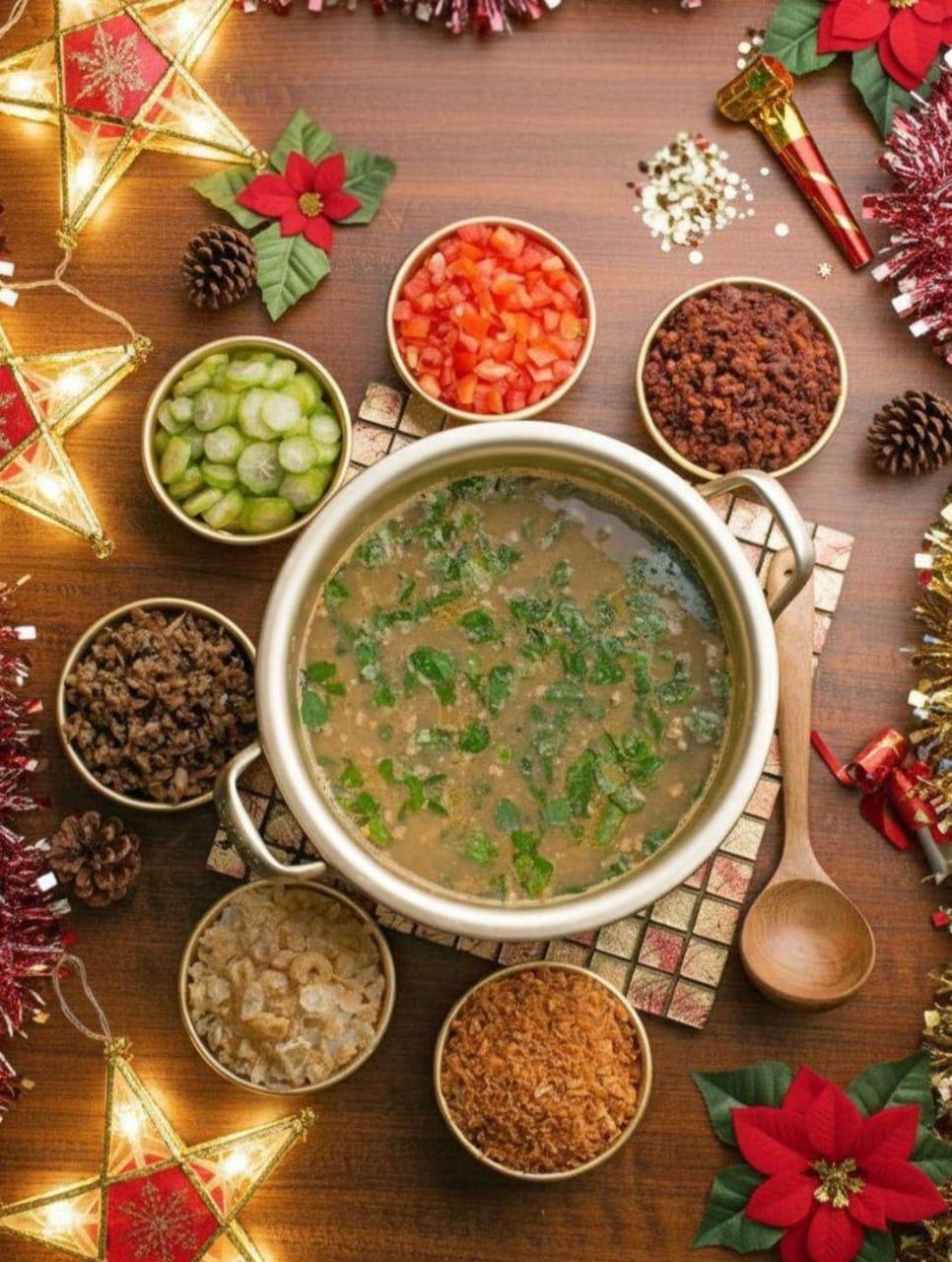
As the year turns, many of us eat luck—deliberately. Round fruits (bilog-bilog) stand in for coins. Malagkit becomes rice cakes meant to “glue” the family together. The stretchier the noodle, the better—for long life. Leafy greens are eaten for health and renewal. Tubers keep us grounded. Legumes like monggo are considered auspicious because they grow and multiply—and because they nourish.
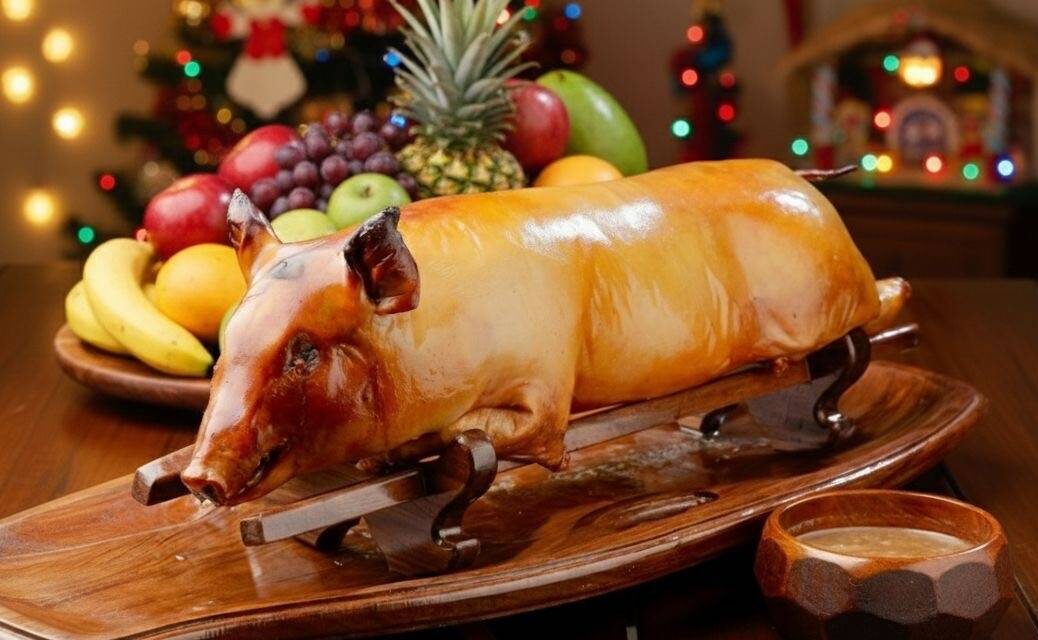
And then there is the star of the Filipino feast: lechon, the unmistakable symbol of celebration, abundance, and success.
Food carries cultural memory
I asked culinary heritage advocate and award-winning author Ige Ramos to share his thoughts on New Year’s food traditions. For him, while bloodlines carry biological heritage, food carries cultural memory.
In the Philippines—where the table sits at the heart of family life—ideas of “luck” come from many places: indigenous beliefs, Chinese influence, and Spanish tradition, all blending into what we now know as Filipino food culture. For Ramos, who draws from a wide social circle rather than a direct lineage, tradition becomes something curated and shared. It is not just about passing down recipes but also about passing on taste memories to a chosen family.
Some dishes remain non-negotiable at celebratory feasts: pancit for long life, sticky rice cakes for togetherness, lechon for prosperity, and rellenong bangus for generosity and care. These dishes endure because they are meaningful—and because they bring people together.
At the same time, Ramos reminds us that tradition is not fixed. New dishes can carry new meanings. An adobo confit becomes a symbol of friendships that deepen over time. A seafood paella enriched with aligue takes on the golden color of wealth and sharing. A fruit salad made with indigenous, seasonal fruits honors the land and what it provides.
He also notes that while tradition is often framed around family, family takes many forms. Having fewer people at the table—or no children—does not mean traditions disappear. They simply evolve.
Welcome the New Year with an open table, says Ramos. After all, “kain tayo” is an invitation we freely offer. In this way, tradition becomes less about bloodlines and more about connection, generosity, and shared meals—where the barkada often becomes family, and friends become keepers of food memories.
Prescriptions for luck and prosperity
Geomancer Hanz Cua joined the New Year musings by sharing his prescriptions for luck and prosperity. Blue, he says, is the lucky color for 2026. The missing element for the year is water, so wearing blue helps enhance it.
The kitchen signifies the fire element and is considered a generator of wealth. It should be clean, bright, and warm, and balanced with wood elements. It should not feel wet or damp. The stove generates wealth. It is where prosperity and money are “cooked.” It should be new or newly serviced, and always kept clean.
Fix faucets to make sure wealth does not “leak,” the feng shui master adds. Water dispensers, LPG tanks, rice bins, and containers for salt, sugar, and condiments should all be kept full. The dining table should always be kept clean and orderly, too.
Other tips he shares include:
•Finding imaginative ways to wear polka dots
•Rolling kiat-kiat inside the house and throwing coins inward as well
•Cleansing the home by lighting incense before New Year’s Eve
•Keeping the main door and the kitchen bright. Replace bulbs that do not work
•Hanging and displaying horse ornaments to bring luck
•Sharing your wealth by giving ampao to children and grandchildren, wishing everyone well, and keeping the energy at home light, positive, happy, and noisy
•Eating together as a family, while serving lucky food
To amplify good fortune, make a prosperity basket by filling it with rice and adding lucky charms, and display it on the dining table. Prepare a basket of 12 fruits, symbolizing luck for every month of the year. All fruits are auspicious, Cua stresses. Mangoes, being yellow, are lucky. Apples bring harmony. Pineapples invite prosperity. Oranges symbolize abundance. Grapes represent luxury. Lemons help take away bad luck. To attract the water element, a basket of a dozen watermelons is an option.
Wishing you a happy, healthy, meaningful, and peaceful 2026—may it be a year of hope and new beginnings.
For consultations, you may reach Master Hanz at (0922) 829 0382
Blue pea pancit
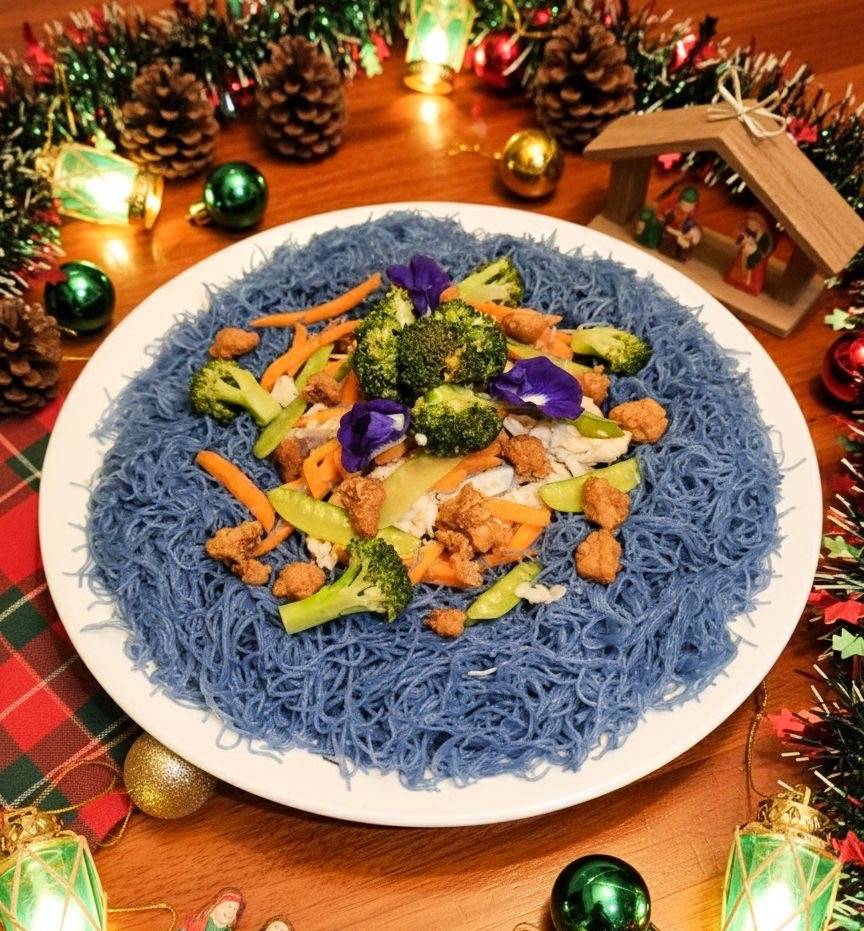
In keeping up with Hanz Cua’s recommendation to have more water this coming New Year, here’s my blue pea pancit recipe. May it not only bless you with a long life but also with joy and abundance.
Pancit stock: The basic stock for all pancit recipes
Ingredients
1 cup shrimp heads
1/2 kilo chicken soup pack
1/2 kilo pork bones
1 carrot, large chunks
1 celery, large chunks
1 onion, quartered
2 tsp garlic, whole
1/4 cup light soy sauce
1 leek, large cuts
2 tsp peppercorn
2 liters water
Salt, to taste
Patis, to taste
Blue pea flowers
Procedure
1. Fry shrimp heads in a little oil.
2. Add the rest of the ingredients (except for the blue pea flowers) and simmer over low fire for at least 1 hour.
3. Cool broth and strain.
4. Blend with dried pea flowers. Add enough flowers to achieve the desired hue
Vegetables
Ingredients
1/4 cup oil
3/4 cup carrot, cut into sticks
Splash of chicken broth
1/4 piece of small cabbage, sliced
1 small broccoli, cut into florets, blanched in hot water and shocked in ice-cold water
1/2 zucchini, sliced

1/4 kilo chicharo, blanched in hot water and shocked in ice-cold water
3/4 cup sliced green beans, blanched in hot water and shocked in ice-cold water
Procedure
1. Sauté carrots in oil. Add cabbage and a splash of chicken broth. Cook until the cabbage has softened.
2. Add the rest of the vegetables to warm. Do not overcook.
Pancit
Ingredients
1/3 cup oil
1 large chicken thigh, boiled and shredded
1/4 kilo Bagnet, sliced into strips
12 pieces shrimp, peeled and deveined
1 onion, sliced
2 tsp garlic, pounded
1/2 kilo pancit bihon, soaked in water
1/4 cup light soy sauce
Pancit stock
Salt and pepper, to taste
Patis, to taste
Procedure
1. In a wok, fry bagnet in oil and set aside.
2. Add chicken, saute, and set aside.
3. Cook the shrimps until it changes color. Set aside.
4. Sauté onions until translucent, then add the garlic.
5. Add noodles and 4 to 6 cups of stock. Adjust accordingly.
6. Add light soy sauce and season to taste with salt and pepper.
7. Transfer to a serving dish. Cap with sauteed vegetables, chicken, shrimps, and bagnet.
8. Serve with calamansi and patis.