








Empowered voices

Across schools, workplaces, and communities around the country, National Women’s Month is a time devoted in recognition of a powerful and enduring force in society: Filipina women. In addition, Republic Act No. 6949 declares March 8 as National Women’s Day.
Women’s Month serves as a platform to amplify women’s voices, recognize our contributions, and confront the challenges we still face—particularly discrimination, gender-based violence, and unequal opportunities against our male counterparts. More than a celebration, Women’s Month serves as an enduring reminder of both the progress achieved and the continuing struggle for equality, safety, and representation. It also highlights the vital role women play in nation-building while encouraging conversations about gender equality and empowerment.
Over the years, there have been legal mechanisms put in place by Philippine legislation in order to protect women’s rights.
A legal backbone for women’s rights
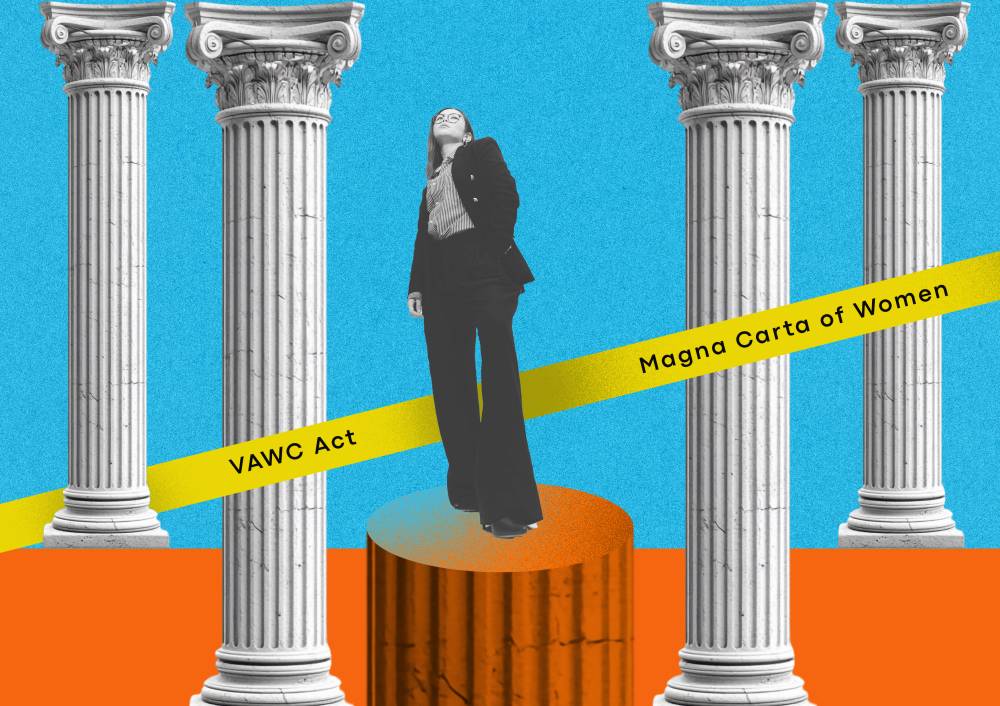
Behind the celebrations lies a strong legal framework designed to protect and uplift Filipino women. At the center of this framework is Republic Act No. 9710, also known as the Magna Carta of Women. This landmark law affirms that women’s rights are human rights, and mandates the state to eliminate discrimination and ensure women’s equal access to opportunities in education, employment, healthcare, and governance.
The Magna Carta of Women goes beyond symbolic recognition. It requires concrete action, such as integrating gender equality into government policies, increasing women’s participation in leadership, and establishing mechanisms like Violence Against Women (VAW) desks in barangays to assist victims. It also guarantees specific benefits, including special leave for women undergoing gynecological surgery and protection against workplace and educational discrimination.
Gender-based equality in the workplace
Republic Act No. 6725 codifies the express prohibition against discrimination against women with respect to the terms and conditions of employment. It penalizes specific acts, such as payment of a lesser compensation to women employees for work of equal value, favoring a male employee over a female employee with respect to promotion, training opportunities, and study and scholarship grants solely on account of their sexes.
Motherhood and pregnancy
Congress has also enacted laws that specifically protect women, mothers, in awareness of the biological and physiological realities they face in relation to motherhood and childbirth, and in order to protect their overall reproductive health.
Republic Act No. 11210, or the Expanded Maternity Leave Law, recognizes women’s maternal function as a social responsibility, and provides them with ample transition time to regain health and overall wellness as well as to assume maternal roles before resuming paid work.
Notably, it increased the period of paid maternity leave for working mothers in the public and private sector to 105 days. This is unconditional, regardless of her marital status, or whether the birth is through natural or caesarian, provided that the mother has made the necessary contributions to Social Security Service. This is a significant increase from the previous 60 days of paid maternity leave for working mothers in the public and private sector.
The law also recognizes unfortunate circumstances, and carved out accommodation for such situations. Thus, mothers who also experienced miscarriage or emergency termination of pregnancy are also afforded 60 days of paid maternity leave. Additionally, this law also understands the special circumstances of single mothers. In connection with Republic Act No. 8972, or the Solo Parents Welfare Act, mothers qualified as such are entitled to an additional maternity leave benefit of 15 days on top of the 105 days.
Addressing violence and harassment
While equality for women is the goal, safety remains a pressing concern because of the prominence of gender-based violence in the Philippines.
One of the most significant is Republic Act No. 9262, or the Anti-Violence Against Women and Their Children (VAWC) Act. This law criminalizes various forms of abuse against women and children—physical, psychological, sexual, and economic—and provides legal remedies such as protection orders and support services for victims. It also affords immediate remedies such as Temporary Protection and Protection Orders during the pendency of the criminal case, and provides measures such as the installation of women’s desks in barangays around the country.
Complementing this is Republic Act No. 11313, or the Safe Spaces Act, also known as the “Bawal Bastos Law.” It expands protection into public and digital spaces by criminalizing acts like catcalling, stalking, and online harassment, and imposes corresponding criminal liability. It also obliges institutions to create systems that prevent and respond to such behavior.
Together, these laws reflect an evolving understanding of violence—acknowledging that harm can occur not only at home but also in streets, workplaces, schools, and online platforms.

The continuing challenge
Despite these legal safeguards, challenges remain. Reports and public discourse continue to highlight cases of abuse, discrimination, and unequal access to resources. Awareness and enforcement of laws are ongoing concerns, especially in marginalized communities.
This is where Women’s Month becomes crucial—not just as a celebration but also as a call to action. It encourages citizens, institutions, and policymakers to ensure that laws are not only written but fully implemented.
Ultimately, Women’s Month in the Philippines is one of resilience and progress. It reflects decades of advocacy, legislation, and cultural change aimed at building a more inclusive society. Yet, the responsibility does not rest on women alone. Achieving true gender equality requires collective effort from government agencies enforcing laws, to communities fostering respect, to individuals challenging harmful norms.
As the country celebrates Women’s Month each year, it also renews a commitment: to uphold the dignity, rights, and potential of every Filipina. When women are protected and empowered, the entire nation moves forward.
******
Get real-time news updates: inqnews.net/inqviber