









Fashion collaborations and the illusion of democratization

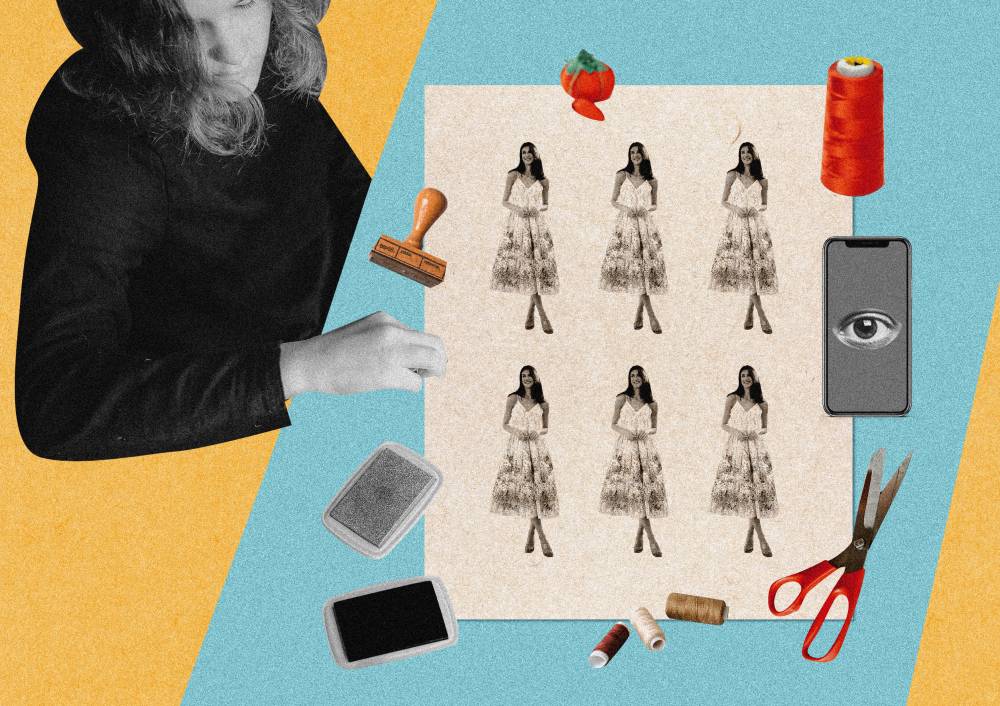
Global retail brands have become central arbiters of fashion in the 21st century, and they now wield significant influence over designers and creative directors. From Karl Lagerfeld’s partnership with H&M to ongoing projects involving JW Anderson and Uniqlo, these collaborations have become a defining feature of the modern fashion landscape.
The latest example—John Galliano working with Zara—may have surprised the industry, but it ultimately follows a trajectory that has been building for years. Its roots can be traced back decades earlier, most notably to Halston’s partnership with JCPenney in the early 1980s. At the height of his career, Halston’s decision to design for a mid-market retailer was met with sharp criticism. Luxury retailers reportedly distanced themselves, and his reputation within high fashion suffered. At the time, it was seen as a breach of fashion’s hierarchy, and for years, the industry maintained that divide.
What once felt disruptive now feels systemic. The question is no longer why these collaborations happen, but what they expose about the shifting power structures within fashion.
The illusion of democratization
Collaborations are often framed as acts of democratization, and on the surface, they succeed. They bring recognizable aesthetics, names, and ideas to consumers who might otherwise never encounter them.
But accessibility in fashion is rarely neutral. To function at scale, design must be simplified. Complex references are distilled into visual cues, construction is adjusted for production efficiency, and garments are shaped as much by logistics as by intent. What reaches the consumer is not the full depth of a designer’s work, but a version calibrated for mass consumption.
All of these complicate the narrative of democratization. What is being made accessible is not couture itself, but its most legible form.
Collaboration or absorption?
When a designer operates within a system defined by speed, volume, and global distribution, their work is inevitably shaped by those conditions. What emerges is not a synthesis of high and low, but a reconfiguration of creativity itself.
Crucially, this integration cannot be separated from the ethical dimensions of the system it sustains. Fast fashion has long been scrutinized for its environmental impact, labor practices, and the acceleration of consumption cycles. These concerns do not dissipate through collaboration; they persist beneath the surface, even as design is elevated through association with established creative figures.
In this light, such partnerships risk doing more than expanding access, they risk legitimizing a system whose structural issues remain unresolved.
When designers of the caliber of Lagerfeld or Galliano enter the realm of fast fashion, their presence confers cultural authority, reframing mass production through the lens of authorship, craftsmanship, and legacy. What was once criticized as disposable becomes recontextualized as desirable, even aspirational. Basically, it’s giving similar vibes to Shein opening a store in Paris.
The question, then, extends beyond aesthetics or authorship. It becomes one of complicity: what it means for designers to operate within—and, in doing so, reinforce—the systems that reshape their work.