











Fitness pros and influencers still have a lot to learn about arrogance

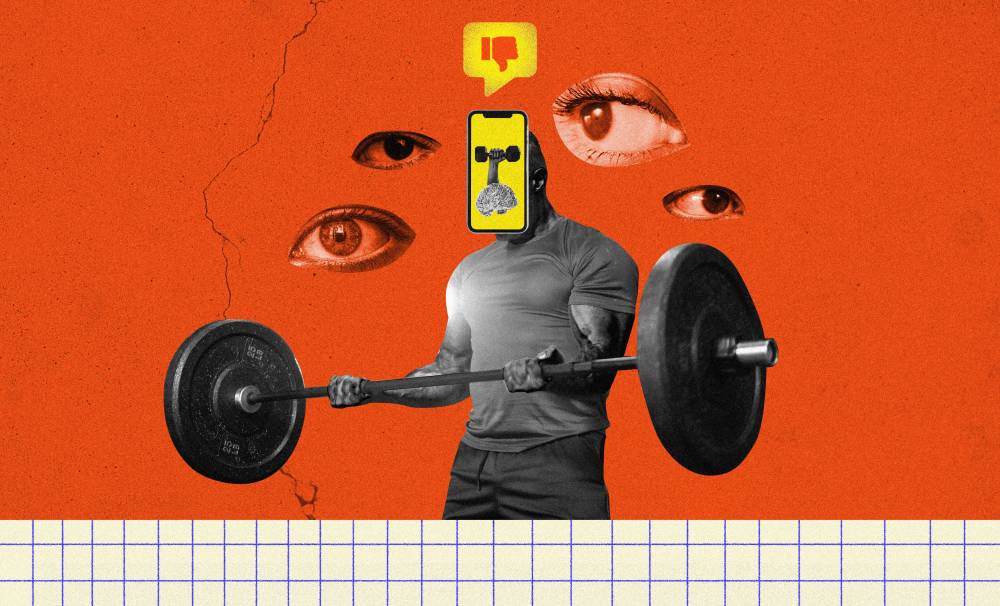
Another day, another controversy on the internet. Over the weekend, a firestorm quickly kicked up on the fitness side of Facebook: local pro bodybuilder, certified fitness trainer, and online personality Harold Goma found himself at the center of attention after he noticed a newbie gymgoer do a side lateral raise at a machine using an ankle cuff instead of a dumbbell—and he made a post that seemingly judged the person for doing so.
The world assumed that was his intention because he used the facepalm emoji and remarked, “Science-based pa more.” (I’ll explain that one in a bit.)
Life comes at you fast
If you know nothing about working out, and that sounds ridiculous to you, it mostly is. But allow me to explain: Traditional weightlifting has us favor free weights or at least the proper cable grip when you’re using a machine.
Now, the whole ankle cuff gimmick is taken directly from a video by Jeff Nippard, a popular fitness content creator who is considered the current face of science-based lifting.
The reactions were swift. Surprisingly so, actually, considering it only happened a few days ago as of writing.
While some agreed because they also didn’t like science-based lifting (which I’ll also get to in a bit), and some also didn’t find ankle cuffs personally good to work out with, many others chastised Goma for shaming the gymgoer, even if he didn’t name the person.
Fellow fitness creators were also quick to slam Goma and tell him to educate instead of ranting on social media (to which he replied that he didn’t bother to talk to that person because one, they weren’t his client, and two, they didn’t ask). A local supplement brand was even quick to end its ties with him, although the gym that employs him as a personal trainer has yet to pursue any action.
It pays to be kind
Many also chalked up his behavior to why a lot of people feel intimidated to start a fitness journey in a commercial gym, where they feel there will be a lot of judging eyes. And honestly, despite me constantly telling people that no one’s going to care about what you do in the gym, as long as you’re not hurting yourself or others, the way people (especially a coach) like Goma act on the internet only validates those fears.
I think by the time you’re reading this, you already know that not only does it pay to be kind and not be a judgmental dick on social media, but if you’re a pretty important person in some places, your behavior could be your downfall.
And while I don’t think Goma should have been dropped by his brand—although he only apologized when he was—sometimes, hard lessons do need to be taught.
Train how you want
The bigger issue here, in my opinion, is the pervasive bias against science-based lifting.
What is science-based lifting, you ask? If you start weight training and someone’s helping you (as almost everyone experiences when they start out), they’ll usually dish out a lot of advice that sounds solid and scientific.
Don’t get me wrong—they are, and pretty much all fitness coaching and advice is based on some established anatomical science. But often, what’s passed down from mentors to students is anecdotal evidence and workout plans, and while those definitely work, they also aren’t the most optimal in terms of science.
Science-based lifting improves and sometimes even changes the accepted traditions through scientific data accumulated from proper studies and experiments. Nippard is the face of this movement right now because he’s done the most to push these data and results and recommend how they can be applied through various exercise tweaks and changes, like the aforementioned ankle cuff trick.

The bigger issue
To me, the bigger issue here was that Goma clearly looked down on the approach (based on what he said in his post) because it’s apparent that it’s not what he would have personally done for a beginner lifter. He likely would have made gains the old way, and the science doesn’t say that he wouldn’t. If he got to a pro physique doing it old-school, and he’s got a better body than I do, then he’s obviously doing something right.
But there’s really no reason to shame someone who wasn’t even bothering him because he was doing it in a way he felt was weird and foreign to him.
After all, that’s the place where most judgment comes from, isn’t it? We think someone’s doing it wrong just because they’re not doing it our way, and we are quick to label them as stupid or ridiculous. But Goma clearly identified where and who the gymgoer got it from, and Nippard obviously isn’t a guy who recommends things at random.
And issues like this still lay bare the fact that we’ve got so much to learn—not only about how we act in the gym, but also with the influence that we’re able to build up through a following on social media.
For now, if we’re to believe the words on his latest social media post, Goma seems to have learned his lesson—at least as far as how brands want their ambassadors to act in public. (And if you’re reading this and aiming for the same thing in your career, you’ll need to learn this lesson, too.)
Words are easy to say, though; he’ll have to get over the fact that there will be things that are strange to him that he’ll be seeing at his workplace, and there will be lifting approaches that are not his usual Arnold Schwarzenegger routines.