









From racy satire to comedic reality: Jeffrey Jeturian’s films

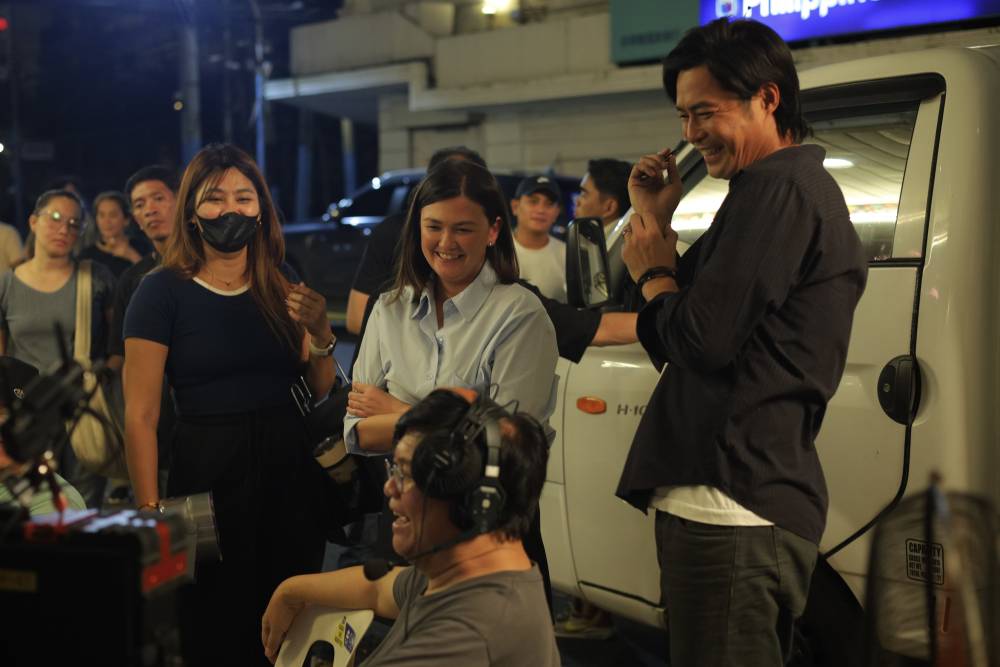
It was a Saturday afternoon, sunny but with a slight drizzle, when I got to sit down and talk to one of my favorite Filipino directors of all time, Jeffrey Jeturian. I had met him at the end of October during the special screening of the newly restored Gerardo De Leon 1951 classic, “Sisa,” where I introduced myself and told him I was a fan, and that I taught his film “Tuhog (Larger Than Life)” (2001) in my class on Film and Culture at the De La Salle College of St. Benilde. He was absolutely thrilled to hear that the film, one of his favorite works, is finding a new audience with film students.
To my surprise, he is soft-spoken, very unassuming, unlike many directors I’ve come to know. I immediately asked him if I could interview him to talk about his movies and his return to cinema after almost 10 years since “Ekstra” in 2013. What was initially set to be an interview over coffee turned into a conversation about movies, both past and present.
From film to television
There’s nothing showbiz about Jeturian. You wouldn’t be able to tell off the bat that he is a multi-award-winning director with a FAMAS (Filipino Academy of Movie Arts and Sciences) Award and a Gawad Urian to his name.
As we were talking about his career, I was absolutely floored that in the 27 years since he directed his first film, “Sana… Pag-ibig Na,” he has only done nine movies. His tenth film, the upcoming Metro Manila Film Festival (MMFF) entry “Unmarry,” was produced by Quantum Films and Cineko Films and written by Chris Martinez and Therese Cayaba.
It is such a surprise to me because, as far back as 2004, we would celebrate the release of a new Jeffrey Jeturian film. In that year alone, we were overjoyed to have two Jeturian releases—“Bridal Shower” and “Minsan Pa”—with “Bikini Open” the following year, and then the globally celebrated independent film “Kubrador” in 2007.
In those 27 years, the master filmmaker has kept himself busy directing television series. “Pinagsabay ko ang TV and movies,” he shares. “I consider TV as my bread and butter. Films are my passion. I’m very careful with my filmography. If the material doesn’t excite me, I won’t do it. And I’ve had offers.”
A new wave of bomba films
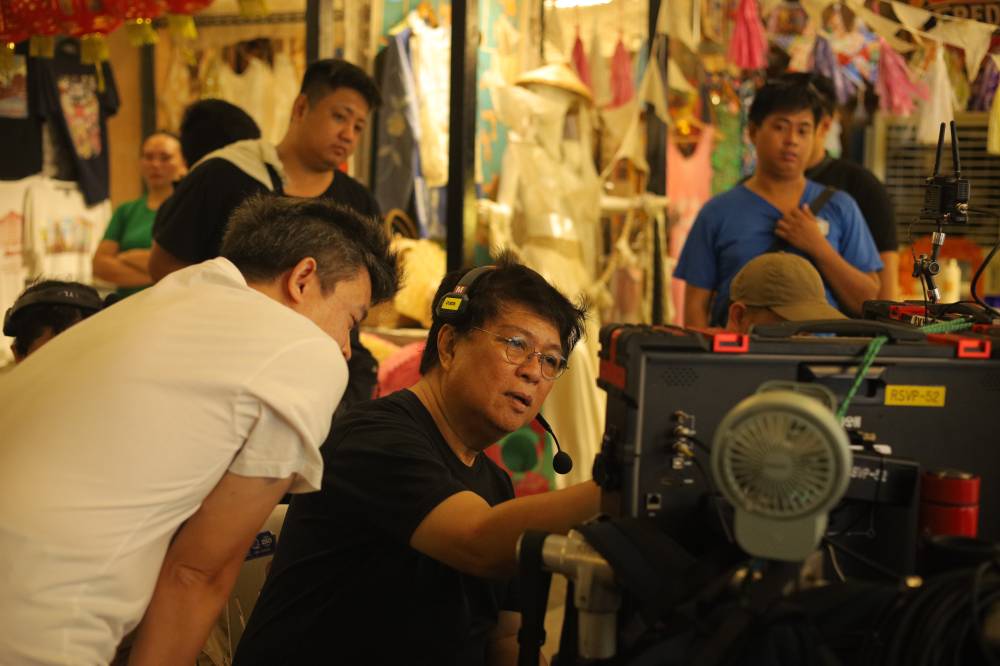
And what a filmography! Jeturian got his first break in the late ’90s at the rise of the ST films (the new wave of bomba films called Sex Trip films). From there, he made three movies: “Sana… Pag-ibig Na,” “Pila-Balde,” and “Tuhog,” all written by Armando Lao. While the films were racy and sexually provocative, Jeturian and Lao were sure to add depth to the narrative by tackling the politics of the power dynamics of sex and, in the case of “Tuhog,” a commentary on the exploitative nature of the ST film.
A subversive movie that satirizes exploitation in filmmaking, “Tuhog” shows fictional characters who undergo a traumatic family scandal and see their lives turned into a sloppily written sex film that twists facts for arousal. It’s both funny and painful, showing how women can be violated multiple times by men in a society that praises men’s virility and then demonizes women’s desire.
In fact, “Tuhog” was so good that Armando Lao won Best Screenplay at the Gawad Urian Awards while the film won Best Picture. And then in 2011, “Tuhog” won Best Film of the Decade (2000-2009) for Jeffrey Jeturian.
The commodification of love
It would also be the film that would connect Jeturian with Chris Martinez, who would later write for him some of his hit comedies. “When Chris Martinez saw ‘Tuhog,’ he said, ‘I want to work with that director,’ which was me,” Jeturian recalls. “And then when I got an offer from Seiko to do a film for them, Robbie Tan (head of Seiko films) had been courting me to do a film for them, kasi fan din siya ng ‘Tuhog,’ but I kept holding it off.”
At the time, Seiko Films was famous for releasing erotic and sexually explicit films that turned stars like Rosanna Roces into national sex symbols. Jeturian was cautious and wouldn’t budge until Tan allowed him to make a movie on his conditions.
“When he agreed with my terms, that’s when I agreed to do a film for them,” he continues. “And si Chris [Martinez] kasi, I saw one of his plays, ‘Last Order sa Penguin.’ I thought of getting him to do a sex comedy for Seiko, and even if it was a film about sex, it still said something about relationships.”
“‘Bridal Shower’ is about the commodification of love. It wasn’t just a run-of-the-mill sex film,” Jeturian adds. “It did well in the Metro Manila Film Festival. That was my first MMFF film.”
“I love doing satire,” he says about his older works like “Tuhog” and “Ekstra.” “It’s one way of commenting on social realities without ramming the issues down people’s throats.” And especially with those two films, it allowed him to “poke fun at the industry I belonged to.”
He then adds, “And the good thing about ‘Tuhog’ was when the industry people saw it, they didn’t mind. They were laughing at themselves also. They didn’t get mad that I was satirizing them, which also happened with ‘Ekstra.’”
No longer a satire
Ten years later, Jeturian finds himself again at the MMFF with a new film, “Unmarry,” working alongside Martinez as scriptwriter (with Cayaba) and working with producer Atty. Joji Alonso of Quantum films, with whom he has worked in “Minsan Pa” (2004), “Kubrador” (2006), and “Bisperas” (2011).

“Unmarry,” a story about two couples who are in the process of getting annulled, is not a satire, though. It’s a story that came from an idea from Alonso, who also takes on annulment cases as a practicing lawyer.
While it’s not based on a real case or real people, the emotions and procedures are taken from similar stories she has experienced in the field. “What’s different about ‘Unmarry’ is, even if it tackles a seemingly serious issue like marriage and annulment, after watching the film, ang feeling mo is that it is a delightful movie,” Jeturian explains. “Which is strange because it’s about annulment. How could it be delightful?”
“Humor is natural for me,” he shares. “My belief is that humor is as effective a dramatic device as drama itself.”
He further posits that if you can reach your audience with characters in a comic, pleasant way, you can bring your audience with you on whatever ride you decide to take them on as a director. “The nature of the Filipino is light-hearted and filled with great humor,” he says. “That’s why I don’t understand so many Filipino films that are so heavy and full of drama. It doesn’t feel Filipino.”
“Filipinos don’t carry their problems with them in their daily lives,” he observes. We talk about memes and our own observations about Filipinos in times of crisis. “Ang Pinoy hindi nahahalata na naghihirap.”
A comeback into film
When asked about coming back to film after a 10-year hiatus, and then as part of the MMFF, Jeturian says, “I’m excited because I’m so happy with the outcome of the film that I made.”
He adds that he is eager for us to see his ensemble, which includes lead stars Angelica Panganiban and Zanjoe Marudo, whom he has high praise for, along with Eugene Domingo, who plays the lawyer, and co-stars Tom Rodriguez and Solenn Heusaff.
He warns us that it’s not an art film. “This is a commercial film,” he says. “There’s so much humor in the film. Instead of being overly dramatic, it’s delightful. And we do not undermine the value of marriage. You’ll know what I mean when you see the film.”