









From the griller to the pond

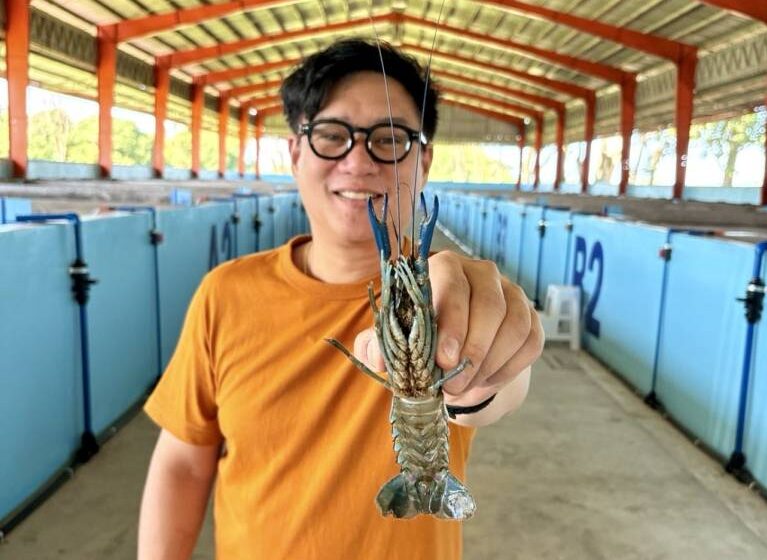
Mike Pelayo defines himself as a builder at heart—one who has worked across construction, food, sports, and agriculture. From growing a chicken barbecue brand—Vito’s Barbecue—to helping develop boxing talents Filipinos can be proud of, his preoccupations have been driven by a love for creating from the ground up. And most recently, that instinct has led him into the crayfish industry.
Beyond building businesses, Pelayo says, he is focused on building industries—creating opportunities and shaping long-term impact, always with the hope of making a meaningful difference in the country.
From food to seafood
Pelayo never imagined that his fascination with food would one day lead his family into aquaculture. Coming from a large brood of boys and a girl, food has always been at the center of the Pelayo family’s shared curiosity—perhaps it’s the Kampampangan in them.
Meals were never just about eating; they were about discovery. Over time, the family found themselves especially drawn to Cajun-style seafood boils, crayfish boils, and restaurants inspired by Louisiana cuisine.
Those experiences sparked a question that lingered long after the meals were over: “Why isn’t this being done in the Philippines—seriously, and at a larger scale?”
That question stayed dormant for some time. Pelayo was well aware that in the Philippines, crayfish were largely regarded as aquarium pets or novelty species, bred in small numbers as craylings. But from a food perspective, he felt it was a missed opportunity. “Crayfish are not only delicious; when done properly, they are also commercially viable—and full of promise,” he says.
His idea took shape during a trip to Taiwan. Pelayo’s brother, Rap, who is involved in agriculture through okra and edamame farming, introduced the family to a crayfish farmer. Eager to learn, they immersed themselves in the process and eventually hired him as a consultant. Drawing from real production experience, their consultant helped them design systems—from tank layouts to water flow—turning a general idea into something tangible.
Hatching up a new business
The Pelayos opted to build their hatchery in Candaba, Pampanga—their hometown. To manage costs, they repurposed a 1,280-square-meter motor pool previously used for heavy equipment, converting it into a hatchery after extensive cleaning and testing. Before thinking about expansion, they focused on what mattered most: water quality, ensuring it could support the requirements for Australian red claw crayfish to thrive.
Crayfish farming is far from forgiving, especially with little local precedent. When they started, there were no locally formulated feeds specifically for crayfish. Probiotics were difficult to source, and many systems had to be built from the ground up. Early on, the family decided that their company, Early Catch Corporation, would be self-sustaining—not just operationally, but philosophically—by controlling costs, repurposing byproducts, and gradually shifting 24-hour aeration systems to solar power.
Losses, as in all forms of aquaculture, were inevitable. “Biology has its own rules,” Pelayo notes. But with careful design, constant monitoring, and proper guidance, mortality was kept to a minimum. Today, the farm runs smoothly, with stable and consistent results.
For Pelayo, there is a bigger picture.
He intimates that in Candaba, many tilapia farmers are trapped in a difficult cycle. As the economics no longer make sense, many ponds are being abandoned. But crayfish, Pelayo explains, offer a viable alternative. They thrive in similar water conditions and, at current market prices, provide farmers with a real opportunity to earn sustainably. Existing ponds can even be converted rather than left to fail.
Training, transparency, and collaboration
Alongside the hatchery, the Pelayo family is developing 22 hectares of grow-out ponds, allowing them to complete the full production cycle—from hatchery to market-size crayfish—within their own system. This scale gives them the space to refine best practices before expanding further.
From the beginning, Pelayo knew this was not knowledge meant to be kept. One of Early Catch Corporation’s core principles is openness. “If an industry is going to grow,” he says, “it must be shared—through training, transparency, and collaboration.”
This is why the family aims to work closely with government institutions, not only to scale production, but to help establish demo farms and deepen understanding of crayfish life cycles under Philippine conditions.
Today, the hatchery is operating at full capacity, with the grow-out phase well underway. From Pampanga, the vision extends to the Visayas, Mindanao, and ultimately, toward building a national crayfish industry that did not previously exist.
Sustainability, Pelayo believes, must be anchored in real demand. He sees strong potential for Australian red claw crayfish, both locally and for export. Across Asia, crayfish consumption is already well established. Locally, the opportunity lies in experience. Once Filipinos taste the sweetness and delicate texture of crayfish, the response will be immediate—much like his own first encounter with it years ago.
“In the end,” Pelayo reflects, “this is not just about business. It’s about believing that innovation in aquaculture can change lives.”
It is about proving that with patience, discipline, and the courage to take risks, something new can be built—one that benefits not just a single family, but Filipino farmers and fishermen as well.
That, for Mike Pelayo, is what real impact looks like.
Crayfish will be available next month. For orders and queries about contact Francis De Vera at 09178025525
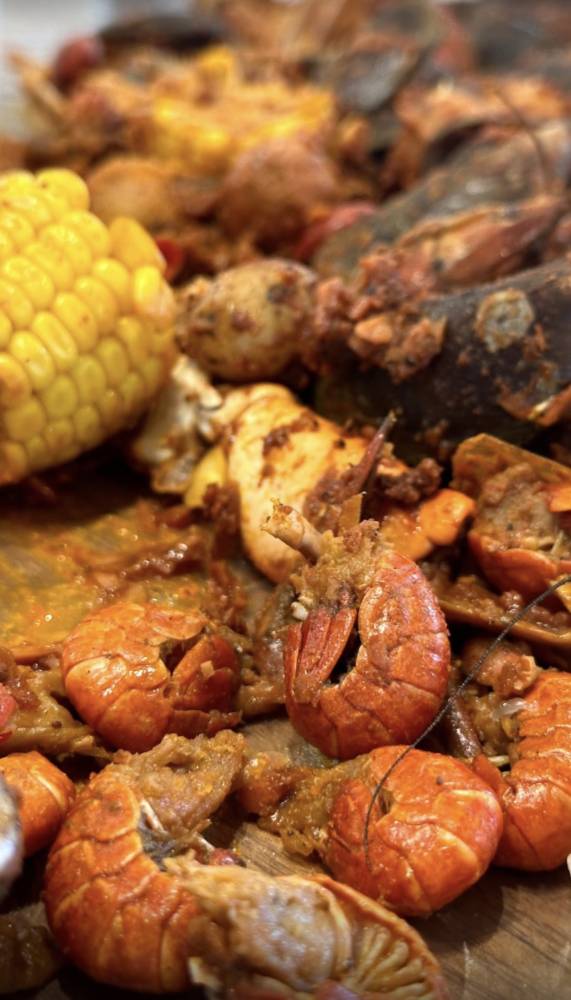
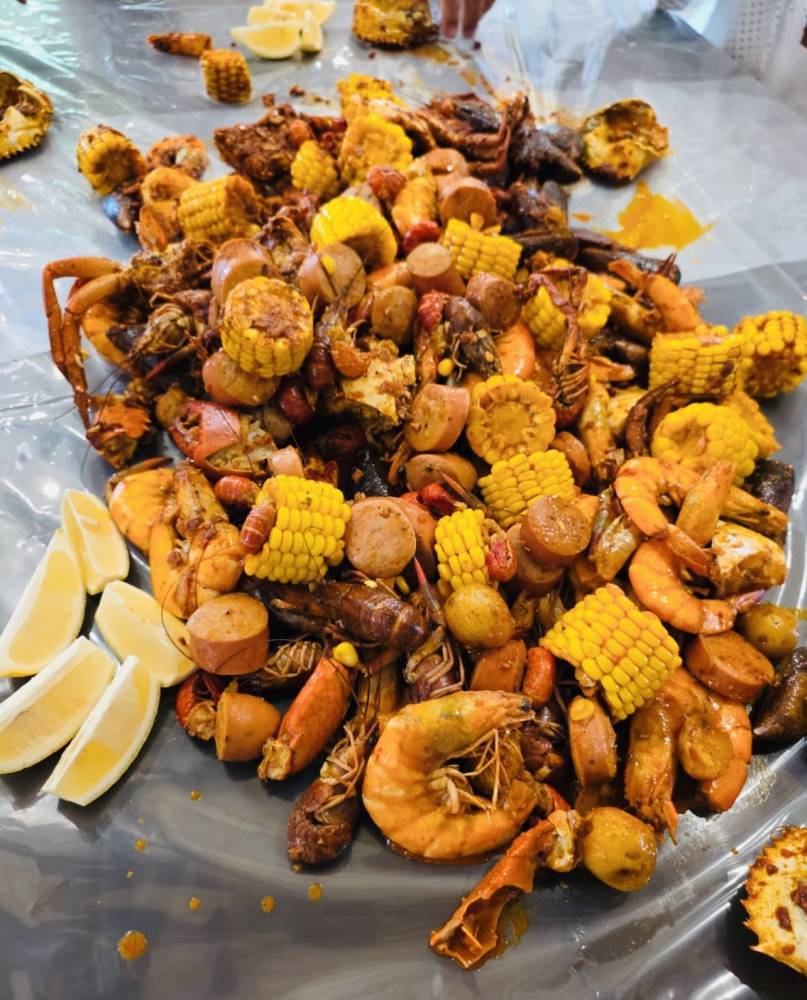
Mike’s sweet and smoky Cajun-style seafood boil (good for 8 pax)
Serve with white rice and sliced lemons
Ingredients
Seafood and add-ons
2 kg crab
2 kg mussels
500 g shrimp
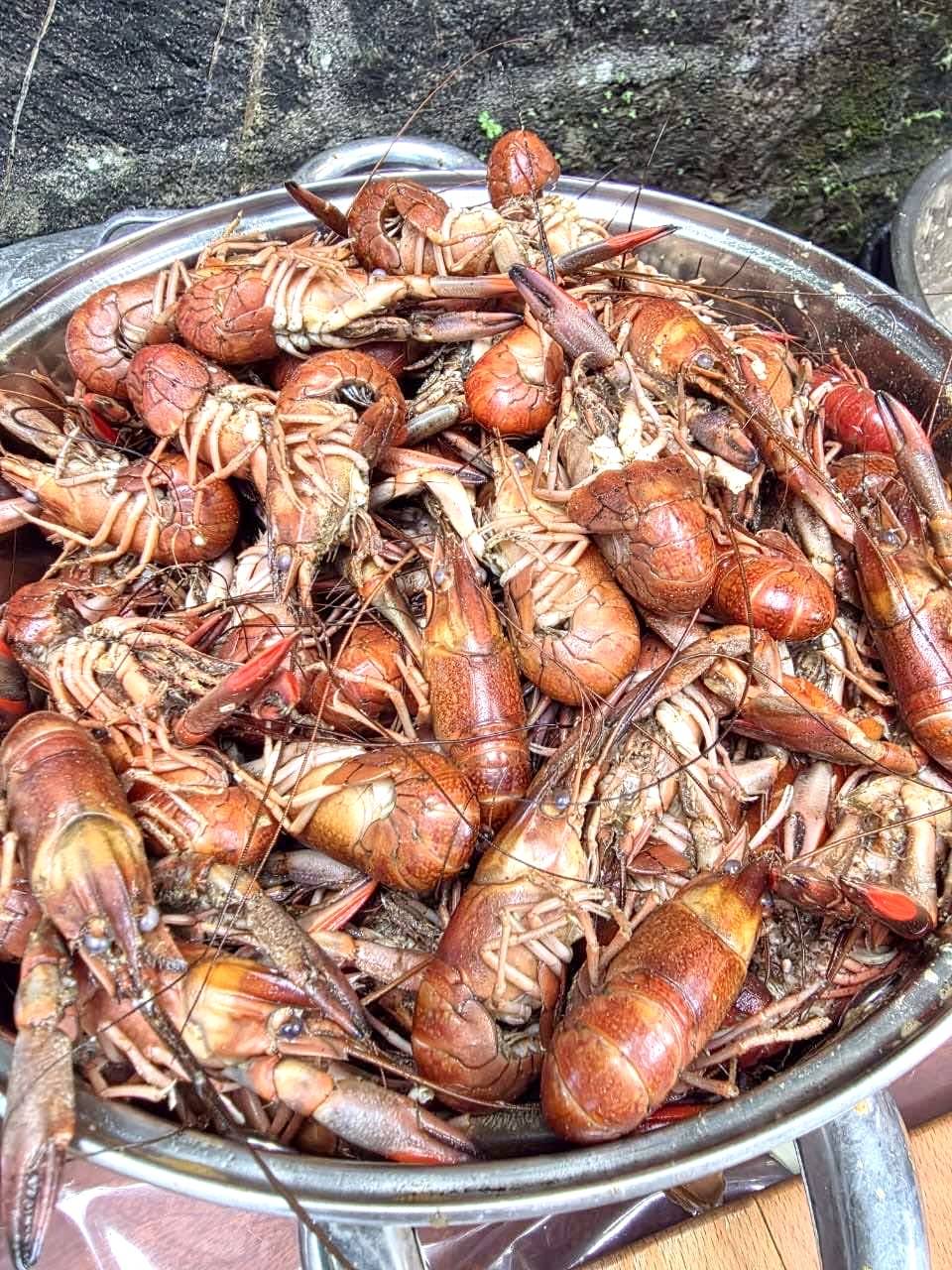
1 kg crayfish

6 links Hungarian sausages (sliced)
2 pcs sweet corn (cut)
5 kg baby potatoes
Boiling stock
6 to 8 liters water + 8 tbsp Cajun seasoning (McCormick)
Butter sauce
2.5 sticks (oleo) butter (225 g)
1 cup minced garlic
1/2 cup Cajun
1/4 cup Old Bay
1/4 cup lemon pepper
1/4 cup brown sugar
1/2 cup smoked paprika
1/4 cup cayenne pepper (optional)
Procedure
- Boil potatoes and corn in a separate pot until tender. Drain and set aside.
- Make the stock by boiling water and Cajun seasoning in a large pot.
- Cook seafood in batches: mussels (2 to 4 minutes), crab (8 to 12 minutes), crayfish (3 to 5 minutes), and shrimp (1 to 2 minutes). Remove each one right away.
- Make the sauce by melting butter and sautéing garlic for 1 minute, then mix in all seasonings. Heat for 5 minutes.
- Combine everything in a large food-grade plastic bag (must be thick enough for it not to get punctured), pour in the sauce, and shake. Serve boodle-style and enjoy.