









Have I aged out of the climate movement?

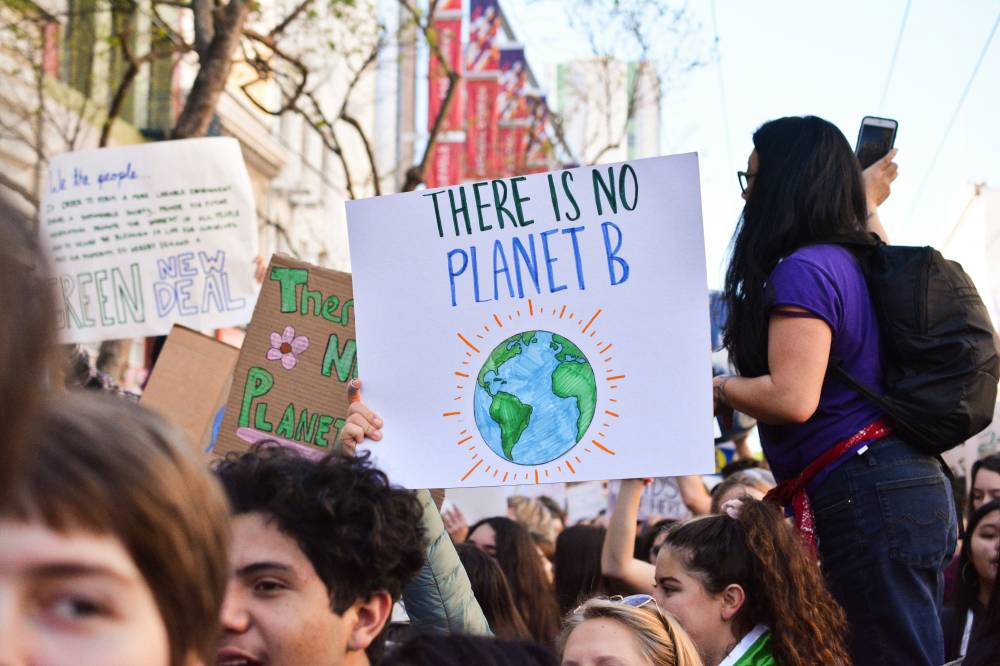
When I was 18, I worked for WWF UK for the first time under its youth movement, Youth for Our Planet. It was the middle of lockdown, a moment when the world felt both paused and unbearably urgent, and the opportunity seemed improbable.
Still, doors opened. I learned quickly, worked hard, and found myself speaking on international platforms that had once felt impossibly distant: a WWF UK pop-up at COP26 and an exhibit at the Glasgow Botanic Gardens called “Glasgow to Globe,” while a video of mine played at the launch of the Dasgupta Report—an event attended by then-newly crowned King Charles.
In the years that followed, more opportunities came. In 2022, I became part of the World Ocean Day Youth Advisory Council. In 2024, I joined the Youthtopia Circle of Youth. Each role came with its own language of participation and promise—another seat at another table where youth voices were invited to speak about the future.
A quiet contradiction
In these spaces, a familiar narrative took shape around me. I was introduced not simply as a climate advocate, but as a young one—often a “brave” one, from a country described as “deeply vulnerable” to climate change. My age, my origin, and the urgency of the crisis were folded together into a single, marketable story.
Youth was treated as proof—proof that the crisis mattered, proof that the future was listening, proof that institutions were doing the right thing by making space. What was rarely treated as was power.
This is the quiet contradiction at the heart of youth advocacy.
Negotiating with the deaf
Young people are invited to symbolize urgency, not to exercise authority. Being heard is mistaken for being heeded. Panels applaud; decisions are made elsewhere.
But youth presence becomes ornamental—something to point to in press releases and post-event reports—while structural power remains untouched. The invitation to speak does not come with the ability to decide.
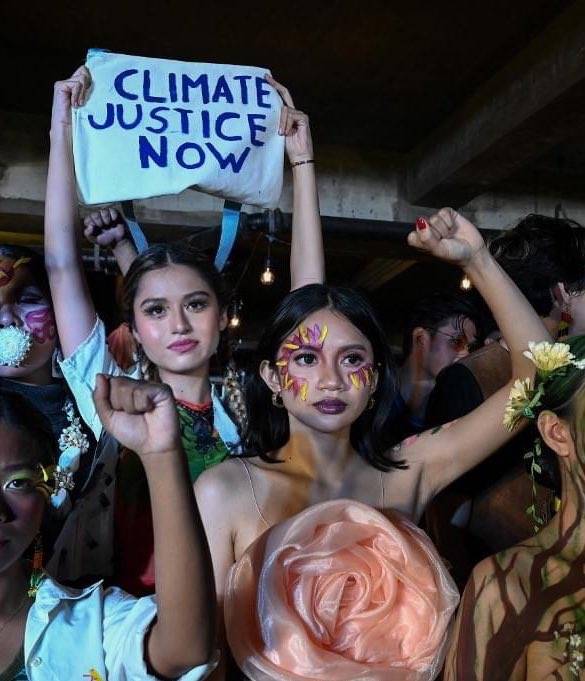
Too old for heroics
There is an age ceiling no one names. It is enforced not through policy, but through preference: grants capped by youth brackets, fellowships for the “emerging,” foundations seeking the next young face of a movement.
A colleague once told me about a major Western foundation looking to platform a young changemaker in Southeast Asia. Many names came up. Then the qualifier arrived: preferably no one above 18. The paradox is difficult to ignore. The very experience young advocates gain by working in these spaces eventually disqualifies them from future access to them.
This fixation on youth is not neutral. Institutions tend to prefer young people who are legible, grateful, and non-threatening—those who speak in moral clarity rather than institutional fluency. As young advocates age, they learn how power moves: how funding works, how language obscures responsibility, how “listening” can be a substitute for action. They become more precise, more critical, less easily impressed.
And with that comes a loss of marketability. Passion is celebrated. Competence paired with moral authority is not.
The burden is heavier for young advocates from the Global South. We are often framed as evidence of what is at stake rather than as partners in shaping solutions. Introductions emphasize vulnerability over expertise, resilience over strategy. Our stories are useful insofar as they confirm the severity of the crisis, but rarely insofar as they challenge who gets to lead the response.
We are welcomed as testimony, not as architects.
Repeated negotiations mean failure
Over time, the emotional cost becomes impossible to ignore. Youth advocacy requires a kind of unpaid labor that is rarely acknowledged: the repeated telling of catastrophe, the constant translation of grief into urgency, the expectation that hope remains intact despite inaction. The same speeches are delivered in the same rooms, to the same types of people, with the same demands.
I remember thinking, “If I have to repeat myself at the same conference, this is evidence that the last time did not work.” Burnout is treated as an individual failure of resilience rather than a predictable outcome of institutional neglect.

Am I, as young people say, unc?
When I was 19, I co-founded a local youth nongovernment organization in the Philippines with friends I had met through the WWF UK. I wanted to shift my focus—away from international stages and toward climate education at home. Throughout the years, the work became more grounded, more strategic, and arguably more impactful.
But as my capacity to create lasting change grew, the invitations slowed. Speaking engagements dwindled. Collaborations became less frequent. The irony was hard to miss: I was more experienced, better connected, and more capable than I had been at 18—and therefore, far less interesting.

How do we keep growing together?
For many changemakers who have “aged out,” another dilemma emerges: How to continue this work, while building a life that can actually sustain it?
Advocacy is rarely a full-time, paid role, yet it demands full-time commitment. Many of us work elsewhere to support ourselves, fitting changemaking into evenings and weekends. With that comes a quieter tension—especially in the Philippines—around labor and compensation.
There is also a persistent guilt in asking others to volunteer their time and energy, knowing how precarious daily life already is, knowing that passion does not pay rent. What once felt like collective action begins to feel like an ethical compromise.
After the applause
There is no adulthood plan for young changemakers. No pipeline that carries us from youth panels into sustained leadership roles. No mechanism to retain the knowledge, relationships, and institutional memory we build. Movements that claim to care about the future routinely discard the people who have already committed their early years to protecting it.
What needs rethinking is not the value of youth, but the structure around it. If institutions are serious about change, they must value longevity over novelty, commitment over optics. They must fund trajectories, not moments. Youth should be understood not as a branding category, but as a phase within lifelong civic work.
We may have aged out of the narrative. Our intentions, however, have not. The problem is not that young changemakers grow up. It is that the systems that rely on us refuse to grow with us.