







Hope, repentance, and discipleship

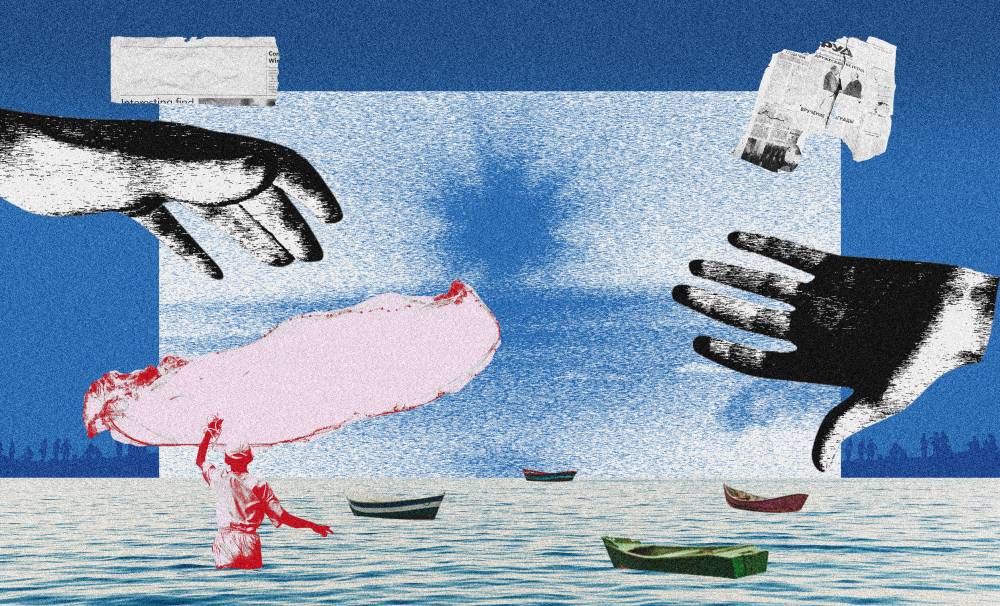
Third Sunday in Ordinary Time
Readings 1: Isaiah 8:23—9:3; Psalm 27:1, 4, 13-14; R. The Lord is my light and my salvation.; 1 Corinthians 1:10-13, 17: Gospel – Matthew 4:12-23
I would like to reflect on this Sunday’s Gospel from the perspective of what we are experiencing now—not just in our country, but all over the world. All the negative and evil things seem to overwhelm us. From violence to corruption, from fake news to a wanton disregard of the truth, from the plight of the marginalized and the poor to deeply rooted social injustice, all this leads many to ask, “Is there hope?”
The Gospel gives us three reflection points—or perspectives—that are worth pursuing. The first is the shift from the prophetic age to the Messianic age. The second is the proclamation of the coming of the kingdom of heaven and with it the call to repentance.
Then, finally, the call of Jesus to discipleship.
From prophetic to Messianic
The Gospel opens with the news of John’s arrest. This signals an important shift. Not only did Jesus continue along the lines of John’s ministry, but he also signaled the beginning of the Messianic age.
John ended the prophetic line and announced the arrival of the Messiah, which was really the inspiration and core of his ministry and message. “In the tender compassion of our God the dawn from on high shall break upon us, to shine on those who dwell in darkness and the shadow of death, and to guide our feet into the way of peace.” (from the Canticle of Zechariah, Luke 1: 68-79)
These words of Zechariah beautifully described the Messianic age, which can very well be a description of the kingdom of heaven.
A call to repent and a call to follow
This brings us to the second point, the proclamation of the kingdom of heaven and the call to repentance. Jesus boldly claimed that “the Kingdom of Heaven is at hand.” In another version, put it as the kingdom is in your midst.
This being the case, he issued a call to repentance. The Filipino term gives us a clearer picture of “pagbabalik-loob.” It is an invitation to introspect that leads to action. We return to our interior or internal being, an interior space of goodness. The Filipino term “kalooban” makes us feel that our interiority is fundamentally good.
Then we have the call. The “pagbabalik-loob” is a preparation for us to be ready for the Kingdom, and central to this is our openness to the call to follow Jesus.
Jesus called, in today’s Gospel, Peter, Andrew, James, and John. There are interesting details in this “call conversation.”
First, Jesus met them where they were amid their daily work. Second, the response was both prompt—immediately they followed him—and they left everything behind. Third, the basic “demand” of the call was to “come after me” or “follow me.”
This is where it all culminates: to follow Jesus and to be a disciple.

Is there hope?
This is the advent and the basic dynamics of the Messianic age. There is a transition into this age that begins with Jesus. Their dynamic is a “pagbabalik-loob” that enables us to follow Jesus, to be disciples. And central to our discipleship, to our being followers, is to proclaim the presence of and to build the Kingdom of Heaven in our midst.
All these points speak volumes to us in our present age. Amid all the challenges we face, we seem to be “the people who sit in darkness… those dwelling in a land overshadowed by death.”
Back to the question: “Is there hope?” Yes, there is. In this “darkness… land overshadowed by death,” we have seen a great light. It is a light that overcomes darkness and the shadow of death.
We are not simply being overly optimistic because the Kingdom of Heaven is in our midst. It is not a “pie in the sky,” but the kingdom is in the many acts of service and compassion rendered by so many. It is in the good and the kindness we experience every day from people from all walks of life.
In the middle of temptation and the agitation to despair, we must also remember that the Messianic age started and the mission of the Messiah was fulfilled on the Cross and in the Resurrection.
The beginning of this age started with Emmanuel, the coming of Jesus to be among us. It is our greatest inspiration to repent, “magbalik-loob,” and to encounter Jesus in this “pagbabalik-loob.” He is in us.
It is to rediscover the power of good, the power of love and mercy. It is to live this way of life as disciples, followers of Jesus.