










Hosting more than a meal

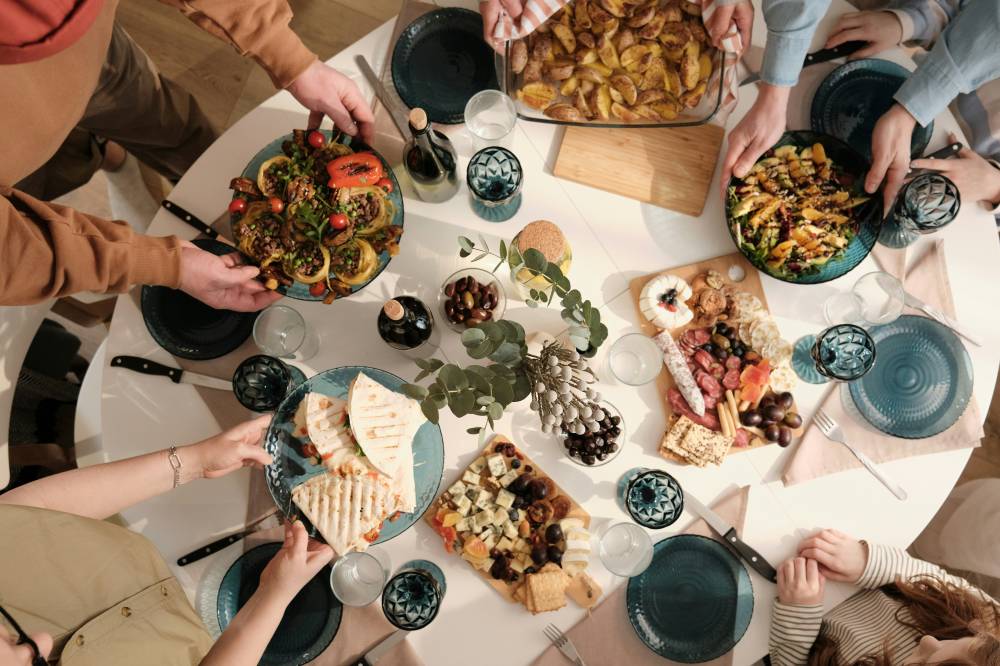
We often think of hosting as a checklist. The menu is decided, the table set, the flowers arranged. We worry about whether there is enough food, if the plates match, or if the house looks presentable. Yet long after the dishes are cleared, and the last guest has gone home, what lingers with those we have shared the evening with is how we made them feel. The elation, the enjoyment, the feeling of being valued.
The most memorable gatherings are not defined by what was served but by how they made people feel. This is the magic of experiential hosting at home. It is an experience that goes beyond the food and décor, into something long-lasting.
All about the experience
Experiential hosting asks us to see a gathering not as an event to execute but as a lived experience. It considers the full arc of a guest’s journey: from the moment they arrive, to how they settle in, to the pace of the evening, and even how they feel as they leave. It extends beyond the party itself, into the impressions guests carry home and the memories they will cherish and recall years later. Much like a song that suddenly brings you back to a moment so vivid it feels like yesterday, the kind that leaves a quiet smile on your face.
Academically, experiential thinking is a way of approaching decisions by focusing not on tasks or objects but on how people move through an experience and remember it afterward. It asks one central question: What will this feel like to someone living through it?
In simple terms, it shifts the host’s mindset from what am I serving to how will this impact my guests.
To be honest, there is absolutely nothing wrong with how we host parties normally. Sometimes it is enough to just have good company, good food, and drinks. But on occasion, and if hosting is really your thing, it is really worth it to delve deeper into planning something beyond the food, drinks, and the usual other items needed for a good party. I am talking about the things that burn into your memory.
Sequence over objects
Traditional hosting tends to focus on individual elements: the table setting, the food, the décor. Experiential hosting takes things a step further by imagining the flow of the gathering—how each moment unfolds from arrival to goodbye.
Arrival matters more than we think. Is there music already playing when guests walk in, or do they enter into silence? Is there a place to immediately put down a bag, a drink offered without asking, a moment where guests can exhale and relax?
The order of moments—arrival, settling in, the peak of the evening, a pause, and the exit—all have rhythm. Even simple choices matter: how many courses to serve when time is precious, whether food is served all at once or in small increments that can be savored, enjoyed (and even photographed), and whether plates are warm or cold. The time candles are lit and lights are dimmed will influence how guests experience time or forget about it. A well-paced gathering feels effortless, even when it has been carefully considered.

Emotion over excess
We often equate generosity with abundance. More food, more options, more décor. But experiential hosting measures success differently. It asks whether guests felt comfortable, welcome, and cared for. This is often felt most in ways when guests least expect it.
An overcrowded table can feel overwhelming. Too many choices can create anxiety. A quieter, more intentional spread often allows guests to relax. When people feel at ease, they linger. They engage. They stay present and often look forward to next time.
Emotion is shaped by subtle signals: a warm greeting, a calm host, an unhurried pace. When the host is relaxed, the room follows.
People matter
No amount of décor or abundance can replace the energy created by the right mix of people, including those who host and serve. Guests are not passive participants in a gathering; they are part of the atmosphere itself.
Thoughtful hosts consider not just who to invite but also how people might connect once they are together. A shared sense of humor, a mutual curiosity, or even complementary temperaments can shape the tone of an evening. When guests feel they belong, conversation flows more easily, and the room softens.
My mother-in-law always hosts with her personalized name cards, thoughtfully seating guests beside those they share something in common with or gently apart when needed. Recently, even my teenage daughter did the same at a dinner party she hosted.
The most successful gatherings are rarely the largest. They are the ones where guests feel emotionally comfortable—where no one feels out of place, and everyone has space to be themselves. In these moments, hosting becomes less about managing and more about letting things unfold.
Senses over spectacle
Experiential hosting pays attention to the senses—not for drama, but for comfort.
Sound sets the tone. Music should support conversation, not compete with it. I often create separate playlists for cocktail hour, dinner, and the moments that follow—allowing the energy of the evening to shift naturally. For convenience, there are now many online music platforms where playlists can be curated and selected simply by choosing an era, a genre, or even a time of day. And sometimes, silence is just as intentional.
Scent is powerful and often overlooked. A softly scented candle in the entryway, the aroma of something warm in the kitchen, or the subtle freshness of a newly cleaned sofa or rug can quietly anchor memory
Lighting, on the other hand, is transformative. Overhead lights flatten a room; layered lighting softens it. A lamp with a warm white bulb, turned on just before sunset, signals both transition and thoughtful care.
Temperature, texture, and pacing all contribute. Is the room too cold or warm? Are there places to sit comfortably or small nooks where guests can linger? Is there space to move without feeling rushed? These details may go unnoticed individually, but together, they create a sense of ease.
Memory over performance
Experiential hosting is not about impressing. It is not a performance. It is about creating an environment people remember fondly.
Guests rarely remember every detail, but they remember how the evening felt. They remember whether conversation flowed and connections were made, whether they felt seen, and whether they left feeling nourished rather than drained.
Sometimes it is the smallest moments that endure: a thoughtful goodbye, leftovers wrapped with care, a small token or gift offered before guests leave—a thoughtful gesture as you bid adieu, a message the next day thanking them for coming. These gestures extend the experience beyond the event itself.
Perspective-taking
Perhaps the most important element of experiential thinking is perspective. It asks the host to step out of their own effort and into the guest’s experience.
Great hosting starts with seeing things through your guests’ eyes. Are the chairs comfortable? Is the evening easy to follow? Is there a quiet spot where someone can take a moment to rest? When you plan with their experience in mind, hosting becomes less about doing everything perfectly and more about making people feel cared for.

Experiential hosting reminds us that a gathering is not about showcasing a home or a menu. It is about creating a moment in someone else’s life—a moment to breathe, a pleasure, a memory.
In the end, hosting is more than a meal. It is an atmosphere, a rhythm, a feeling. When done thoughtfully, it becomes something guests carry with them long after they’ve gone home—a lingering sense that they were welcomed well.
10 ways to elevate a gathering
1. Lightly scented candle or reed diffuser in the entryway or powder room to welcome guests
2. Curated playlist for cocktail hour, dinner, and after-dinner conversation
3. Freshly laundered linens with a subtle scent to comfort and delight
4. Thoughtful token or gift for each guest to take home
5. Soft throw or cushion in a cozy nook for guests to linger, or a pillow with a witty quote can add humor, charm, and spark conversation
6. Layered lighting: lamps, candles, or dimmable bulbs to set the mood
7. Seasonal items from your garden or leftover flowers from a previous gathering, arranged in unexpected corners, not just as a table centerpiece
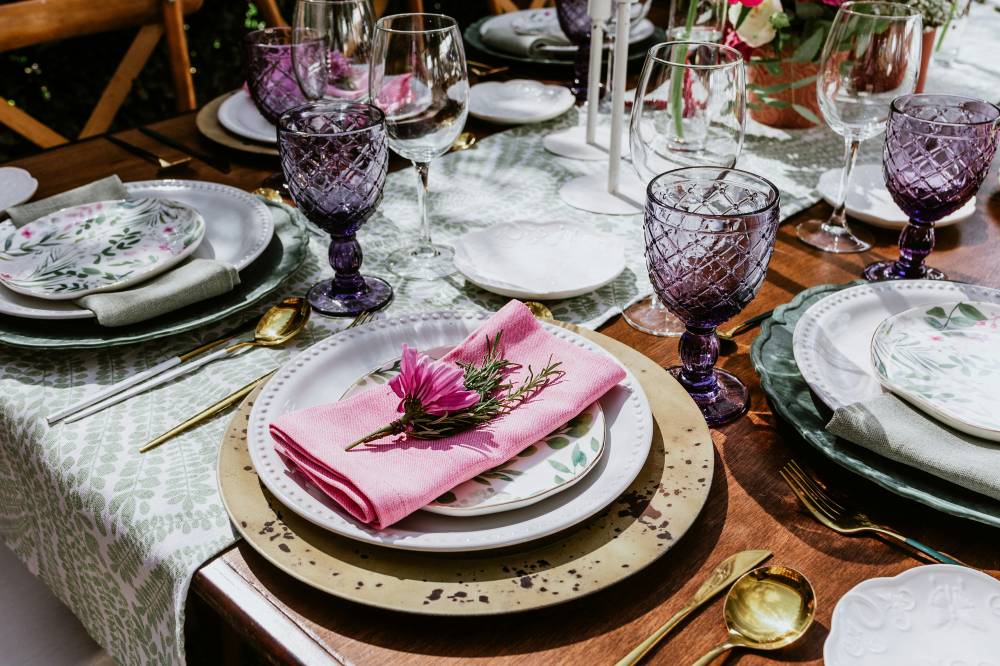
8. Artisanal tableware or glassware to add tactile beauty
9. Well-placed seating for easy conversation and natural movement
10. A handwritten note or personalized menu card that doubles as a place card—both practical and personal, and often taken home by guests as a keepsake