






How do we protect our shared spaces without resorting to elitism?

Stereotypes and social expectations often inform how we view certain places. Salcedo girlies, Southies, and Cubao Expo bros—from their outfits to their distinct mannerisms—are groups of people who are unavoidably associated with the places they’re mostly seen in.
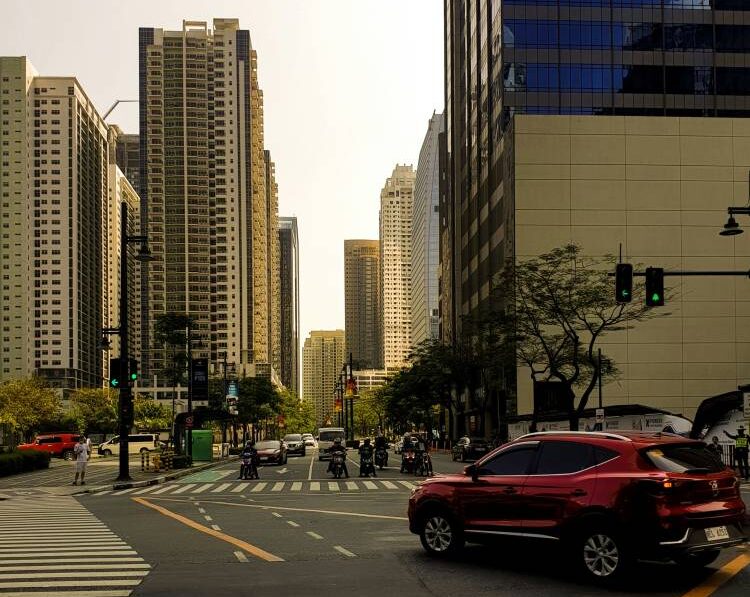
And for Bonifacio Global City (BGC), a business and lifestyle district characterized by open shared spaces, corporate headquarters, and upscale retail stores, troublemaking kids in tacky streetwear (better known as “young stunnas”) wouldn’t go unnoticed—all the more when they travel in packs.
It’s an unfortunate but necessary conversation. But sadly, while behavioral standards can and should be maintained without excluding the general public, discussions can’t seem to protect our shared spaces without resorting to elitism.
Why we can’t have nice things
Coinciding with last year’s holiday season, public spaces such as malls and parks faced a high volume of foot traffic. BGC was no exception. But rather than simply dealing with large crowds and heavy traffic, sights of pickpockets and gangfights littered what would normally be considered an upscale neighborhood.
It’s an unnatural sight, and social media users lamented how behavior expected from impoverished neighborhoods was now on full display in BGC of all places. “Wala naman talaga ako issue even if these types of people hang out there pero wag lang sana sila magulo and wag nila sirain ang BGC,” says a Reddit user in response to a recent video of teens running amok along High Street.
“People should know how to conduct themselves and behave appropriately when they come or visit the place,” says another Reddit user, explaining that one’s behavior should fit the place they’re in.
But we’re not simply talking about a few standouts in a shopping district of which they aren’t the target market. Another viral video showed a passing group of men in shorts and sandals snatch a wallet from an unsuspecting victim. While netizens pointed out that one should never place important items in a backpack’s front pocket, the fact remains: You wouldn’t expect this to happen in BGC.
How do we prevent this from happening? While some have floated stricter punishments for violating juveniles, others seem to prefer a proactive approach instead of outright banning profiled groups of people from even entering the area.
Hopefully, we wouldn’t have to resort to the latter.

Between disturbance and existence
Upholding certain behavioral standards with regard to public spaces is a particularly difficult subject to navigate. On one hand, we have Article 153 of the Revised Penal Code, “Tumults and other disturbances of public orders,” which penalizes those who commit disturbances in public places, offices, or establishments.
But on the flipside, what constitutes a violation punishable by law when disorder isn’t viewed consistently across the board? What may seem like a disturbance to a certain demographic may simply be normal behavior for another. After all, we’re talking about a meeting point for different walks of life.
Is simply being kanal or jologs—for lack of a better term—worth policing? But if anything, even going as far as that seems a bit too heavy-handed.
Subtly putting up barriers to restrict access to affluent neighborhoods isn’t unheard of. For one, access points for commuters are typically limited to cater to more vehicle users—something BGC is already accused of doing. Sentosa Island in Singapore takes it a step further, charging admission fees to all visiting vehicles.
These are steps that BGC can technically do if they so desire to truly restrict access from a certain demographic. But in a metro that is already jam-packed with malls and lacking in open, shared spaces, is gatekeeping one of the few shared spaces we have behind a paywall something that we want to do?