




Keeping up with the Feast of the Three Kings

Do you recall ever leaving your shoes out the door on Jan. 6 and waking up to find them filled with candy and chocolates? I know I did, religiously so. One year, though, nothing showed up in my neatly placed shoes. Later that day, my mom told me that the Magi were a little late this year, and the candy arrived the next morning. Much like how she used to insist Santa Claus liked wine instead of milk and cookies.
From then till now, there’s something wonderfully imaginative about the way traditions have blended in Filipino homes, differing slightly from household to household.
Although it seems like the Feast of the Three Kings, also known as the Epiphany, is barely celebrated today, it marks the end of the months-long Christmas season in the Philippines. It’s often joked that Christmas in the Philippines starts as soon as September rolls in. But while much of the world packs away its ornaments by Dec. 26, Filipinos linger with their lights and parols a little longer, packing up only when the kings have passed by that first week of January.
What the Epiphany shows us
I always used to think the “12th day of Christmas,” like in the song, was Dec. 25. But actually, the first day of Christmas is Dec. 25. That makes Jan. 5 the twelfth night, the evening before the Feast of the Epiphany on Jan. 6.
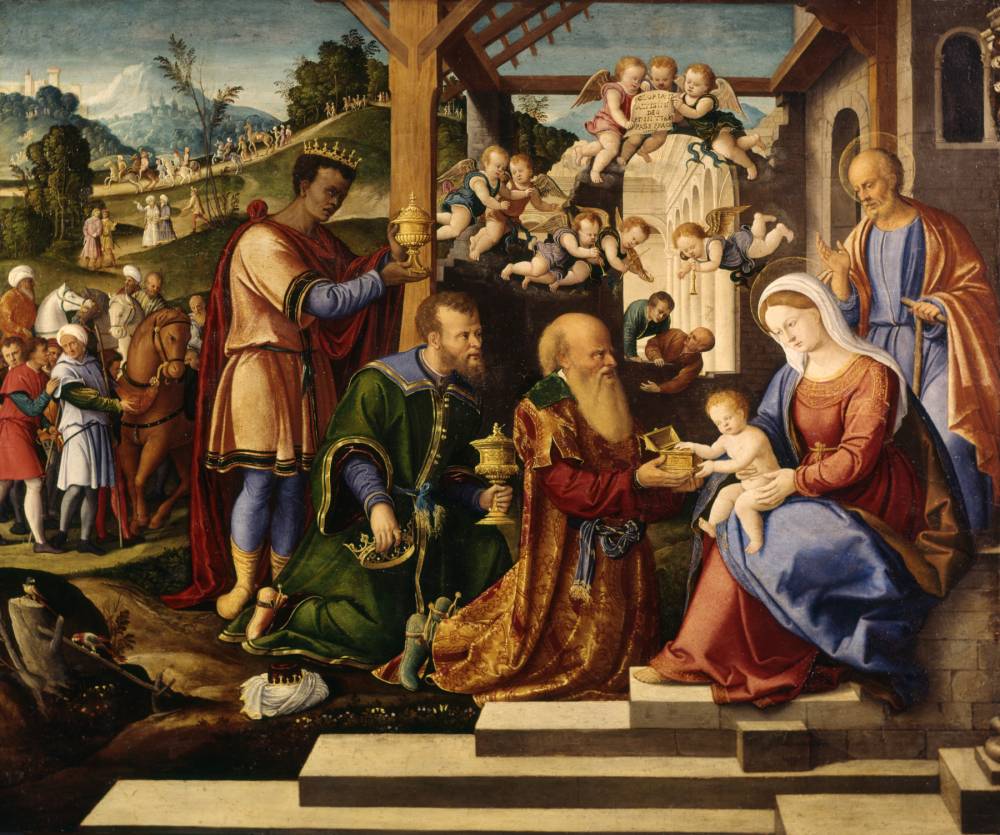
The church teaches the importance of this day as when Jesus Christ’s true identity was revealed to the world. The Epiphany literally means “manifestation,” or a spiritual unveiling beyond the familiar. It commemorates the visit of the Magi, Melchior, Caspar, and Balthazar, the three wise men who followed a star to Bethlehem bearing gifts of gold, frankincense, and myrrh, each with its own meaning.
The precious metal gold represented royalty, honoring Jesus as a king. Frankincense, the fragrant resin used in religious ceremonies, symbolized divinity as the Son of God. And myrrh, often used in burials, pointed to mortality and foreshadowed Jesus’ future suffering. Together, the gifts recognized him as king, God, and man.
The Gospel of Matthew describes them as Magi, wise men or astrologers from the East. He recounts how the Magi were secretly called by Herod and told to follow the rising star. It reads in Matthew 2, verses 11 to 12, that “On coming to the house, they saw the child with his mother Mary, and they bowed down and worshipped him. Then, they opened their treasures and presented him with gifts of gold, frankincense, and myrrh. And having been warned in a dream not to go back to Herod, they returned to their country by another route.”
It’s also said that Christian tradition came to call them the three kings because of Psalm 72, verses 10 to 11, which speak of kings from three distant lands bringing gifts. The psalms read, “May the kings of Tarshish and of distant shores bring tribute to him. May the kings of Sheba and Seba present him gifts. May all kings bow down to him and all nations serve him,” which is interpreted as a prophecy fulfilled by the Magi visiting Jesus.
While their names, origins, and historicity are debated, the Magi remain in the wider world as symbols of recognition of Jesus Christ.
Traditions befitting the Feast of the Three Kings
Across the Philippines, parents who remember the feast day remind their children to leave shoes out for treats. Some families share a final festive meal before their relatives go back abroad, while certain communities celebrate with pabitin, keeping the spirit of giving alive until the Christmas season officially ends.
In past years, the three kings’ feast day has been celebrated in Manila through the traditional parade from San Vicente de Paul Parish in San Marcelino to Casa Espanol in Kalaw extension in Ermita, Manila. It’s also been celebrated in places like Mabitac, Laguna, with a grand town festival.

In the farming village of Santa Cruz, Barangay Hupi celebrates the Feast of the Three Kings in a unique way. While three men ride as kings on horseback, a fourth, known as Haring Karabao, rides a carabao. The tradition began after World War II as a way for farmers to celebrate freedom, mock oppressors, and enjoy a day of playful rebellion as villagers don costumes, including drag, clowns, and creative outfits. The Feast of the Epiphany is also celebrated in other provinces across the Philippines.
While the Philippines has its own unique customs, the Feast of the Three Kings is also celebrated in other parts of the world. In records of the World Population Review, the Three Kings’ Day is celebrated in Latvia, Sweden, Ethiopia, India, Greece, Finland, Peru, the United States, and more, but its origins are maintained to be from Spain, which passed down the tradition to most of Latin America, like Mexico and Cuba, during eras of colonization.
According to National Geographic, in Spain, many children traditionally receive their Christmas gifts on this day. In Puerto Rico, kids place a box filled with hay under their beds on the night of Jan. 5, hoping the Three Kings will leave them presents.
Meanwhile, in France, families celebrate with a sweet treat called “la galette des rois” or a “king’s cake” that hides a coin, charm, or small toy inside for the lucky finder.
Considered the 12th day of Christmas, the Feast of the Three Kings is often overlooked. But perhaps it’s time to bring it back, to celebrate the faith behind the season with a touch of imagination and play, pausing to remember its meaning before the decorations are packed away.