









Lucky fish for the Year of the Horse

Chinese New Year is the biggest holiday for Chinese and Chinese Filipinos, but it is also widely celebrated by many Filipinos. People look up lucky colors for their zodiac signs and prepare auspicious food. And non-Chinese people are adopting Chinese wellness practices.
The ancient wisdom of Chinese civilization dates back over 5,000 years, after all, so it’s an excellent place to start. Acupuncture, traditional Chinese medicine, and even medicinal herbs are starting to be more visible and accessible for the average person. The Chinese have had the gua sha for centuries, for both beauty and myofascial release, and are now available in different price ranges.
Even Chinese food, in all forms—fast food, fine dining, and food for medicinal purposes—has long been consumed by people from around the world.
Fish for abundance
Chinese New Year is built on thousands of years of tradition, where every action, word, and dish carries meaning. Families clean their homes to sweep away bad luck days before, while wearing red to invite joy, and gathering around tables filled with food during the day itself. That quietly speaks of hope for the year ahead.
Among these foods, none is more important than fish, and among the most treasured fish served during this season is turbot.
In Chinese, fish is called yú (鱼), which sounds exactly like the word for surplus or abundance (余). Because of this, serving fish during Chinese New Year is believed to bring prosperity into the home. But not just any fish will do. The fish must be served whole, with its head and tail intact, to represent a complete year—from beginning to end—that is filled with good fortune.
Turbot holds a special place in these traditions because in Chinese it is called 多宝鱼 (duō bǎo yú), meaning “many treasures fish.” Its name alone makes it one of the most auspicious foods that can appear on a New Year’s table. To serve turbot is to wish that the coming year will be rich in blessings, opportunities, and wealth.
The rituals that surround it
During Chinese New Year’s Eve dinner, the fish is often brought out last, like a final blessing for the family. It is placed in the center of the table, with its head facing the eldest or most respected person, honoring their wisdom and role in the family.
No one flips the fish over after eating one side. In traditional belief, turning the fish would mean turning over a boat—an omen of bad luck. Instead, the bones are gently lifted away, keeping the symbolism of smooth sailing and stability in the year ahead.
Some families even intentionally leave part of the fish uneaten. This is not waste—it is a ritual. It represents the wish to carry abundance into tomorrow, just as the saying “Nián Nián Yǒu Yú” (or “May you have abundance every year” in English) promises.
Of new beginnings, harmony, and unity
Turbot is known for its tender, snow-white flesh and clean, delicate flavor. In Chinese tradition, white and pure foods symbolize new beginnings and clarity of life. The fish’s round, flat body also represents harmony and unity, which is why it is often served when families reunite after long separations.
In coastal regions of China and in festive banquet traditions, turbot is seen as a premium fish—something reserved for important occasions. To serve it on Chinese New Year is to say: This year is precious.
Chinese New Year is not just about welcoming a new calendar year—it is about honoring ancestors, protecting family bonds, and passing traditions from one generation to the next. When grandparents explain why the fish must be whole, or why it must not be flipped, they are not just teaching rules—they are passing down wisdom.
Turbot, sitting quietly on the table, becomes part of that story. It carries wishes from parents to children, from elders to the future, for a life of stability, prosperity, and many treasures.
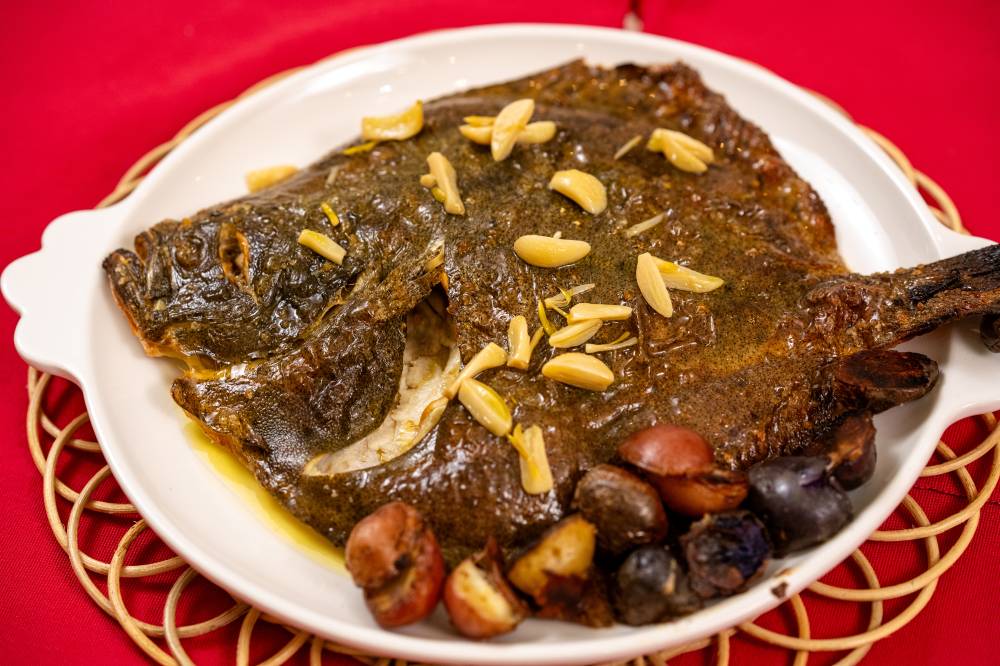
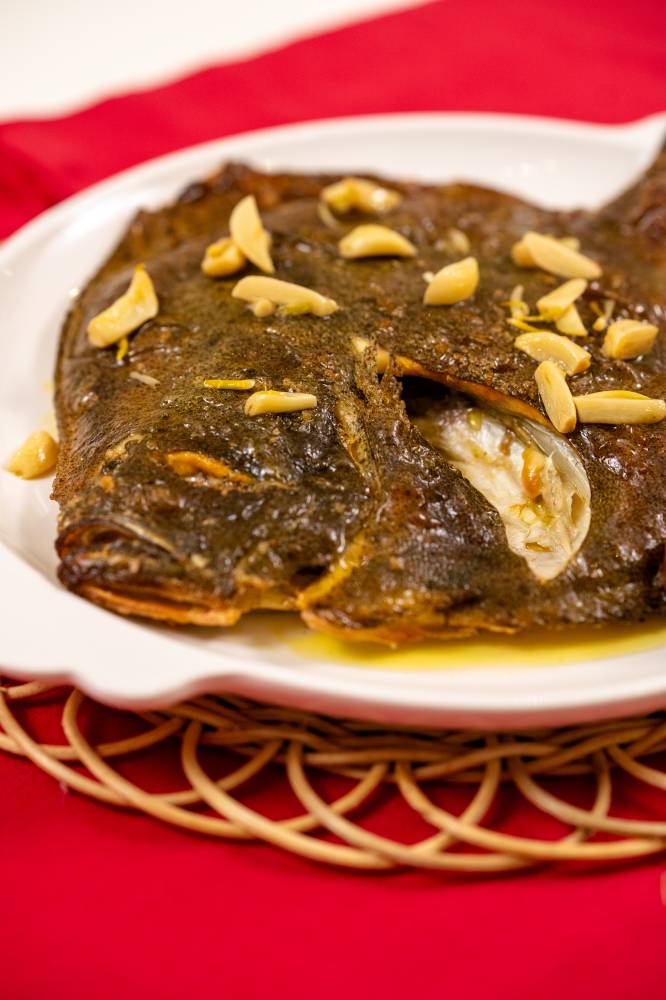
Baked turbot with garlic pil pil
Ingredients
1 whole turbot (approx. 2kg)
6 medium potatoes, peeled

Extra virgin olive oil
Sea salt, to taste
6 cloves garlic, thinly sliced
1 dried chili, such as a siling labuyo (optional)
1/2 cup apple cider vinegar
Procedure
- Prepare the potatoes. Preheat oven to 180°C (350°F). Slice the potatoes thinly (approx. 5mm). Grease a baking tray with olive oil, arrange the potato slices in a single layer, and sprinkle with sea salt. Bake for 15 minutes, or until they begin to soften.
- Prepare the turbot. Remove the tray from the oven and place the whole turbot on top of the potatoes. Drizzle the turbot with olive oil and rub sea salt onto both sides of the fish.
- Bake the turbot. Return the tray to the oven and bake for 30 minutes, or until the turbot is cooked through and flakes easily.
- Infuse the oil and make the garlic pil-pil. While the turbot is baking, heat 1 cup of olive oil in a pan. Add the sliced garlic and chili (if using any) and cook gently until the garlic is lightly golden and fragrant. Watch carefully to avoid burning. Add the apple cider vinegar to the oil, give it a quick stir, then turn off the heat and set aside.
- Emulsify the sauce. Once the fish is cooked, remove the tray from the oven. Use a wide wooden spoon or spatula to carefully hold the turbot in place as you tilt the tray, allowing the natural juices from the fish to collect. Pour these juices into the pan of garlic-infused oil (or a mixing bowl). Whisk or stir vigorously to emulsify the oil and fish juices, creating the pil-pil sauce.
- Serve. Arrange the potatoes on a serving plate and place the turbot on top. Pour the pil-pil sauce generously over the fish and serve immediately.
******
Get real-time news updates: inqnews.net/inqviber