








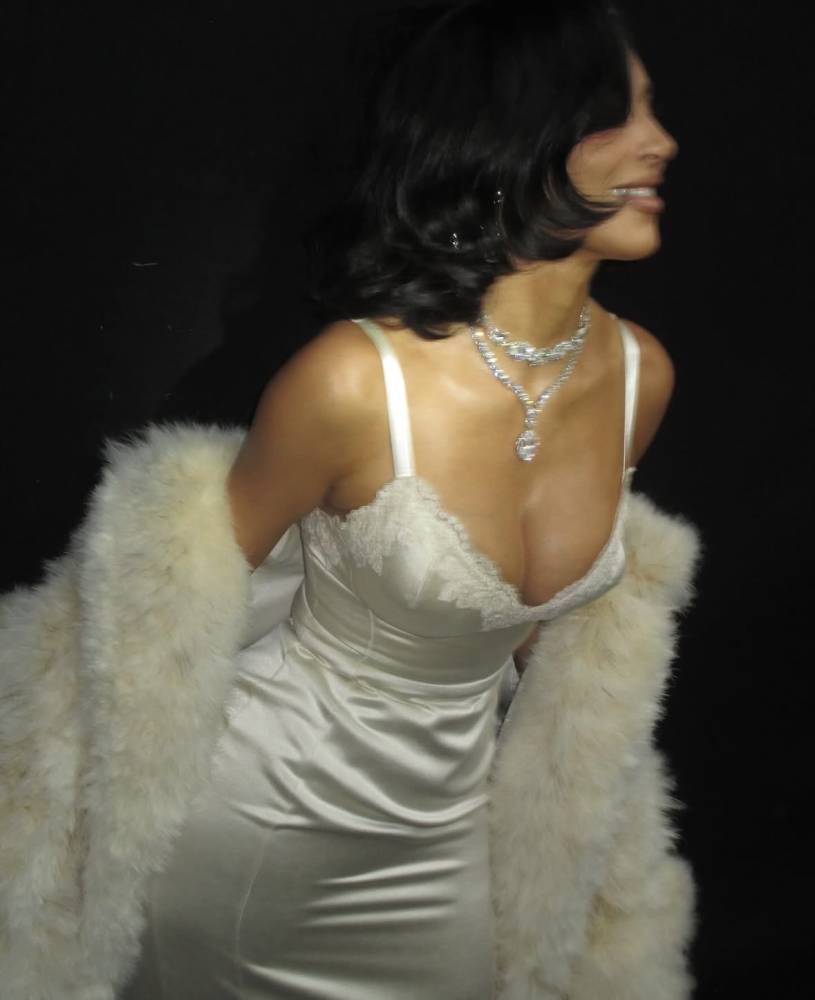
Mastering the art of jewelry stacking


There is a particular kind of person who knows that an outfit can be technically simple and still feel completely finished because the real styling moment is happening in the jewelry. A tank and trousers, a slip dress, an oversized shirt, these are foundations, but a good stack is what turns them into a look.
Honestly, who doesn’t love more jewelry when it is done right? For some, the stack is not an addition to the outfit—it is the outfit.
Jewelry stacking becomes the difference between simply wearing pieces and actually styling them. When it is done well, it feels dimensional, instinctive, and personal, as though every piece arrived there naturally over time; when it is done poorly, it reads visually loud, cluttered, and unresolved.
The difference is not about how much you wear but about how deliberately you build because stacking works best when it follows the same principles as good styling anywhere else: proportion, contrast, and space.

Start with a focal anchor
Every compelling stack begins with a point of emphasis—the visual thesis that grounds everything else and gives the eye a place to land before it travels. This anchor might be a sculptural cuff, a weighty signet, a pendant with presence, or a chain with substantial links, but its role is always the same: to establish hierarchy in what could otherwise become visual noise.
When there is no anchor, every piece competes at the same volume, and the result feels accidental. When there is one clear lead, the supporting pieces fall into rhythm—softening, framing, and amplifying rather than fighting for attention.
Play with proportions
A stack without scale variation feels flat, no matter how beautiful the individual pieces may be. Depth comes from contrast in size, from the tension between something bold and something barely there, and from the push and pull of visual weight across the wrist, neck, or hand.
A tennis bracelet, for example, feels more intentional when it is flanked by slender chains, just as a substantial link necklace gains elegance when tempered by finer strands that almost disappear against the skin.
The eye needs this progression of scale in order to read the stack as designed rather than piled on. Proportion creates rhythm, and rhythm is what transforms accessories into styling.
Mix high and low jewelry
A great stack is not defined by price—it is defined by personality. It does not have to be expensive to look elevated; it just has to feel like it belongs to you. Fine pieces, sentimental keepsakes, vintage finds, travel souvenirs, and everyday staples can sit side by side as long as they tell a cohesive story on your wrist, neck, or hands.
When a polished piece meets something worn in, handmade, or playful, the stack gains depth and character. That contrast is what makes it interesting because it feels lived in rather than styled straight from a display case. The goal is not to prove value. It is to show a point of view.
Contrast with intention
The most memorable stacks often rely on combinations that feel slightly unexpected at first glance—the kind of pairings that should clash but instead create energy.
Supple leather beside polished gold, delicate beads woven between assertive bangles, luminous pearls pressed up against industrial metal cuffs all generate a dialogue of textures that keeps the look from becoming one note.
When something soft meets something structured, or something organic meets something highly finished, the contrast produces dimension. It signals that the stack was considered, that the tension is deliberate, and that the wearer understands that harmony in fashion often comes from opposites rather than perfect matches.
Work in texture, not clutter
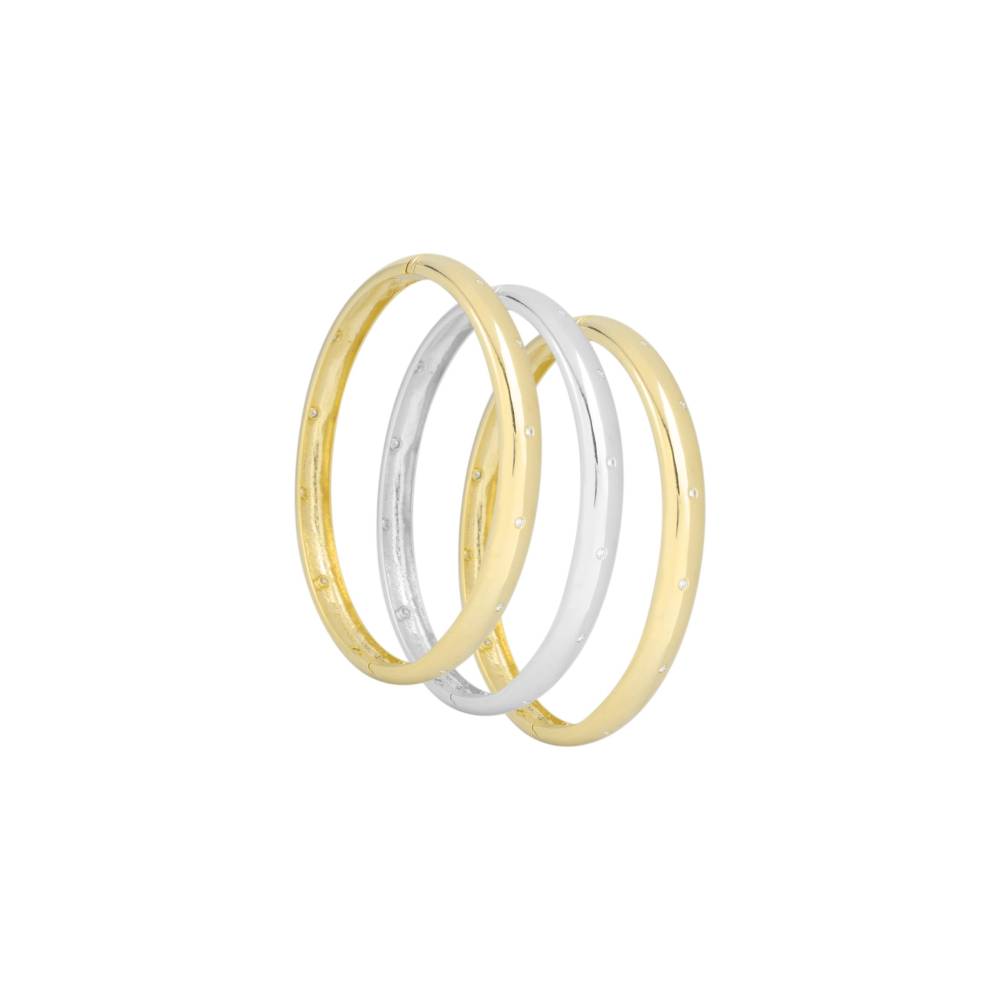
Variety is essential, but randomness is not. Texture is what allows a stack to feel rich without feeling heavy because the interest comes from surface and finish rather than sheer quantity. A matte piece beside a high polish, a smooth band next to pavé detail, a structured link countered by a fluid chain, all create nuance that the eye can move through slowly.
Texture builds layers visually, even when the physical layers are few, which is why a thoughtfully mixed trio can look more sophisticated than an armful of identical shine.

Embrace asymmetry
There is something undeniably modern about imbalance, about not needing everything to mirror perfectly from one side to the other.
Wearing a concentrated stack on one wrist while the other remains bare, spacing pieces unevenly so glimpses of skin interrupt the metal, or combining styles that do not traditionally belong together, all contribute to a feeling of ease that feels current and unforced.
Asymmetry suggests a collection built over time rather than purchased as a set, and that sense of history, of pieces gathered from different moments, adds depth that symmetry rarely achieves.
Use color with purpose
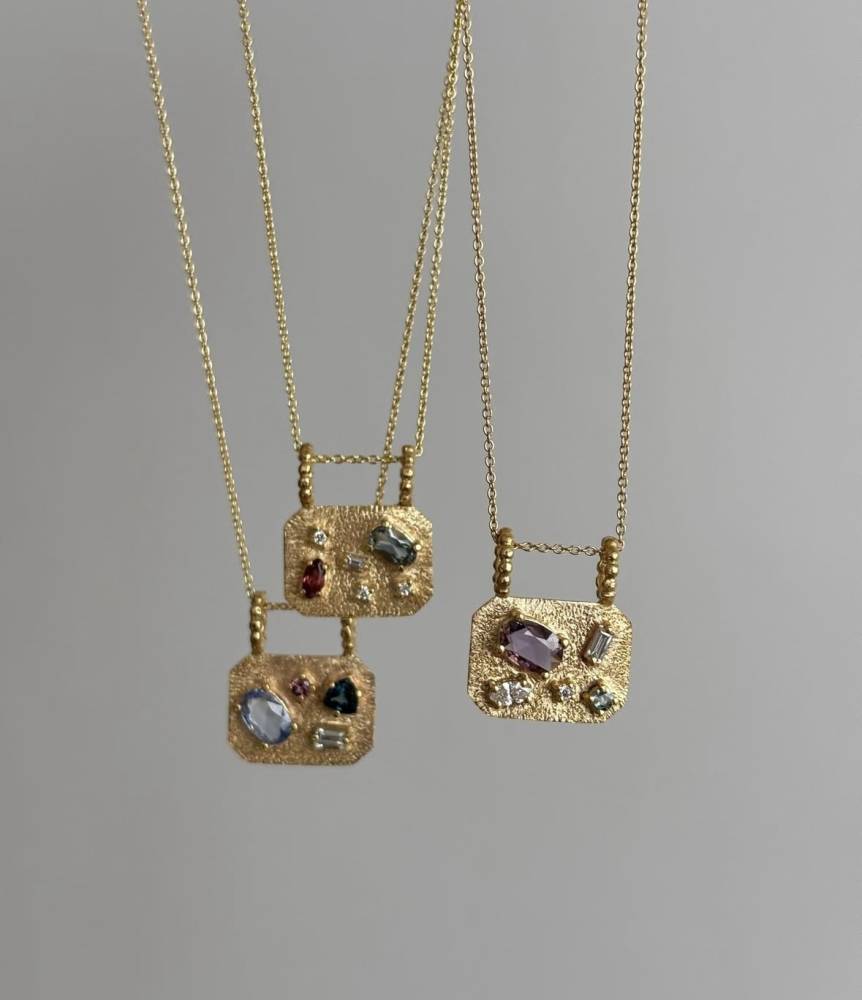
While metal on metal has timeless appeal, the strategic introduction of color can shift the entire mood of a stack. A single vivid stone, a flash of enamel, or a strand of saturated beads can act as a focal spark that draws the eye and gives personality to an otherwise neutral composition.
Keeping color controlled is what makes it feel polished instead of distracting. A single intentional pop, especially one that ties back to what you are wearing, looks styled and considered, while too many competing shades can take away from the overall sophistication.
Movement is part of the aesthetic
Unlike static objects, jewelry exists in motion, catching light, shifting with gesture, and interacting with fabric and skin. A successful stack allows for this movement without tangling, dragging, or feeling cumbersome, striking a balance where pieces can glide and overlap without fighting each other.
When the stack moves well, it feels alive, and that kinetic quality is often what makes a layered look feel effortless and complete.