









One seat, many cities

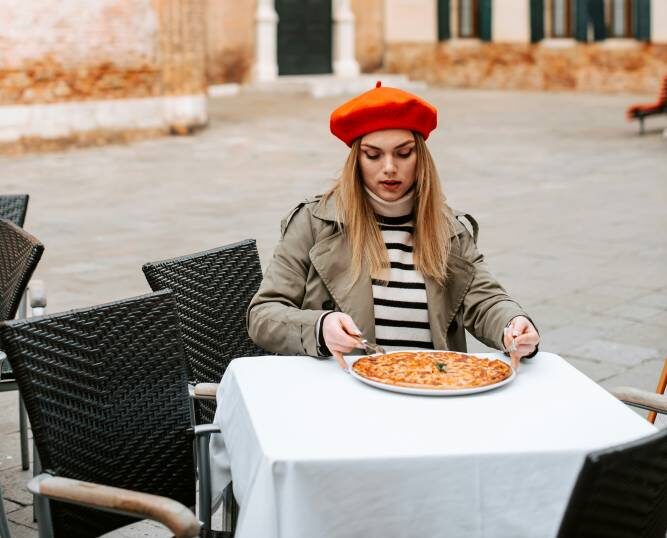
Ordering a table for one in a foreign country brings up all sorts of hyper-aware feelings. Not of the menu, not of the food, but of my hands. Where to place them, where to look. How long is too long to sit without speaking, and how much do I order?
Traveling, I’ve so far discovered, feels adventurous in airports and train stations. But it is at the table—when the chair across you is empty—that you realize how visible or invisible you are. And since then, I’ve begun to notice the differences in how places treat the solo diner. Most make space for you. Some make you feel momentarily out of rhythm. And some barely notice at all.
Over time, I realized that eating alone isn’t simply about confidence. It is a way into understanding a city’s relationship with its food, community, and independence.
Japan makes solo dining feel infrastructural
In Tokyo, this is hardly surprising. I went into it with confidence that solo dining was considered the norm. The city runs on efficiency, and its food culture reflects that rhythm. Small and brightly lit gyudon chains (which are perpetually full in the evening) are designed with individual diners in mind. Tall stools around even taller and narrower counters, where orders are quick.
Here, no one lingers nor looks twice at a table for one. Here, everyone sits shoulder to shoulder, facing their own bowl, enjoying their meal. It didn’t feel lonely; it felt functional and spacious for an individual experience.
Even in Gunma, far from Tokyo’s density, surrounded by mountains and winter air, solo dining felt equally natural. In the cold, a bowl of ramen becomes less of a social event and feels more like a necessity. The steam coats the windows, there are separators on the long wooden tables, and the smell is unlike any other. A deep savory broth with noodles, pork, and the perfect crunch of cabbage. It’s silent—not as an absence, but as an atmosphere.
Eating alone didn’t feel like independence in a dramatic sense—it felt embedded in daily natural life.
In Southeast Asia, the tone shifts
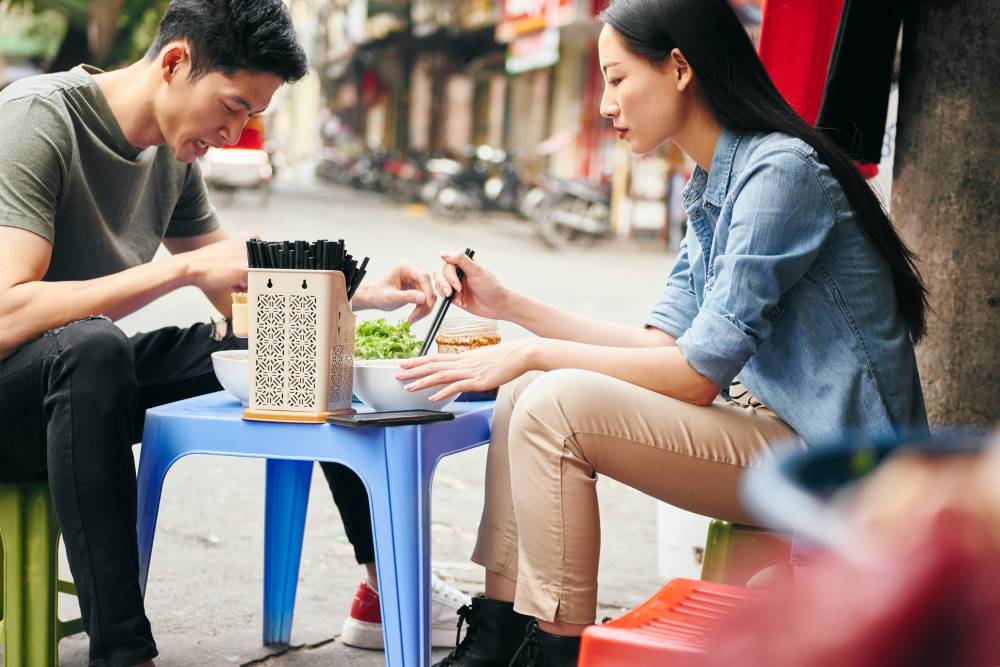
In Vietnam, eating alone looks different. It’s less structured, more kinetic. You sit on low plastic stools in Hanoi or Ho Chi Minh City, where you can find a meal on any pavement. A bowl of pho, filled with herbs and steam, arrives—followed by spring rolls and the optional spice that tingles in your mouth. Movement is all around you—scooters, vendors, chatter. It’s a magnetic atmosphere and yet, eating remains deeply personal. Here, you lean in, you focus, and you create memories.
Street food culture softens the edges of solitude. Everyone around you is light, friendly, and enjoys the idea of a good mix. This is reflected even in their food, in their desserts—a sweet chè layered with beans, coconut milk, and crushed ice.
You don’t need a companion to justify your presence. The city feeds you anyway.
Thailand carries a similar confidence in Bangkok’s markets and food courts that are designed for turnover, for quick meals between daily life. Plates of pad kra pao, pad Thai, and mango sticky rice appear fast and disappear even faster.
Here, eating alone feels transactional in the best way possible. It’s efficient, democratic, accessible, and holds that similar Southeast Asian comfort of hospitality. No reservation required, and no performance necessary.
Latin America shifted solo dining dramatically
In Peru, food culture is a ceremony rooted in pride. A dish of ceviche in Lima isn’t rushed—it’s created carefully, with bright citrus and chili, made fresh.
Eating alone is different; here you’re still part of something larger: a national devotion to flavor. Meals stretch longer, conversations hum around you. Solo dining exists, but so does a collective appreciation. You never separate from the atmosphere.
Mexico follows this communal thread. In markets and neighborhood fondas, tacos are served on small plates frequently. Food here is tactile and layered—al pastor shaved from the spit, fresh pressed tortillas, and salsas spooned generously—meant to be built by hand.
Eating alone here, you notice textures, heat, and balance. It’s an immersive experience.

Europe, in contrast, demands time
In Rome, meals are presented in courses. Bread first, then a Roman-style artichoke, a carciofi alla romana, then pasta—a peppery cacio e pepe. Conversations stretch, and wine is poured generously, and no one seems to rush toward the bill.
You sit poised and participate in the rhythm of the evening rather than eat and leave. Venice carries the same pace. Tables cluster along narrow streets and canals, waiters weaving between them, and there’s an unspoken understanding that dinner is an event, not an errand.
In Spain, tapas arrive gradually—patatas bravas, slices of jamon, and anchovies. Plates are designed for sharing and circling a table. Dining usually spills into late hours. Being alone here, you become more aware of the social choreography around you.
Table for one, please
Eating solo here isn’t engineered for convenience; it’s shaped by ritual and company. Learning to sit within that ritual becomes its own form of independence.
Traveling on your own isn’t just about seeing new places; it’s about meeting yourself within them.
Independence reveals itself in small acts: navigating a city, asking for directions, sitting down at a table for one. Eating alone became the clearest version of that for me. It stopped feeling uncomfortable and started feeling grounding.
******
Get real-time news updates: inqnews.net/inqviber