







Our takeaways from Duterte’s ICC pre-trial hearing

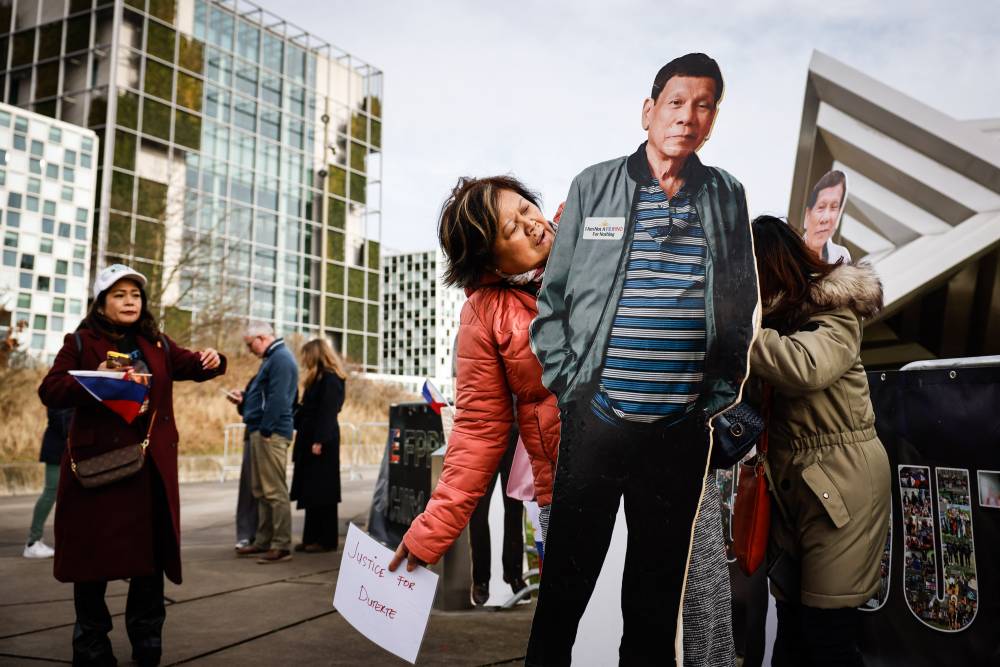
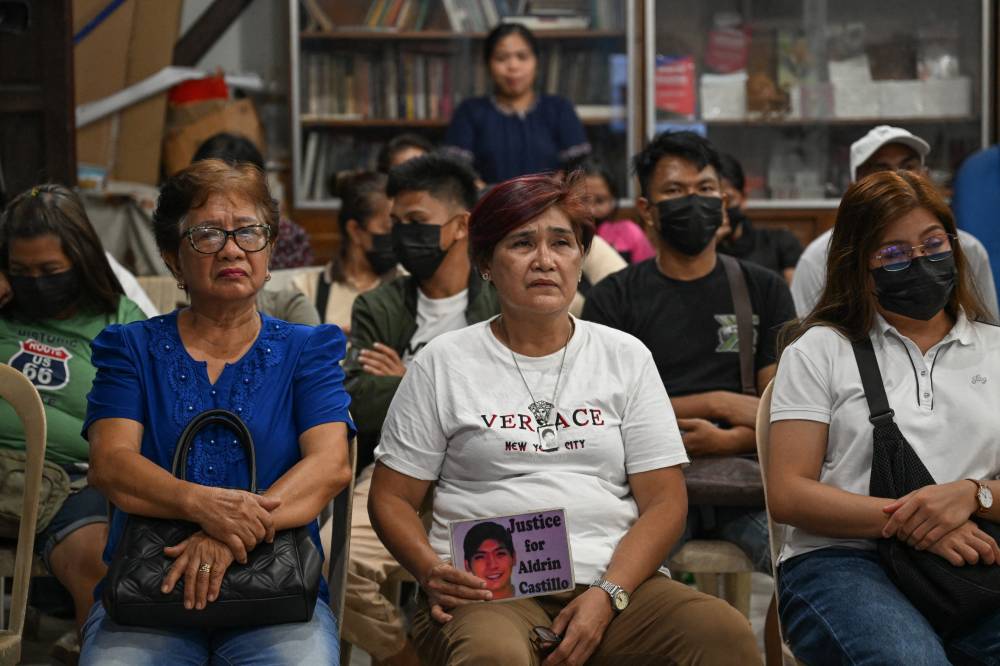
As the nation holds its breath, tuning in to former President Rodrigo Duterte’s ICC pre-trial hearing, his supporters remain anxious and continue to clamor for his victorious return home. Meanwhile, victims of his bloody war on drugs once again relive the trauma and fear they experienced under his iron-fisted rule.
This is but the first step in a long fight for justice and truth. The four-day confirmation hearing, after all, does not lead to a formal verdict—instead, a decision on whether or not the former president’s case should proceed to trial. Still, like a reopened wound, this unearthed memories from a period of impunity unheard of since the days of martial law.
Here are some of our takeaways from the pre-trial proceedings.
He speaks plainly, yet he cannot be taken seriously
From his slurred speech to his penchant for cursing, Duterte’s unique personality separated him from the clean, polished facade of the political elite he set out to unseat—hence, popularizing him to those who have grown tired of ineffective local governments.
Where some heard grave threats against the general public, others heard a man of action with the political will to back them up.
But according to lead defense counsel Nicholas Kaufman, these were but “expletives and hyperbole.” He says, “Rodrigo Duterte was, and will always remain, a unique phenomenon. His style of statesmanship was novel and unpalatable to many. His expletives and hyperbole grated, while his honesty and wild popularity irritated.”
The common legal representative of the victims, Atty. Joel Butuyan, offers a different perspective: “The defense will claim that he was merely bombastic and acerbic when he made these statements. But if he were merely being pompous and flippant, the people who were killed should be alive and laughing today at his supposed pranks and stunts.”
Interestingly, Kaufman contradicted himself in that same statement. Attempting to throw a shot at President Ferdinand “Bongbong” Marcos Jr., the defense counsel adds: “He spoke openly from the heart, sincerely and truthfully. And what a contrast between him and his successor in Malacañang. For [Duterte], his word was his word, and the people knew it. For President Bongbong, his was for the wind, and the people will not forget it.”
So how can we claim that the former president spoke openly and truthfully, then suddenly say it was all jokes and hyperbole?
Plausible deniability—in speech
The defense further asserted that Duterte cannot be held liable for unlawful killings he didn’t order. While he commanded the police to kill so-called drug personalities in his speeches, he would always follow it up with a reminder asking officers to remain truthful to their sworn duty.
“Mr. Duterte’s message was repeated and amplified in the media… ‘Duterte to troops, massacre criminals, I’ll promote you.’ With the byline in the same speech, Duterte tells soldiers he will never order them to do anything illegal. And this was the pattern, Your Honors. Out of one side of his mouth, quietly, occasionally, he would speak about self-defense,” says prosecution trial lawyer Edward Jeremy.
“This was Mr. Duterte, the lawyer, keenly aware of his own legal jeopardy, especially once he was no longer president. And out of the other side of his mouth, loudly, frequently, he would say: ‘Kill, and I will protect you, I will pardon you, and I will promote you.’ And this was Mr. Duterte, the strongman president who orders the murders of drug lords and alleged criminals.”
Clear involvement
Kaufman alleged that there wasn’t a clear link between the “stuff that came out of Rodrigo Duterte’s mouth and the deaths pertinent to the case.”
But following the tragic death of 17-year-old Kian de los Santos and the public outcry that followed, Duterte temporarily suspended drug operations in late 2017. Though he publicly stated that he only did so to satisfy the “bleeding hearts in the media.”
“And less than two months later, Mr. Duterte decided to once again scale up operations. He ordered the PNP back into the campaign, and the killings once again intensified,” says Jeremy during the second day of the pre-trial proceedings.
A systematic attack on the Filipino people
“They killed my four friends, kneeling and defenseless. I heard a barrage of gunshots, voices, and one officer saying, ‘Let it be. Let’s say they fought back, and let’s leave the evidence’… Holding my chest with one hand to stop the bleeding, I slid downwards and fell to the creek bed. I crossed it, climbed the hill on the other side, and walked toward the highway. There, I encountered someone I knew and desperately begged for help,” says Paolina Massidda, one of the common legal representatives (CLRVs), recounting a survivor’s experience.
She paints a grim picture by today’s standards—but a reality we grew numb to during the Duterte presidency. The prosecution presented not a random method for finding and dispatching alleged drug personalities, but a methodical system that absolved the killers of any responsibility.
“Official police reports of these incidents invariably invoke self-defense to justify the killings despite eyewitness accounts that portray the killings as cold-blooded murders of unarmed individuals. To bolster their claims, the police routinely planted guns, spent ammunition, and drug packets beside the bodies,” shares Massidda.

She adds, “Similar post-police, post-incident police reports, with a consistent narrative of armed resistance, ‘nanlaban,’ planting of drugs and weapons, and the absence of genuine investigation, demonstrate a systematic attack.”
“This pattern is not a coincidence; it is structured. The use of similar operational narratives and particular assertions of armed resistance demonstrates consistency incompatible with isolated acts.”
What’s truly at stake
For a country so used to corruption and impunity, the Filipino people cannot see when justice is dangled in front of them. Duterte’s arrest and subsequent pre-trial hearing are excused as mere acts of politicking by his opponents. And while these claims can be dismissed as the typical murmurings of fake news, as we’ve painfully learned before, there will always be someone who’ll believe it.
Atty. Butuyan explains that there is so much more at stake in these proceedings than the sentencing of one man. Because whatever the decision of the ICC may be, it will legitimize what the Philippine justice system could not.
“It is difficult to prove the case here and build up the case, because those who need to speak are involved in the crime. There’s nothing, not even a police report. You don’t have a scene of the crime, you don’t have ballistics, you don’t have DNA,” says Butuyan, quoting former Philippine Justice Secretary Crispin Remulla. “Everything that could be erased was erased so that the cases would not push through. That is why this has reached the ICC.”
If proven guilty, not only will the victims of Duterte’s bloody war on drugs be given justice, but it will also end the belief propagated by the former president that not everyone deserves due process.
On the other hand, a victorious Duterte will not only return a hero—but he will have also proven his point. “He converted millions of peace-loving citizens into bloodthirsty disciples who have become converts to the belief that violence and killings are valid solutions to societal problems,” says Butuyan.
And what does that leave the families of the victims of his war on drugs? Perhaps bleakly, knowledge that justice cannot be met anywhere.