





Preparing for marriage, the Filipino way

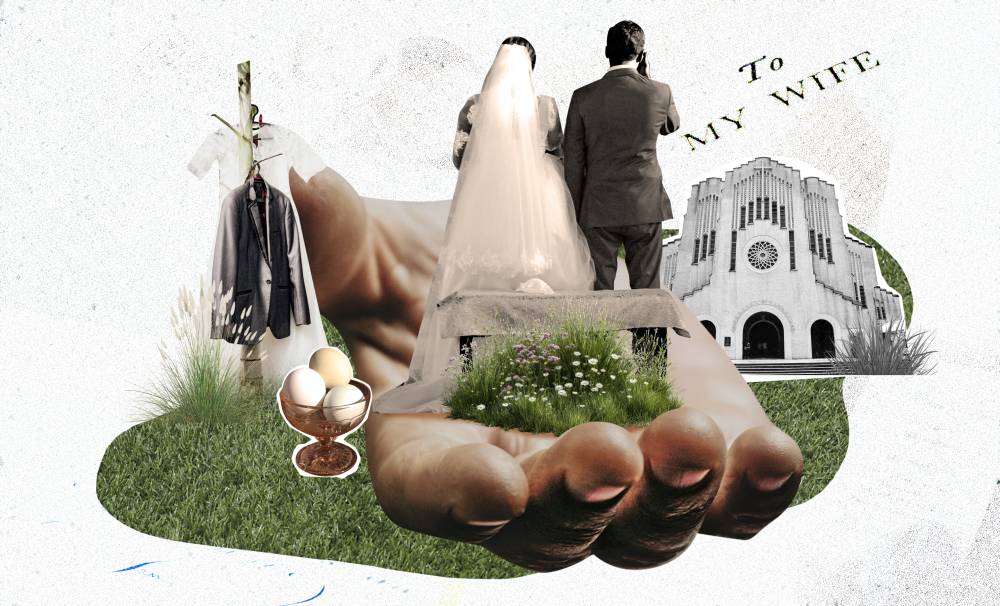
I recently got married in my hometown, Silay City, at the gorgeous San Diego Pro-Cathedral. There are many Filipino wedding customs, and we have so many because we know how important it is. Being family and kapwa-oriented, we appreciate that a good marriage connects people on a deeper level.
In the months leading up to our wedding, my wife and I did some popular traditions, mainly pamamanhikan and offering eggs.
The pamamanhikan
Filipino weddings are a family affair, which is why the meeting of families is important. As my mother used to say: I am not just marrying my partner—I am also marrying her family.
Pamamanhikan, from the word “panhik,” means visiting the house. Our two families met and had dinner together. There, we saw the differences in our personalities as well as the dynamics between family members.
Traditionally, pamamanhikan also means pagpapaalam—informing the family, asking for their permission to marry, and saying goodbye. But we do not “own” our children for us to give them away. They are their own person. Sariling pagkatao, sariling pagpapakatao.
And anyway, in marriage, we do not lose them, but gain a new family member.
Offering eggs to Santa Clara
We were so busy planning the wedding that we almost forgot to offer eggs. This is another peculiar custom. Traditional rituals usually involve the offering of an animal, but it is not just sacrificed. It is also prepared as a meal. You will see that in many customs across the country. The standard offering is an animal you can eat as food, because you are feasting with the spirits. Those who cannot afford the more expensive animals (such as a pig) can use eggs.
During our planning season, my wife and I could not decide whether we should get tents for our outdoor reception. We opted to check the weather forecast at least three days before to be sure. The months leading up to the date consistently indicated a very high chance of rain. A week before, we checked again and saw that it was indeed going to rain. We got tents just to be sure.
Then, we went to Monasterio de Santa Clara along Katipunan to offer eggs. The day after, mysteriously, the weather forecast indicated a sunny day on the day of our wedding. As the week went on, the forecast became clearer and clearer, and the chances of rain were lowering. On the day itself, there was a light drizzle in the morning. After the holy mass, the skies were totally clear, and it was sunny when we exited the church.
The reason why people offer eggs to Santa Clara for matters like this is simply that her name means “clear.” And also, in Spanish, the egg white is called “clara.” People visit for other reasons—there are also a lot of nervous exam-takers who make offerings, too.

Would it have been sunny anyway, even if we did not go to Santa Clara? I would not know.
Marriage is a sumpaan
There are other customs that we followed, of course, but they have a more global scope. For example, the proposal usually includes a ring with a precious stone, and the groom must not see the bride’s dress until the wedding. These are so common that we do not realize that they are really just folk customs that people do not have to follow unless they want to participate in the magic of it all.
Marriage is a covenant, or a “sumpaan.” The traditional sumpaan places the burden across generations who carry the same promise. A sumpaan usually involves sandugo—drinking each other’s blood to indicate a blood bond. We do not do that anymore, as it is medically dangerous. But, metaphorically, getting to this point was indeed quite bloody (madugo), especially with all the offices we dealt with and documents we had to prepare, just to affirm over and over again that we are sure and ready to get married.
That said, I wish all engaged couples and fellow newlyweds a strong and happy marriage.