





Producing dreams beyond borders

For every tearjerker drama or sobering biopic that reels in viewers and awards alike, these are built on the imaginations of hundreds, if not thousands, of creatives at a time—far more than the leading stars and the director, who often serve as the faces of a film.
Kristine De Leon, a young Filipina producer, is one of the many hands behind the stories and spectacles we see onscreen. Gaining recognition locally and globally, her short film “Ali” received a Special Mention at the 2025 Cannes Film Festival.
With one film at a time, she is helping shape the future of independent cinema from behind the scenes. And as a producer and single mom, she is ascending among the country’s powerhouse creatives.
Early journey
De Leon didn’t enter the film industry with a clear roadmap. Like many young creatives, she learned by moving through the small but essential roles that keep sets alive—running errands, handling logistics, absorbing everything unfolding around her. “I started as a PA. That’s what I’m most proud of,” she says.
She once wanted to be a writer-director, but producing drew her in. The chaos and rhythm made sense to her. “Sometimes we can’t control our lives, but when you get to control something in your workplace…” she shares. It wasn’t part of her plan, yet curiosity nudged her forward.
Her path sharpened at the Film Development Council of the Philippines (FDCP), where she managed international co-production grants. Reading scripts and evaluating proposals showed her how films move across borders, carried not only by creativity but also by systems, strategy, and support.
The exposure lit something inside her. She began studying projects with greater rigor, funding mechanisms, festival trajectories, and international workflows. What began as instinct evolved into intention, marking her shift from a curious PA to a producer actively shaping her own path.
Mainstream dreams to indie calling
Like many film lovers of her generation, De Leon grew up on the glossy dramas and romantic comedies that shaped much of our idea of Filipino cinema. She never imagined herself working in the independent scene.
But the doors opened at FDCP offered her new vantage points. Regional stories, development labs, and unconventional scripts confronted her with a different kind of filmmaking, one that felt raw, urgent, and deeply Filipino.
Slowly, she found the narratives she wanted to champion, the voices she wanted to amplify, the messages she wanted audiences to wrestle with.
“Until now, I keep on asking myself, is it something I would like to pursue? But every day, that question gets answered,” she says.
The Cannes moment
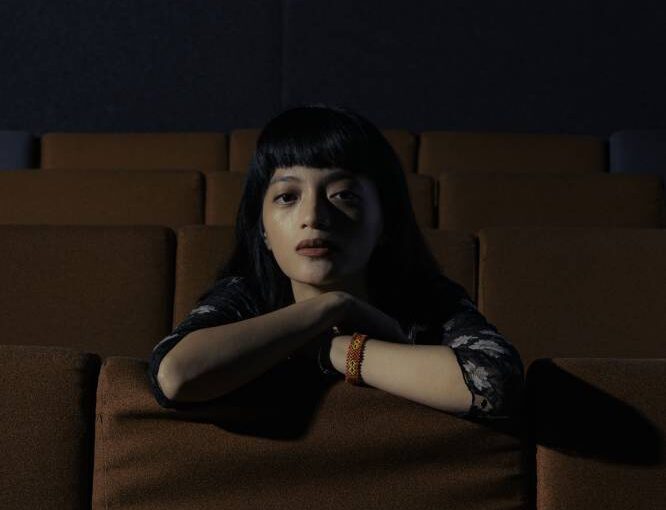
The announcement arrived at a moment De Leon least expected. She was seated in a dark cinema, her head resting lightly against the cushioned seat as the screen washed her face in flickering light. Then her phone lit up, dozens of notifications flooding in all at once.
“Ali,” the short film she co-produced about a young teenager hoping to move to the city by joining a singing competition, had just received a Special Mention at the Cannes Film Festival.
What once felt unimaginable for someone at the beginning of her journey had suddenly become real—proof that passion, persistence, and quiet conviction can push a story farther than you ever think it can go.
She also recalls being at the festival during an after-party celebration. De Leon slipped away quietly, leaving the noise and lights behind. She found herself at the edge of the beach. Alone, she let the moment settle in—a single tear tracing her cheek, the shape of her dream finally real in the darkness.
“Tumingin lang ako sa beach… Pinapakinggan ko lang ’yung alon. Okay. Ito nga ’yung pangarap ko before.”
Building films across borders
De Leon’s rise as a producer is inseparable from her belief in collaboration across countries, cultures, and creative traditions. This vision pushed her and her partners to build their own Asian co-production company called Katalog. “We made a promise to establish a company that will maximize Asian cinema funding mechanisms,” she says.
Yet even as she steps into international arenas, she stays grounded in home. “I make sure it stays Filipino-made, and I will continue to involve Filipino crew and staff,” she emphasizes. For her, cross-border work is not just a strategy but a way to expand what Filipino cinema can become on the world stage.
In every project, she positions herself as both guardian and collaborator. As someone who nurtures a film from development to distribution, she stands beside the director, never above, which is why she openly admits: “I value the director’s voice more than the business strategy.”
In an industry often ruled by financial logic, De Leon’s approach is a reminder that cinema, Filipino or otherwise, begins with vision, trust, and care.

Imposter syndrome, youth, motherhood, and realizations on recognition
“I always thought that someone else was best for the job. Until now, I still have that imposter syndrome, trying to prove I’m worth kung nasaan ako ngayon,” De Leon says.
Being a young producer added its own challenges. “Nagkaroon ako ng era or year na kapag tinatanong ang edad ko, hindi ko sinasabi,” she admits.
“I’m a young producer, tapos I’m a young mom,” she says. Balancing work and motherhood demanded a careful, learned rhythm, she explained, as no one is immune to the struggle of keeping life and work from bleeding into each other.
Recognition, she notes, often comes in unexpected ways. “Sad reality na sometimes malalaman mo lang yung worth mo kapag nakatapat ka sa ibang lahi,” she says. “One of my projects, hindi kami napansin locally. I had to look for international platforms na tatanggap sa project namin.”
Amid the accolades and recognition behind her, she is still learning to believe she deserves the room she walks into. Still, De Leon keeps showing up. She creates, even when doubt interrupts the process. For her, the struggle isn’t a stop; it’s part of the road that leads exactly where she’s meant to be.
Words for young aspiring women producers
“Sana hindi mo isipin na babae ka lang. Sana mas empowering sayo na babae ka, kaya mo magagawa ito,” De Leon says.
The industry is tough, and being a woman in it can be even tougher, but that has never stopped her.
Though she is still navigating her place in this space, she encourages more women to step in. Seeing other women succeed in the field is a powerful motivator for her. Doubts and criticisms shouldn’t hold anyone back. The only person who truly knows their limits is themselves; you can’t definitively say you “can’t” without trying.
As De Leon bluntly puts it, “F*ck it all, f*ck the voices.”
This story was originally published in Scout 2026 Issue 1