











Radishes: The quiet healer

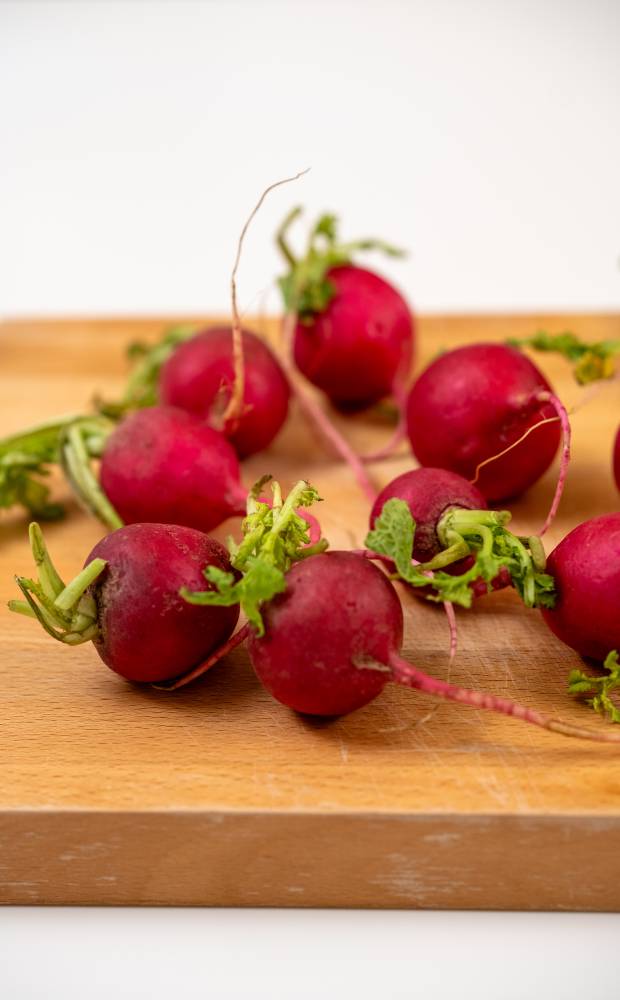
Seasonal eating is one of the healthiest things a person can do for their health. Lately, I have been seeing beautiful radishes in the markets, in all shapes and forms. Big white Korean daikon, small ruby red ones (like in the fairy tale “Rapunzel”), and large red ones as well. Those beautiful colors prompted me to look into cooking with radishes.
The start of the year is meant to be gentle—slow, cleansing, and healing—not a prompt to make everything new. It’s a chance to slow down and cleanse gently. I’ve always believed that nature gives us the food we need for a season, where we live, and now, it’s the season of cleansing: the season of the radish.
A vegetable that balances and cares
Radishes are not trendy vegetables. They don’t show up in smoothie bowls or wellness branding. They show up where real healing happens: in soup, in broth, in dishes cooked when someone is sick, tired, grieving, or worn down. They are the vegetable of care.
In Filipino wet markets, radish rarely gets attention. It sits quietly beside carrots, cabbage, and onions, pale and unassuming. In Tagalog, we call it “labanos”—a word that doesn’t sparkle or shout. But in Filipino food culture, this humble root has always carried quiet power.
If you look closely at traditional Filipino cooking, you’ll notice a pattern. Our cuisine is rich, heavy, and warming: pork belly, beef bones, marrow, fried fish, garlic, oil, and fermented sauces. These foods are deeply nourishing, but they are also intense. Without balance, they would overwhelm the body.
The benefits of radish
Radish has been used as medicine in Asian cultures for thousands of years, and Filipino cuisine quietly carries this knowledge. Radishes are high in digestive enzymes, and they are rich in sulfur compounds, which lend to their peppery taste.
Sulfur compounds support the liver. They are a “cool” food known to reduce inflammation—a gentle diuretic that supports bile flow and fat digestion. Sulfur is what the liver uses to detox hormones, break down estrogen, clear waste, reduce inflammation, and metabolize fat.
Eating radish can lead to less bloating, clearer skin, better digestion, and reduced premenstrual symptoms (PMS) for women. It’s no wonder that Filipino foods, which are rich in flavor (and fat), are oftentimes served with radish alongside them.
It’s also why radish is often added to soups. Soup opens the body. Heat dilates tissues and circulation. When radish is added to hot broth, its compounds move through the system more effectively. It helps clear mucus, reduce phlegm, move stagnant fluids, and wake up sluggish digestion.
Labanos in Filipino dishes
You’ll often find labanos in nilaga, bulalo, sinigang, tinola, achara, and pickled side dishes. But it’s not merely a side dish—radish is there for balance. Filipino food was never meant to be eaten in isolation. A fatty cut of pork always came with a sour broth. Fried fish always came with something fresh or pickled. Heavy stews always had vegetables that cooled and cleared the system.
And radish plays that role perfectly. It cuts through grease. It absorbs excess oil and lightens rich broths. It keeps food from sitting heavily in the stomach.
In Filipino food, radish often absorbs the flavor of broth. It becomes soft, slightly sweet, and deeply comforting. But underneath that gentleness is powerful cleansing energy. In many Asian traditions, radish is believed to clear not just physical stagnation, but emotional heaviness. Believed to be a cleansing root, radish clears stagnant energy. In a world where food is ultra-processed and the ancient wisdom of food is forgotten, radish needs to take center stage.
One of the most beautiful ways Filipinos use radish is through pickling. Achara, whether made with papaya or labanos, is more than a condiment. It’s a digestive aid. It wakes up digestion, which is why radish is also found alongside Korean and Japanese cuisine.
Pickled radish stimulates stomach acid. That’s why it’s served with lechon, fried fish, and grilled meat. Fermented or pickled radish also supports gut bacteria. It teaches your microbiome how to handle rich food. This is ancient probiotic wisdom, hidden inside everyday Filipino meals. Meanwhile, in French cuisine, radish paired with butter and salt makes for a perfect contrast to sharp tastes and fatty flavors. It also lessens the peppery taste.
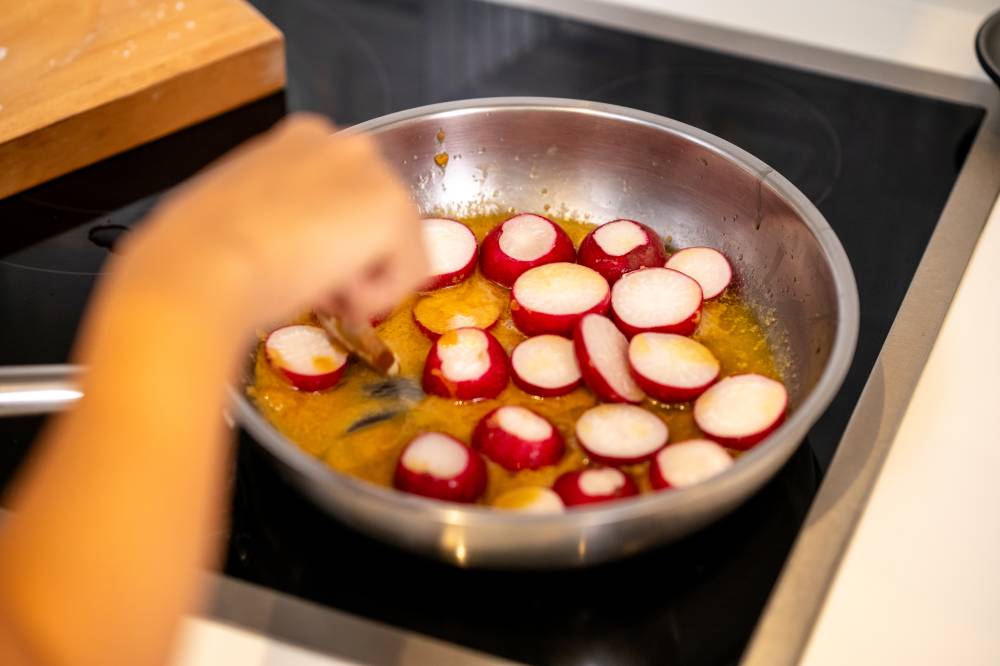
To celebrate radish season, I’ve made a simple miso butter sauce that goes over beautiful red radishes. This can be served as an appetizer or a side dish. You can even add a little soy sauce and a dash of chili to bring out more of an Asian flavor to it.

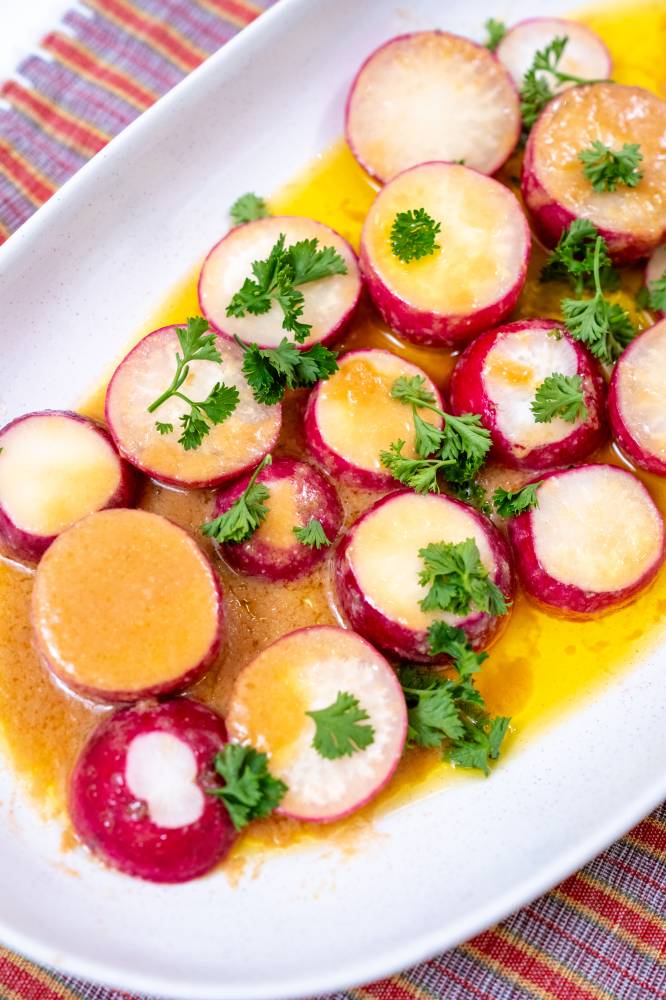
Radish with miso butter sauce
Ingredients
1/2 tsp sea salt
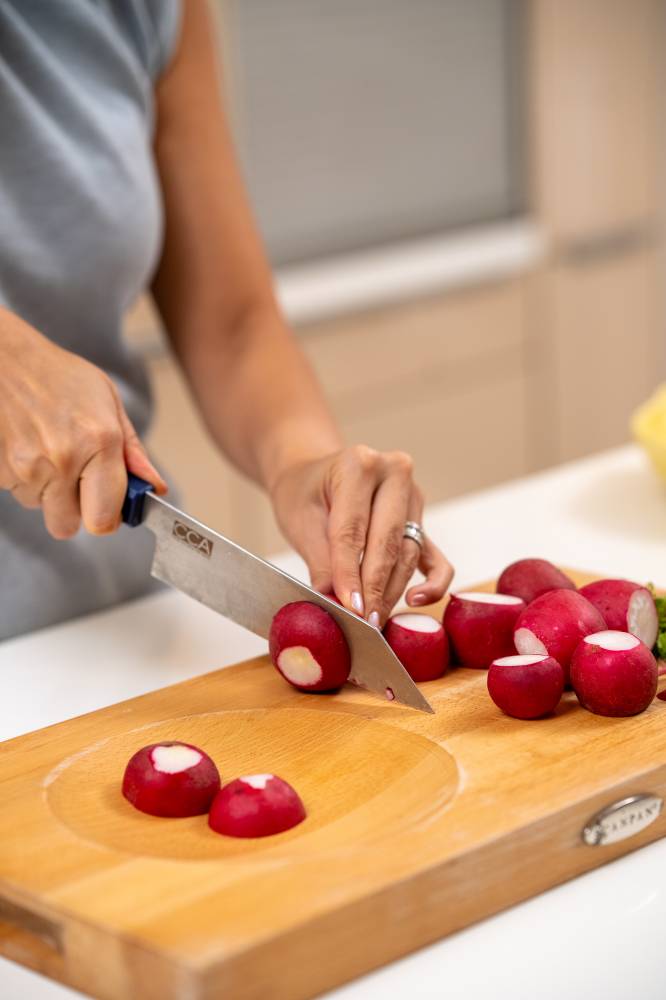
8 to 10 pieces red radish, sliced into thick rounds
2 to 3 Tbsp butter
1 Tbsp miso paste
A dash of water
Procedure
- Salt the radish rounds and let them sit for a few minutes.
- In a hot pan, melt the butter slowly, not allowing it to burn.
- Add the miso paste, and add the radishes. If needed, add a dash of water to break down the miso paste.
- Cook for five minutes and serve.