






‘Remain profoundly human:’ Pope Leo XIV’s first encyclical on AI


We must lovingly safeguard the grandeur of humanity bestowed upon us and revealed in its fullness in Christ, the splendor of which no machine can ever replace.” With these words, Pope Leo XIV introduces the church’s perspective on the existential threat of our time: artificial intelligence (AI).
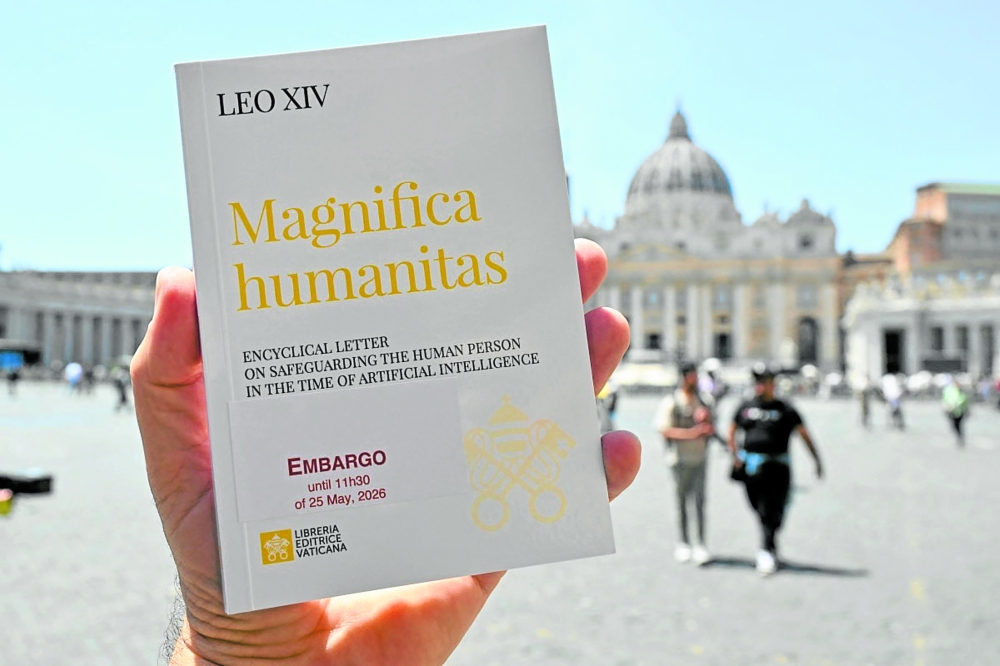
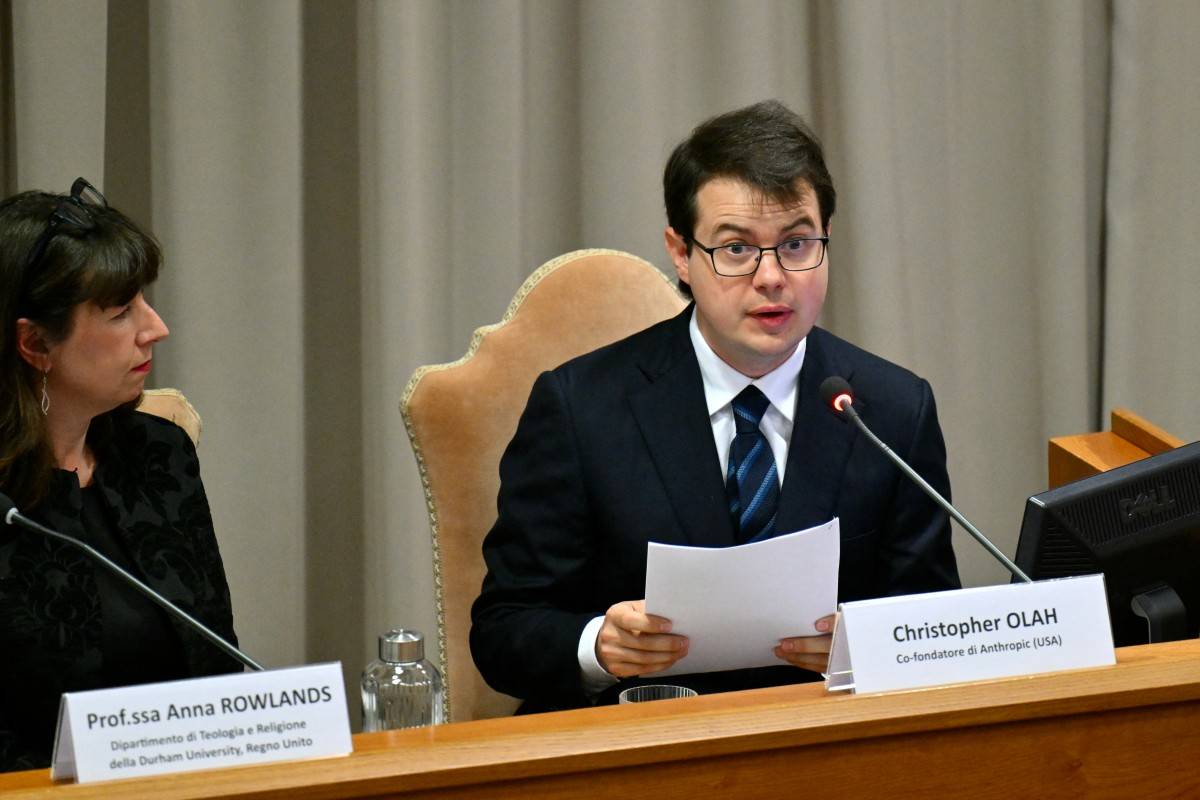
The Pope’s newly released encyclical, “Magnifica Humanitas,” highlights the magnificence of humanity from the get-go. No Pope has ever presented his own encyclical before, but Pope Leo XIV did so publicly on May 25 alongside cardinals, theologians, and Christopher Olah—one of the co-founders of the AI company Anthropic—demonstrating the well-rounded consultation that went into writing the document.
While released on May 25, Pope Leo XIV signed the document on May 15, marking the 135th anniversary of “Rerum Novarum,” the landmark encyclical issued by predecessor Pope Leo XIII during the Industrial Revolution. Back in 1891, the Church grappled with factories, child labor, and industrial capitalism. Today, the current pontiff confronts a different revolution, powered not by steam engines but by machine learning.
So what exactly is an encyclical? As the highest form of papal teaching for Catholics, it’s a meticulously crafted document rooted in scripture, while relating to the real world. Throughout this one, the Pope meditates on what it means to be human in a time shaped by algorithms and automation.
Are we building Babel or Jerusalem?
One of the first conundrums the encyclical presents is how “Humanity, created by God in all its grandeur, is today facing a pivotal choice: either to construct a new Tower of Babel or to build the city in which God and humanity dwell together.”
The Tower of Babel in the Book of Genesis represents humanity’s attempt to reach heaven through its own power, only to end in division and communication breakdown. For Pope Leo, it’s a warning for the AI age, where technology risks being driven by profit, concentrated in the hands of powerful tech giants that reduce human beings to data points.
The pontiff grounds these concerns, citing “the value of work” and “the problem of unemployment” in the context of rapid technological change. He argues for an “economy that values dignity,” built on “transparency and accountability” as well as “inclusion and access.”
As a counterpoint to Babel, Pope Leo offers the image of Jerusalem rebuilt under Nehemiah. Unlike the tower, Jerusalem was restored through cooperation. In the same grounded spirit, Pope Leo argues that “supporting families and young people in this transition requires choices that make stability feasible,” from labor policies and accessible education to a healthier balance between work and rest.
“The social conditions for hope”
In a culture obsessed with productivity, Pope Leo XIV asserts that every person possesses dignity simply because they exist. Chapter two zeroes in on how human beings are made in the likeness of God, with worth not dependent on production or efficiency.
He distinguishes four types of dignity—moral, social, existential, and ontological—the last we have from simply existing by God’s will, something AI can’t replicate.
Pope Leo calls for an “ecology of communication” where truth can breathe amid disinformation, with schools, families, media, institutions, and government all sharing responsibility. Work has a similar role, where human labor isn’t just for income but an expression of creativity, freedom, and participation in society. As automation transforms industries, workers must never be treated as expendable. The Pope also warns against “digital addiction” before it becomes a new form of slavery.
Not a Luddite
Despite his warnings, Pope Leo is not anti-technology. “Humanity has always used tools,” he notes. For him, the problem isn’t innovation but the “unprecedented, private form of technological power that makes it incredibly difficult to govern AI for the common good.”
Echoing Pope Francis’s “Laudato Si,” he warns how “current AI systems require enormous amounts of energy and water, significantly influencing carbon dioxide emissions, and place heavy demands on natural resources.” Thus, he suggests a call for more sustainable tech solutions geared towards the common good.
Pope Leo also cites two dangers shaping contemporary conversations around AI. The first is transhumanism, the belief that technology can eliminate human weakness, perfect the body, and perhaps even transcend mortality itself (a vision that echoes society’s growing obsession with optimization and self-improvement). The second is post-humanism, which sees humanity as merely a temporary stage in evolution that will eventually be surpassed.
Against both ideas, the pontiff argues that our limitations are not flaws to be engineered away, but our vulnerability, mortality, and dependence on one another—and on God—are what make us human.
Disarming AI
The encyclical’s strongest language is reserved for war. Condemning AI-powered weapons, drone warfare, and autonomous lethal decision-making, Pope Leo declares that “Artificial intelligence needs to be disarmed.” Yet disarmament alone isn’t enough. “Rebuilding doesn’t simply mean replacing what’s been destroyed but repairing bonds, restoring trust, and reawakening hope in the future. Moreover, no one builds alone.”

The Pope also laments what he sees as a growing crisis of multilateralism and a world governed by the idea that power determines what is right. His alternative is what Pope Paul VI called a “civilization of love,” built on justice, dialogue, and solidarity. “It is not a naive dream,” Pope Leo writes. “It is a direction. It is the path that Jesus Christ opens within history.”
Our most urgent task
Pope Leo XIV’s document is also surprisingly rich in cultural references. The Chicago-born pontiff has consistently shown himself to be a cultured man, frequently dressing up in a fedora and dark sunglasses, emulating “The Blues Brothers” during his seminary years. So it’s no surprise that he cites Beethoven’s “Ninth Symphony” as an expression of humanity’s longing for unity, Picasso’s “Guernica” condemning war, and even Steven Spielberg’s “Schindler’s List” as a reminder that history must never be forgotten.
He even quotes a passage attributed to Gandalf in J.R.R. Tolkien’s “The Return of the King,” “It is not our part to master all the tides of the world, but to do what is in us for the succor of those years wherein we are set.”
It took the Pope nearly a year to write the encyclical’s 42,000 words—something ChatGPT or Claude might generate in a few hours. But while AI “often surpasses human intelligence in speed and computational capacity,” it can’t truly replicate real human creativity, conscience, or love.
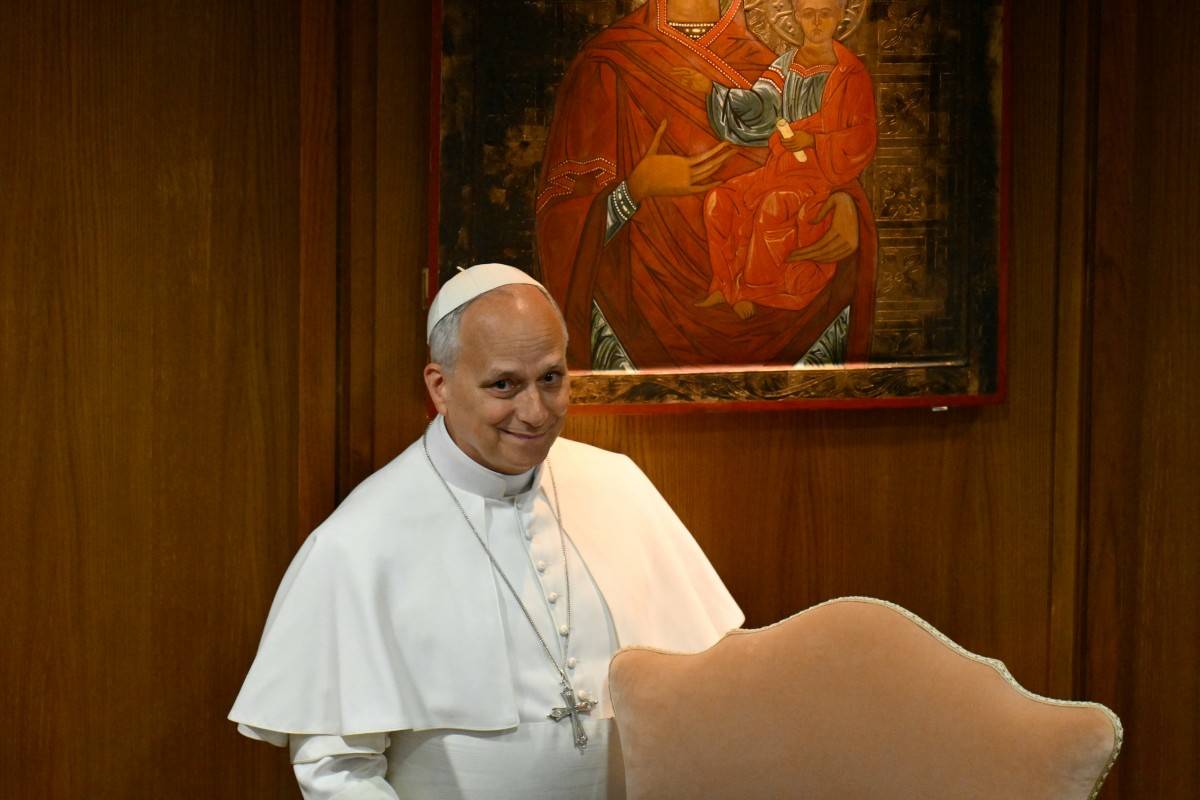
For many, both Catholics and non-Catholics, Pope Leo XIV takes on the image of a shepherd, walking through the pasture with us as sheep, or a father speaking to his children. And his final message during the encyclical speech was perhaps the simplest: “Remain profoundly human. In the age of AI, that is our most urgent task.”
******
Get real-time news updates: inqnews.net/inqviber


