










Sad horses and Draco Malfoy: China’s unexpected Lunar New Year trends

A morose horse, rice cakes, and a Harry Potter villain have become surprise hits in China ahead of the country’s Lunar New Year holiday. These viral trends play on Chinese traditions and young workers’ anxieties as millions head to their hometowns to welcome in the Year of the Horse, which begins on Feb. 17.
Here they are, explained:
Lucky Draco
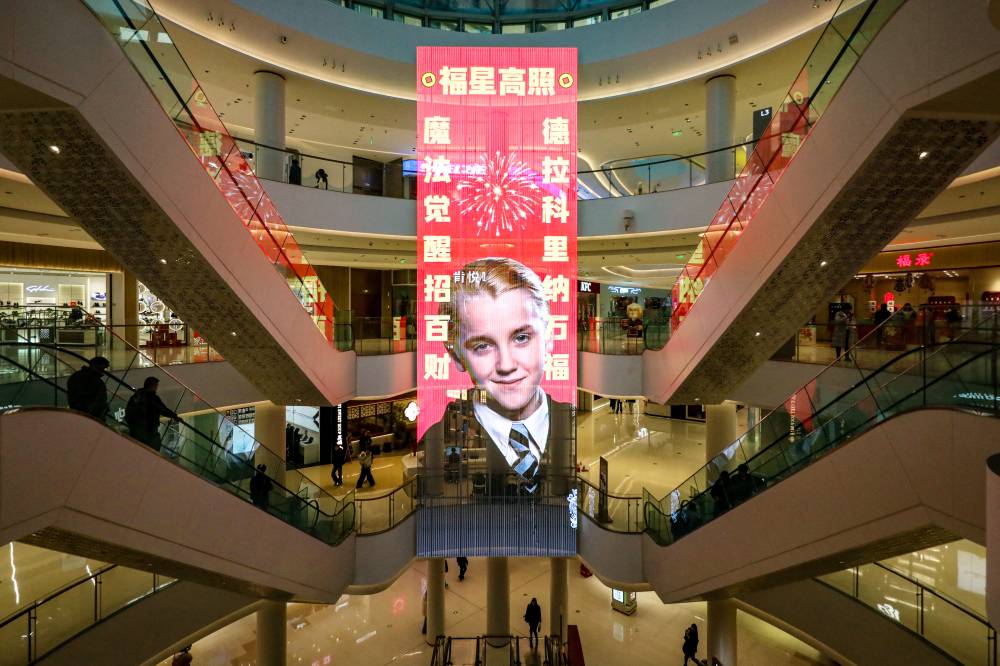
Draco Malfoy, one of the schoolboy villains in the Harry Potter series, has become an unlikely New Year’s mascot. The face of British actor Tom Felton, who played Malfoy in the film series that ended 15 years ago, has appeared on posters, fridge magnets, and even emblazoned on a banner in a Chinese shopping mall.
The film franchise, which is wildly popular in China and the capital, Beijing, has a large-scale Harry Potter-themed attraction at a Universal Studios resort. But the current Draco obsession stems from the transliteration of his surname, “Ma Er Fu,” which contains the Chinese characters for “horse” and “good fortune”—an auspicious omen for the year ahead.
Felton, now 38, has embraced the trend, reposting videos of New Year decorations featuring his image on Instagram.
Why the long face?
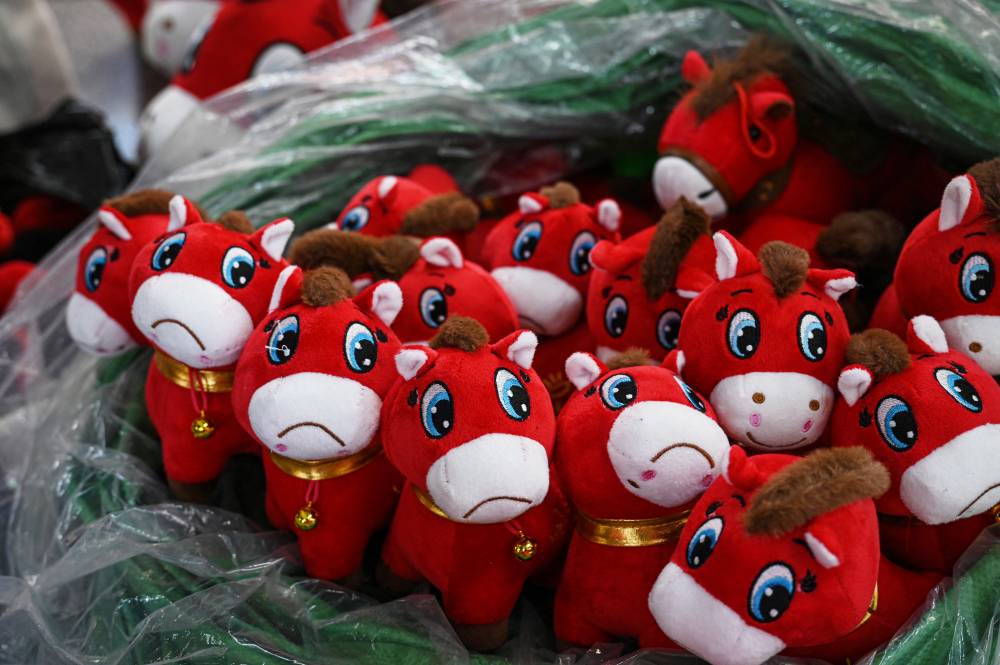
A manufacturing blunder recently turned a smiling horse plushie into an icon of China’s young employees. Making “Year of the Horse” stuffed toys in a workshop, an employee accidentally stitched the festive foal’s mouth on upside-down, turning its cheerful expression into a gloomy frown.
That hit a chord with stressed-out youth struggling in China’s highly competitive job market and sluggish economy.
Dubbed the “crying horse” online, the depressed animal has become an internet sensation, with a related hashtag gaining more than 100 million views on the social media platform Weibo.
Almost 20,000 were being shipped per day at the height of its fame, and orders are backed up to March, according to state broadcaster CCTV. “With a face full of resentment and helplessness, it really looks like an employee coaxing themselves to go to work,” writes one Weibo user.
Many consumers have bought both the smiling and frowning versions to represent both the highs and lows expected in the coming year.

Edible “pets”
Another trend has people “adopting” sticky rice cakes. Sticky rice cakes are a popular New Year’s dish in much of eastern and southern China, but to be prepared, they must be soaked in water, which is regularly changed.
Social media posts show users “raising” their rice cakes, complaining about being at home to babysit, and dubbing them their new pets. One user on the Instagram-like RedNote gained more than 23,000 likes on their post of a photo of a bag of rice cakes left unattended on a train, along with the caption: “Who’s lost their pet?”
Rice cakes join a long list of inanimate objects that time-poor young Chinese have jokingly adopted for low-maintenance companionship in recent years, ranging from mango pits, rocks, and even cardboard dogs.
Clean hair day
In a twist of tradition, netizens have called for a national day of hair washing on Lunar New Year’s Eve. A common Chinese tradition warns that people should refrain from cleaning their hair on Lunar New Year’s Day—and even for a few days after—to avoid washing away good luck and incoming wealth.
The recent hashtag “collective hair washing on the 16th” calls for nationwide mass hair washing on the last day of the lunar year, with social media users joking about salons being booked up.