






Scent schools: Where to learn perfume-making in Manila

So you love perfume and want to make your own special scent? Fantastic. Much like fashion and art, scent is yet another significant form of self-expression—and yes, there are a handful of workshops here in Manila where you can take your passion to another level.
Put down that overused bottle of Baccarat Rouge 540 and ask yourself the following questions: Do you want to just spend a fun afternoon with friends sniffing some notes, or do you want to craft a perfume for yourself that tells a story? Do you want to start your own indie perfume business or become the next Jacques Guerlain or Francis Kurkdjian?
If you’ve answered yes to any of these, then you’re in luck. The current fragrance scene in Manila is growing rapidly, and there’s room for everyone: hobbyists, romantics, serious students, and future brand owners.
Here’s a breakdown of where to go depending on your level of enthusiasm.
For beginners and enthusiasts: Sad Girl Scents
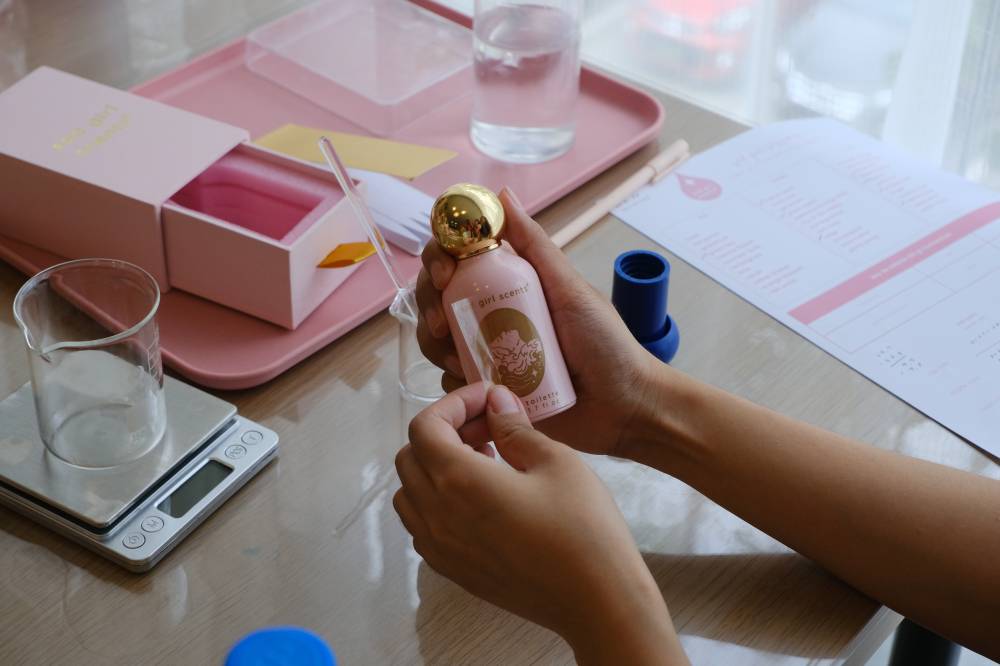
Anyone who enjoys accessible local perfumes has probably heard of Sad Girl Scents, distinguishable by their iconic pink and gold bottles. Carrying a handful of fragranced products such as hand creams, oils, and body washes, Sad Girl Scents’ perfumes are inspired by tender emotions, including, yes, that of heartbreak and pain. The brand’s scent names include “it’s not me, it’s you,” “ok naman ako,” “single awareness day,” and “red flags.”
Despite the brand’s outwardly melancholy theme, founder Trisha Osita wishes to spread joy through her workshops, which are mainly designed for hobbyists and “anyone who just wants to try something new.” Trisha’s intention for her perfume-making sessions was to make the whole process as important and as fun as the end product itself.
“[Creating your own perfume] is a personal thing, because scents are very subjective and there’s really no one way to decide which would appeal to you and to everyone else,” says Trisha. “We’ve had a lot of participants [who] were a bit undecided at first, and I often tell them that it’s good to go with your gut. Otherwise, having a vision—either a memory, a feeling, a picture, or an image of when and where they plan to use the scent—can help put focus on what they’re trying to achieve.”
Sad Girl Scents’ workshops are emphasized as casual and jargon-free, normally beginning with a quick overview of perfumery before trying out various raw materials.
Trisha muses, “Perfumery in general is a craft that has a high barrier to entry. With basic knowledge and access to materials to experiment with, these could spark their curiosity to learn more.”
Follow @sadgirlscents on Instagram to get updates on their latest fragrance workshops
For aspiring artisans: Art in Olfaction by Oscar Mejia III
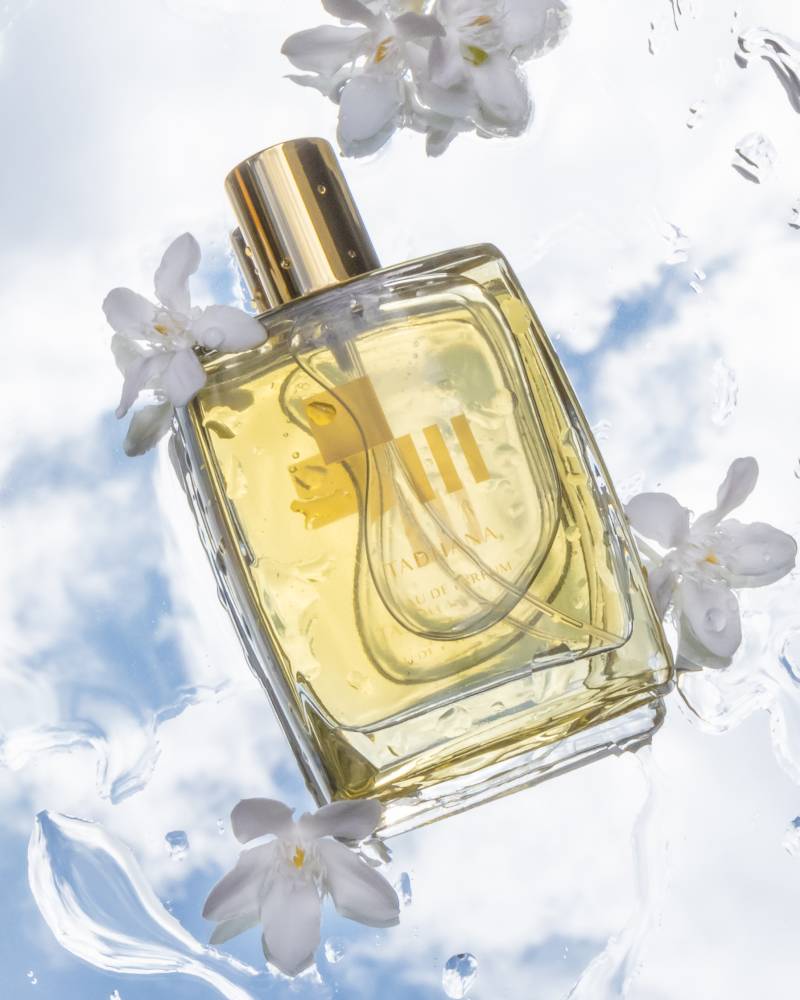
Oscar Mejia III’s scent workshops are for the romantics and the creatives. The Grasse-trained perfumer’s Art in Olfaction sessions are all about emphasizing fragrance creation as a true art form, more focused on the why than the how. Participants are invited to look at scent—not simply as a product, but as a medium for expression, with the entire experience being a guided and reflective creative process anchored on accessing memory, emotion, and imagination.
“My differentiating factor is the lens I put on perfumery as a creative discipline. This means being particular about olfactory storytelling and emotional composition. Fragrances should not just smell good; they should be able to tell a story and resonate with the heart,” says Mejia.
“While I can bring in structure and foundational knowledge, I value instinct and gut feel in creation,” the perfumer adds. “As such, there is no single ‘correct’ scent, only honest and well-expressed ideas.”
A key part of the experience is scent reflection, which Mejia thinks is crucial not only in mastering materials but also in translating inspiration to scent. Participants slow down, smell intentionally, and learn to “listen” to materials—the memories being triggered, the images that come up, and the feelings that arise. For Mejia, this allows greater artistic sensitivity to raw materials.
Mejia’s best advice to any perfumery student is to learn with both mind and heart. “Treat [raw materials] as vessels of lived experiences. You can know of the heady smell of ylang-ylang and how it is normally used as a heart note, but it helps to also know that using ylang-ylang adds sunlight, warmth, and even sensuality in a composition. Be mindful of how it makes you feel and keep a journal of these observations.”
Stay in the loop on Oscar Mejia III’s work and fragrance classes via @omartisanfragrances/Instagram
For committed learners: The Scent Studio by Bernadette Lim
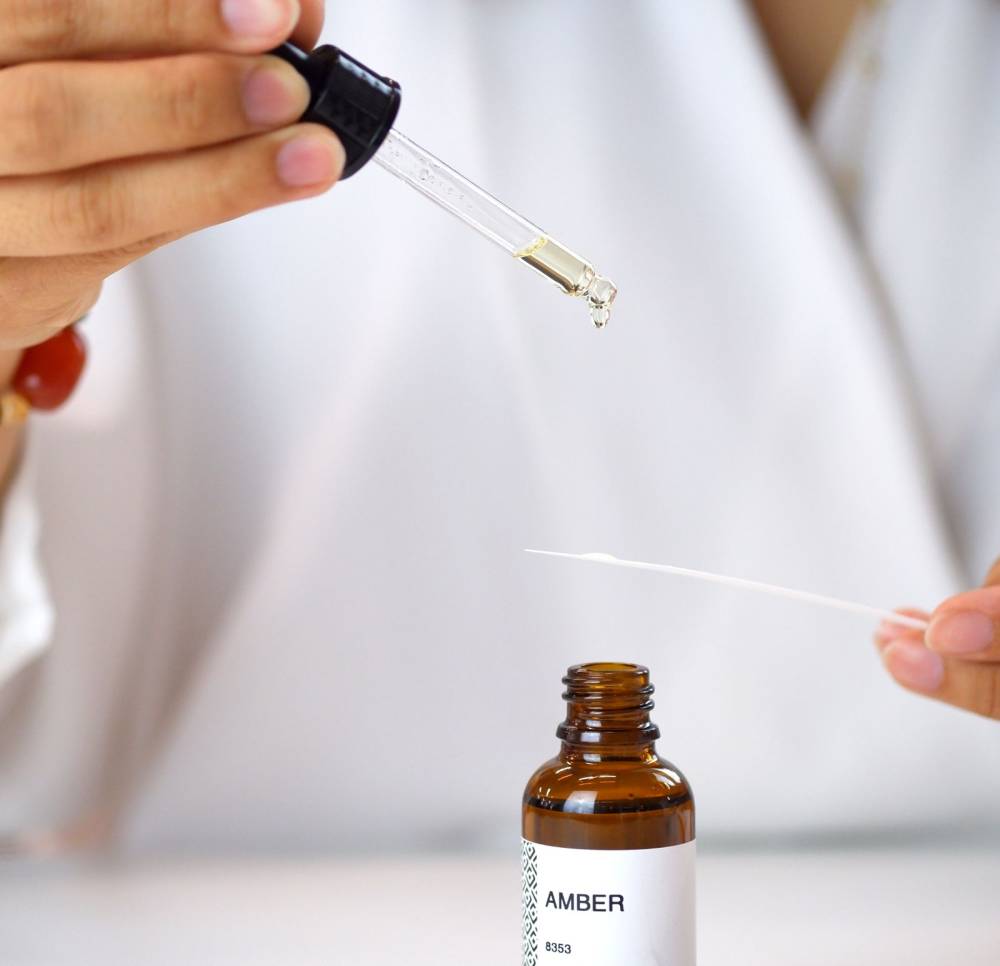
The Scent Studio by Bernadette Lim is the first-ever fragrance studio in the Philippines, with Lim wanting to start it because “there simply wasn’t a dedicated space where people could properly learn about fragrance.” Lim found it frustrating that the majority of local perfume-making classes focused on ready-made compound blends for entrepreneurs selling dupes of existing designer fragrances.
Lim wanted something different. “Perfumery is an art and a creative endeavor,” she says. “I mentor students the way perfumers are trained: You learn how notes behave, how combinations create mood and meaning, and how structure affects the way a scent unfolds on skin.”

Instead of asking “What perfume do you want to copy?” Lim asks her students, “What do you want your scent to say?” before guiding them in translating that idea into a fragrance that’s uniquely theirs.
What sets The Scent Studio apart is accessibility. Lim offers both in-person classes and recorded online sessions where students can learn at their own pace (raw materials and tools are shipped to you). And for those eyeing a professional path, The Scent Studio is the only place in the Philippines offering classes from The Asia Perfume Foundation, including advanced formulation training in partnership with ISIPCA in France.
“My advice is simple: start with curiosity, then commit to structure,” says Lim. “Passion is the spark, but progression comes from learning materials, practice, and guided feedback.”
Follow @thefragrancespecialist/Instagram to get more tips on perfume-making
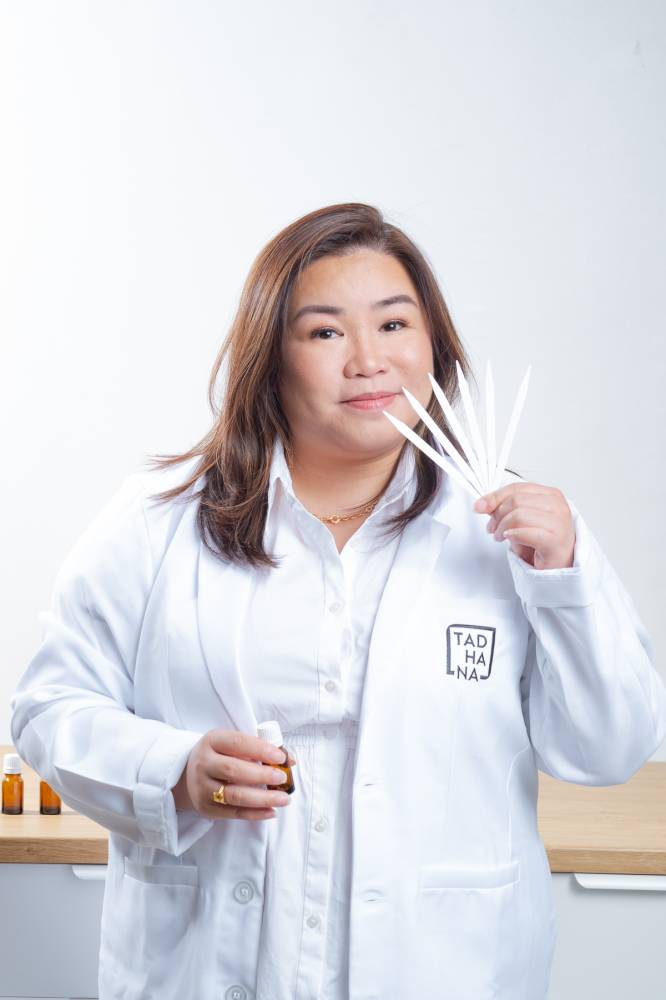
For ambitious entrepreneurs: The Scent Lab by Shale Albao
Dreaming about launching and manufacturing your own fragrance line? It’s definitely possible through The Scent Lab—headed by chemist and ISIPCA-trained professional perfumer Shale Albao. Recently launched in November 2025, Albao’s “co-working scent space” empowers aspiring entrepreneurs to learn, prototype, and eventually launch their very own fragrances.
“We start with foundational perfumery skills through workshops, then a supervised lab membership (bench time plus access to materials library), and an optional scale-up path for those who want to launch their own fragrance line, where we can support in the manufacturing and compliance,” Albao says.
Albao, who also runs her own niche perfume house, is a versatile mentor who offers workshops designed for all types of learners: scent lovers who simply want to enjoy and learn, hobbyists who are gunning for pro-level certifications, and indie brand owners on the hunt for practical, French-based perfumery knowledge. The Scent Lab’s most advanced class tackles perfumery’s business side, where Albao discusses product development, marketing, and production.
“Get to know raw materials,” Albao advises all beginners in perfumery. “Find access to high-quality raw materials, smell them, memorize their scent, and experiment on how these materials react with other materials.”
Get in touch with Shale Albao and check workshop schedules on @perfumerasia/Instagram