











Still haven’t played Dispatch? Why?!

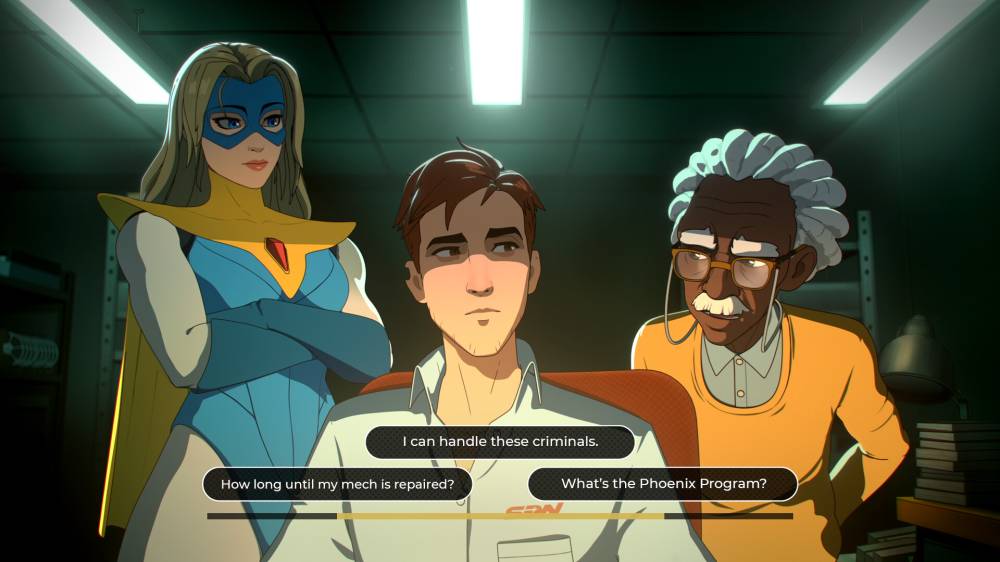
Video games require active participation, whether we’re talking about a competitive shooter or a cozy farming simulator. But a different subset of games—the kind with an interactive narrative genre—lets players sit back and take on a passive role in a story unfolding before their eyes.
In short, more watching and less playing. More TV than game.
From AdHoc Studio, as well as the creators of The Wolf Among Us and The Walking Dead, Dispatch, the latest in the interactive narrative genre, was released in October 2025 to critical acclaim, winning an outstanding story-rich game at the Steam Awards and being nominated for two categories at The Game Awards 2025.
As someone who only recently found time to play through the game, I can attest that it deserves all the praise it’s getting and more. And whether or not you’re a fan of the superhero genre, this is undoubtedly an experience that gamers and non-gamers alike would certainly find worthwhile.
A different kind of show
Dispatch follows Robert Robertson III, who is also known as the hero Mecha Man. After sustaining heavy injuries and losing his suit due to an incident, he is forced to retire from active service. However, at his lowest point, the Superhero Dispatch Network recruits him to become a dispatcher to train the members of the Phoenix Program—a selection of supervillains-turned-superheroes.
Equipped with nothing but a desktop computer, an office headset, and his decades of experience in the field, Robertson sets out to prove to everyone that heroism doesn’t simply apply to those with powers.
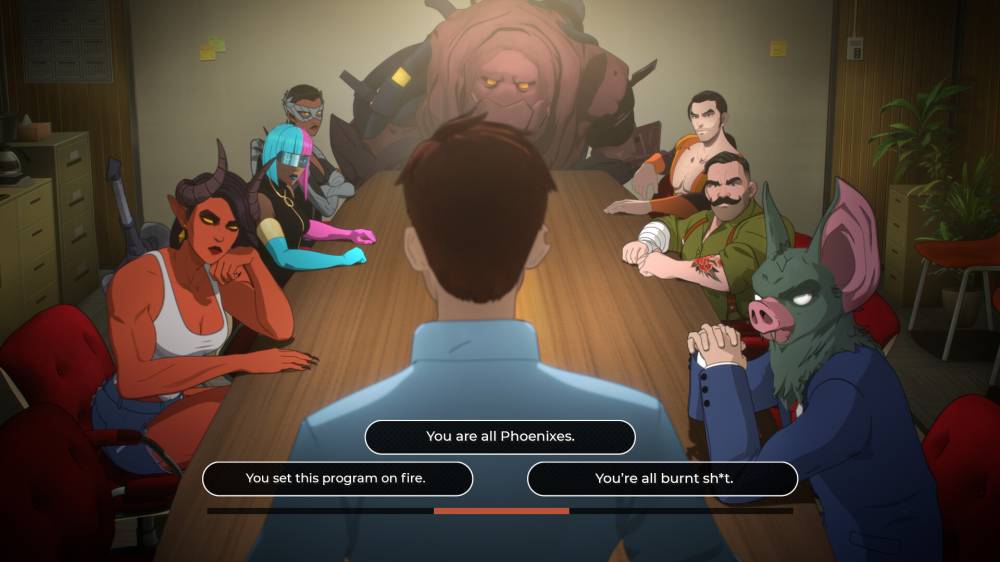
The superhero genre isn’t new—if anything, it’s overdone to the point of becoming stale; just look at Marvel. Instead, Dispatch succeeds in breathing fresh life into the genre by building a world where heroism is treated like a bureaucracy. Heroes don’t go out on their own and work in shifts. Being saved isn’t treated like a random occurrence; instead, it’s a subscription service. It doesn’t paint a dark and grim reality like “The Boys,” but a more grounded possibility fitting our current situation.
Story-wise, Dispatch leans more toward Coach Carter—it has your occasional Marvel quips, the sitcom dialogue, and a sprinkle of office romance. But at its core, it’s a story of redemption led by a protagonist slowly finding life outside heroism.
Strong gameplay loop on top of a tight-knit narrative
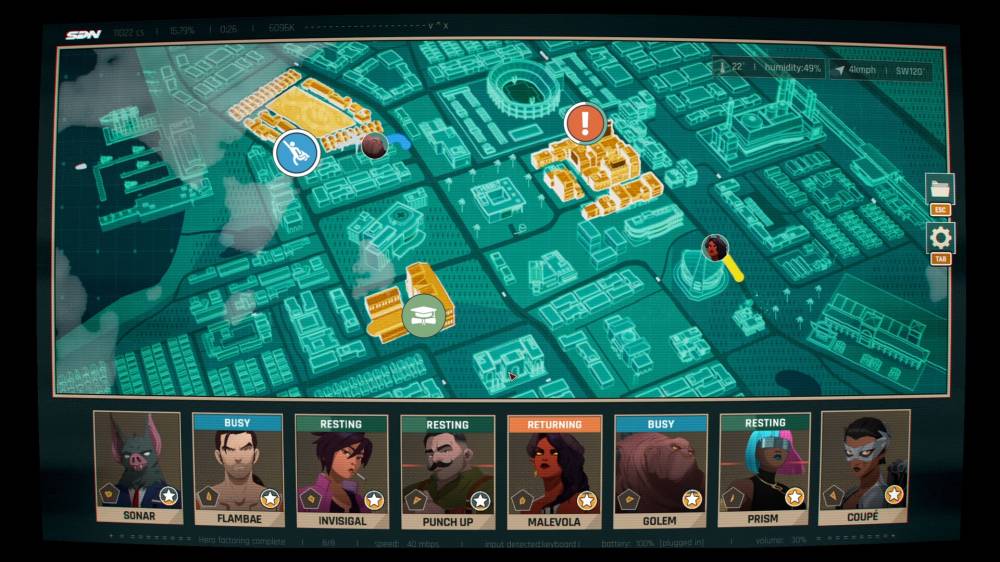
Set in a world where superheroes are deployed and trained like your everyday employee, much of Dispatch centers on a gameplay loop of selecting the best hero for the job.
Sounds simple enough? At first, yes. But as you progress through the game, it raises the stakes by adding higher difficulty situations and more concurrent incidents—all testing your knowledge of your roster’s skills and synergies.
The story was enough to keep me hooked. But this gameplay loop? Simply addicting—so much so that I wish AdHoc made a standalone title with just the “dispatching.”

Balancing clout and fitting voice talent
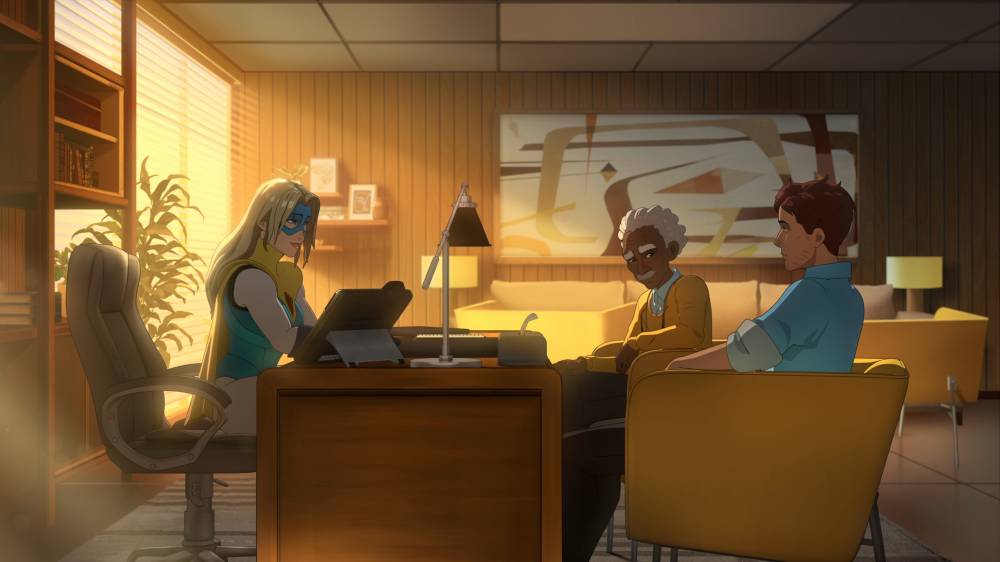
Aaron Paul, best known for “Breaking Bad” and “Invincible,” leads the cast as Robertson/Mecha Man. Laura Bailey and Erin Yvette, two voice acting veterans, play the two leading romance interests Invisigal and Blonde Blazer, respectively.
The game also casts several high-profile YouTubers: Charles White, better known as Most Critical, Seán McLoughlin, or Jacksepticeye, and Alanah Pearce. Jeffrey Wright, who plays The Watcher in Marvel’s “What If…?”, also showcases his voice acting chops in the game as Chase/Track Star.
Simply put, it’s a stacked roster. But make no mistake, their voice acting far outweighs any star power they bring to the table.
Room for more
Without giving any spoilers, Dispatch wraps up its story neatly within the eight episodes it has. But given its success, even those at AdHoc couldn’t ignore the pros of giving it a sequel: “We’re entering the time where we’re going to really sit down and lay those plans out,” said the studio’s co-founder and chief creative officer, Pierre Shorette.
But even if a second season is greenlit, just coming close to the success of the first season could prove impossible. “You have your whole life to write your first album and then eight months to write your second,” adds Shorette, explaining the difficulty of following up to such a massive success.